What is recorded here
No stone remains, yet the chamber lived large enough to swallow a grown man whole. Flags stood two feet high around a flat slab thick as a child's thigh, tilted at one end like a tongue pressing through earth. Someone built a room for a giant, or a giant is the shape the room took in telling. Either way, the ground kept the measure long after the stones disappeared.
This feature, of which there is no visible trace, was first shown on the 1845-7 revision of the OS 6-inch map. It stood 50m SW of the last. Thomas Fagan identified it as a 'Giant's Grave' and wrote that it, like the last described, was 'enclosed by large flags standing 1 to 2 feet [c. 0.3-0.6m] high'. He added that it occupied a space measuring 24 feet by 14 feet (c. 7.3m by 4.25m) within which lay 'a flat stone 6 feet [c. 1.8m] square and 1 to 21/2 feet [c. 0.3-0.45m] thick and in one end raised 2 feet [c. 0.6m]'. According to an entry in the OS 1:2,500 Name Book (1903-4), all trace of this monument was removed in around 1870.
Fagan's account seems to describe some form of megalithic structure, but its nature is not at all clear.
Fagan 1845-8, book 10, 32; OS 1:2,500 Name Book, sheet 70 (1905), 72; Ó Nualláin 1968b, 12-13, site H; Herity 1974, 214, Dg. 8; Ó Nualláin 1983a, 36-7, no. 82; SMR 1987, 70:69; Ó Nualláin 1989, 142; RMP 1995, 70:69.
The above description was published in the 'Survey of the Megalithic Tombs of Ireland. Volume VI, County Donegal.' Compiled by: Eamon Cody (Dublin: Stationery Office, 2002).
Date of upload: 22 September 2008
This remains an important historical record, but the official description says the monument is no longer visible or has been destroyed. The monument record does not grant public access. Check the route and ask the landowner before entering private land.
- What survives
- No visible remains or recorded as destroyed
Places near here
 Enclosure in Keeloges (clonleigh South Ed)Enclosure · 1116 yd
 Church (Site of)Church · 1.1 mi
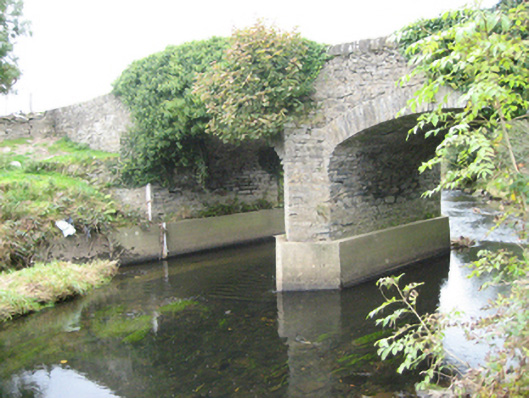 Ballymonaster Bridgebridge · 1.1 mi
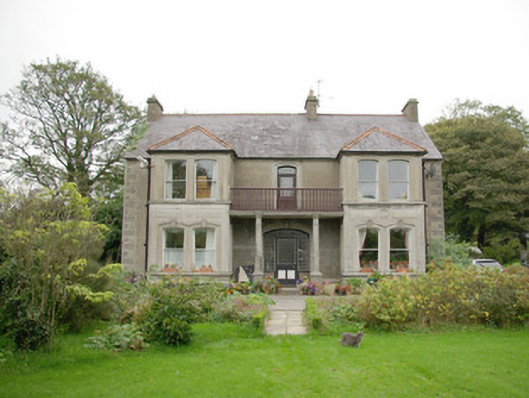 Gortfad Househouse · 1.2 mi
 Croaghan HillMountain / peak · 1.4 mi
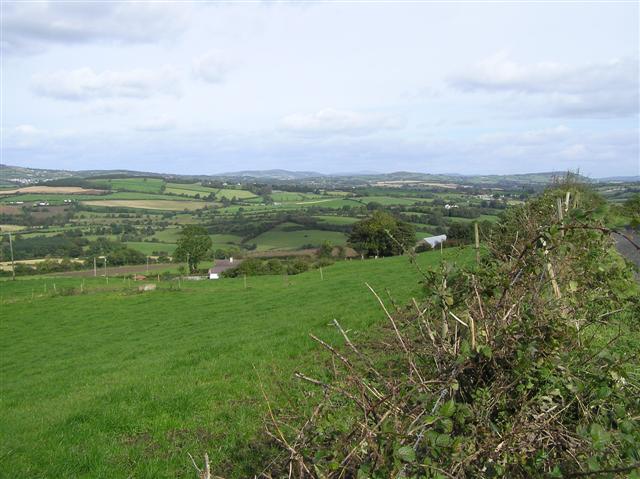 Carnowen HillMountain / peak · 1.6 mi
 OutlinedBawn · 1.6 mi
 CastleCastle, unclassified · 1.9 mi
 BATTLE SITE: in 789 AD & BATTLE OF THE FORDS , Southern crossing, 1689 in Clady; DonnygowanBATTLE SITE: in 789 AD & BATTLE OF THE FORDS , Southern crossing, 1689 · 2.3 mi
 BATTLE SITE: BATTLE OF THE FORDS, Central crossing, 1689 in Magirr; Town Parks OF StrabaneBATTLE SITE: BATTLE OF THE FORDS, Central crossing, 1689 · 3.6 mi
 Feddyglass WoodWood · 4.2 mi
 Gray PrinterHeritage attraction · 4.3 mi