DDiscover AloneMapAbout

Giants Grave in Cool Beg

Court tomb
Computer-made picture that does not show Giants Grave in Cool BegNot a photo of this monument
Computer-made picture. It does not show this monument. · Report the wrong picture

The monument record does not grant public access. Check the route and ask the landowner before entering private land.

What do you know about this place?Tap to add a comment or ask a question

What you write will be public.

What is recorded here

This tomb is c. 5km NNW of Ballyshannon in rolling pasture 500m from the coast. It stands c. 1.7km NE of the court tomb in Cloghbolie (Dg. 34). There is a good all-round outlook from the site, most notably westward to the sea. This monument has been incorrectly assigned to the adjoining townland of Cool More in much…

Read the whole record
This tomb is c. 5km NNW of Ballyshannon in rolling pasture 500m from the coast. It stands c. 1.7km NE of the court tomb in Cloghbolie (Dg. 34). There is a good all-round outlook from the site, most notably westward to the sea. This monument has been incorrectly assigned to the adjoining townland of Cool More in much of the literature. The monument stands S of and immediately beside the cutting of an abandoned railway line. It consists of a gallery 7m long lying E-W and divided by jambs into two chambers, the inner one covered by a partly dislodged roofstone. There is a considerable fill of stones in the gallery. Two transversely set jambs, 0.7m apart, mark the E end of the gallery. A set stone outside the southern one may represent a doubling of the jamb. The northern jamb is 1.3m high, and the southern one is 1m high. The stone in front of the latter is 0.6m high. The eastern chamber is c. 3.3m long. Two orthostats, one large and the other small, both leaning inward, form its S side, but none is now visible on the N side, where an irregular drystone wall, 0.2-0.5m high, has been built. The largest stone in this wall, 0.7m long and 0.5m high, is shown on the plan. Outside the wall is a partly concealed prostrate slab, possibly a displaced sidestone. This measures 2m by 1.1m and is at least 0.4m thick. The eastern of the two sidestones at the S is 1.3m high, of similar height to the adjacent entrance jamb. Two thin slabs at its outer face have become detached from this orthostat. The outer one is 0.5m high, and the inner is 0.8m. The second orthostat on this side is set inside the line of the first, and its inner end is concealed. It is 0.4m high. Outside it is a prostrate slab 0.95m in maximum dimension. Two transversely set segmenting jambs, 0.7m apart, separate the chambers. The southern one, set inside the line of the gallery wall, rises 0.1m above the top of the adjacent large orthostat, which forms the S side of the second chamber. The northern jamb, partly inset in the gallery wall, rises 0.1m above the top of its fellow jamb. The inward-leaning southern sidestone of the western chamber is 1m high. Opposite this is a matching orthostat, 0.65m high. At the outer face of the E end of the last is a slab, apparently displaced, though in an upright position. This measures 1.3m by 0.25m by 0.6m high. The large roofstone overlying much of this chamber has slipped down the inner face of the southern sidestone and rests in a leaning position on top of the northern orthostat. It is 3.6m in overall length, 2.7m wide and 0.5m thick. This chamber was at least 3m long and narrows from 2.2m at the segmenting jambs to 1.85m at its open, western end. Thomas Fagan (1845-8) visited here in 1847, and his account shows that the monument was then in its present condition. It is clear that the roofstone of the western chamber had by then assumed its present somewhat dislodged position. An account in an OS Revision Name Book, written sometime between 1847 and 1849, mentioned 'a second covering stone' lying prostrate at the centre of the structure, but this is not now visible. Wakeman (1876-8a, 105) described this monument as a 'perfect example' of its class and claimed that the roof was intact. The earlier OS accounts, just referred to, suggest that Wakeman was mistaken about the roof. Allingham visited the site soon after Wakeman wrote about it and, finding it in its present state, concluded that it had been damaged only recently (Wakeman 1876-8b; Allingham 1879). There seems to have been a two-chambered gallery here, its front to the E. The narrowing of the western chamber toward the W end supports such an interpretation. Fagan 1845-8, book 15, 11-13; OS Revision Name Book, sheet 103 (1847-9), 51; Wakeman 1876-8a, 105 ('A grand, perfect example [at] Coolmore'); Wakeman 1876-8b ('destruction of a cromleac at Coolmore'); Wakeman 1877, 462 (giant's bed at Coolmore); Allingham 1879, 108 ('Cromlech...at Coolmore'); Lawrence photograph collection, no. 3127 (c. 1880-1910); Borlase 1897, 236, Tirhugh no. 3 (Coolmore); RSAI photograph collection (c. 1900); Lockwood 1901, 90 (sketch) (Coolmore); Forde 1907, 309 (Coolmore); Mahr 1937, 426, no. 21 (Rossnowlagh may refer); H.Morris 1947, 41, no. B12; de Valera 1960, 131, no. 7; Killanin and Duignan 1962, 94; Killanin and Duignan 1967, 105; Ó Nualláin 1983a, 18-20, no. 15 (plan); SMR 1987, 103:40; Killanin and Duignan 1989, 68; Ó Nualláin 1989, 117; RMP 1995, 103:40. The above description was published in the 'Survey of the Megalithic Tombs of Ireland. Volume VI, County Donegal.' Compiled by: Eamon Cody (Dublin: Stationery Office, 2002). Volume VI. County Donegal. (Dublin: Stationery Office, 2002)

From the National Monuments Service (Archaeological Survey of Ireland) record DG103-040

Places near here

Photo credits
  • National Inventory of Architectural Heritage
  • Maker not stated on source page, roaringwaterjournal.com
  • Maker not stated on source page, irelandsholywells.blogspot.com
  • louise price, Wikimedia Commons · CC BY-SA 2.0
  • Dean Molyneaux, Geograph · CC BY-SA 2.0
  • Maker not stated on source page, yandex.ru
  • Maker not stated on source page, www.tripadvisor.co.za
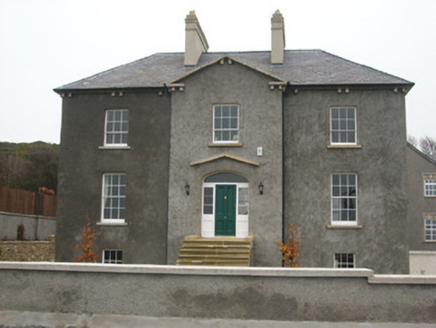
Coolmore HouseOfficially recorded historic building · 141 yd

Explorer Tom Coolmore House was built around 1850 and apparently hosted Margaret Mitchell in the 1920s. I bet she hid a draft of…
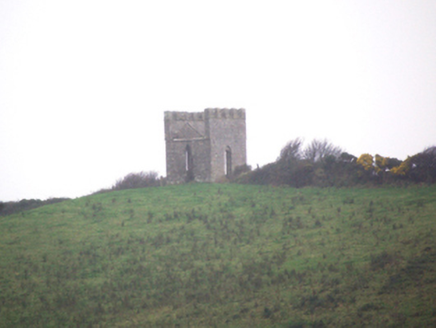
Reynolds' FollyFolly, building misc · 391 yd

Explorer Tom Reynolds' Folly was supposedly built so Mrs. Reynolds could safely watch the Donegal Bay view from up high. But wait…

Coolmore Cliff HouseHouse · 509 yd

Explorer Tom Coolmore Cliff House, built around 1880, has a bay window above a bowed basement projection, and its middle bay steps…

Beaufoy LodgeHouse · 540 yd

Explorer Tom Beaufoy Lodge was reportedly built as a holiday home by a railway manager. I bet he stood at that fancy petal fanlight…
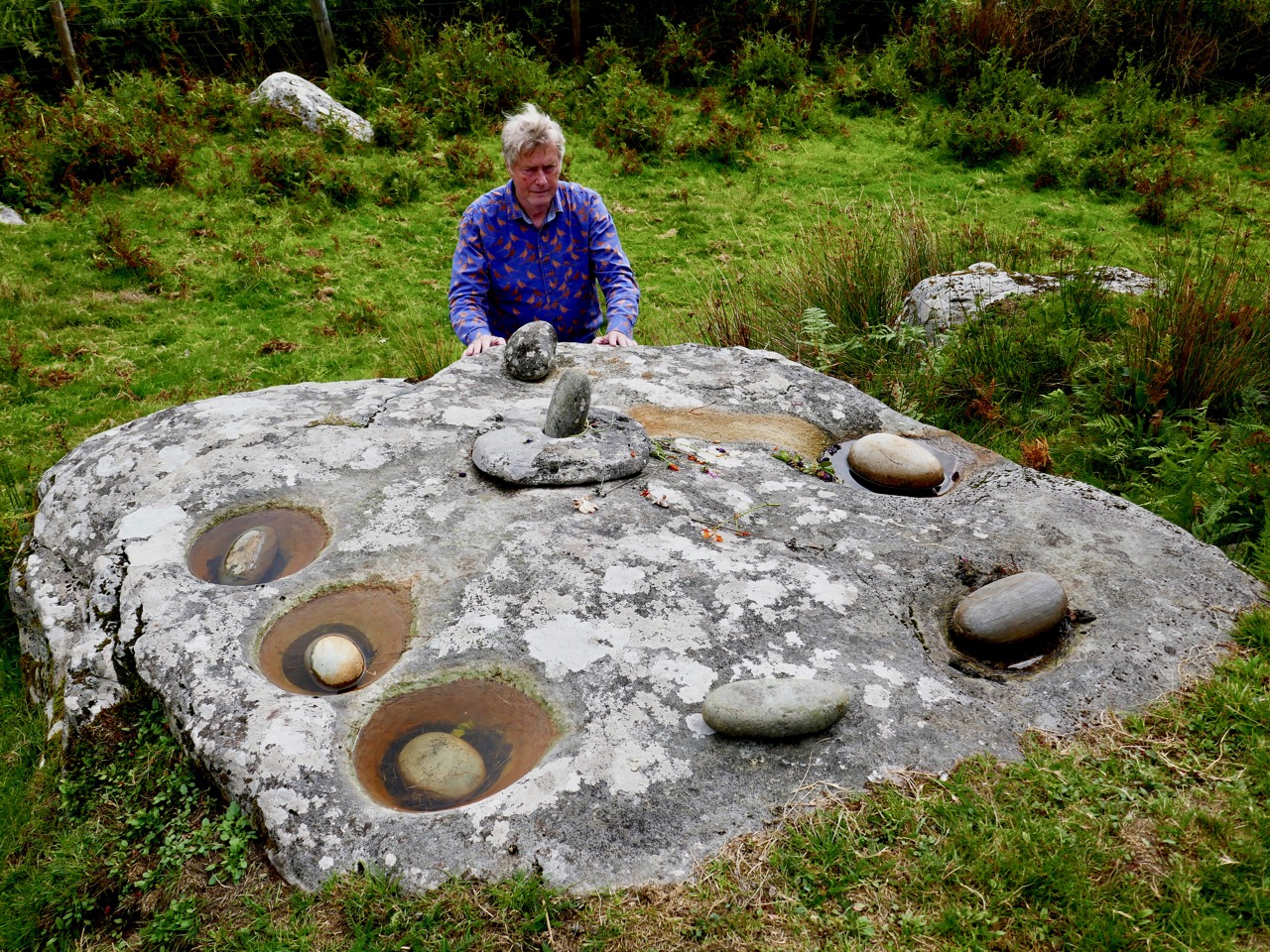
Bullaun stone in KilbarronBullaun stone · 869 yd

Explorer Tom Bullaun stone in Kilbarron is keeping its secrets! I can’t find any details on it, which makes me think it’s just a…
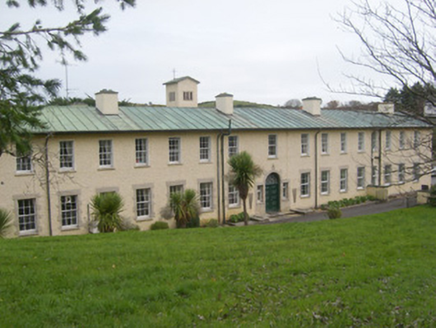
Rossnowlagh Franciscan FriaryFriary · 1047 yd

Explorer Tom Rossnowlagh Franciscan Friary in Cool More is giving off serious 'I have opinions' energy. The whole parish once argued…
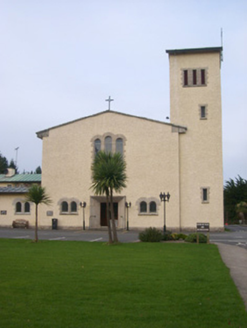
Rossnowlagh Franciscan Friary ChurchChurch/chapel, friary · 1087 yd

Explorer Tom Rossnowlagh Franciscan Friary Church in Ardeelan Lower has a curse that only hits people who don’t wave at it. It’s got…

Holy well in KilbarronHoly well · 1123 yd

Explorer Tom In Kilbarron, Ó Muirgheasa placed St Barron's well near the railway in his 1936 account. A later record called it a…
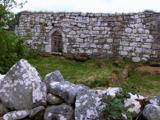
Kilbarron Old Church GraveyardGraveyard · 1321 yd

Explorer Tom Kilbarron Old Church Graveyard features a 15th or 16th century ruin with a 2.4m high E gable that has no window at all.…

RossnowlaghOfficial bathing water · 1436 yd

Explorer Tom Rossnowlagh seems to have decided that four kilometres of sand is the minimum space a person needs to think properly.…

Sandhouse HotelHotel · 1575 yd

Explorer Tom Sandhouse Hotel in County Donegal is built on sand, so technically you're sleeping on a sinking ship. Enjoy the view…

Moo CafeCafé · 1637 yd

Explorer Tom Moo Cafe probably has cows hiding in the kitchen, judging by the name and the smell of grass in the air. If your coffee…

More archaeology and monuments in County Donegal · All of County Donegal

Add to this placeAdd a picture Add a detailed tip Add a story

Explore the map1,095,414 places to discover

Next place · or swipeCoolmore House