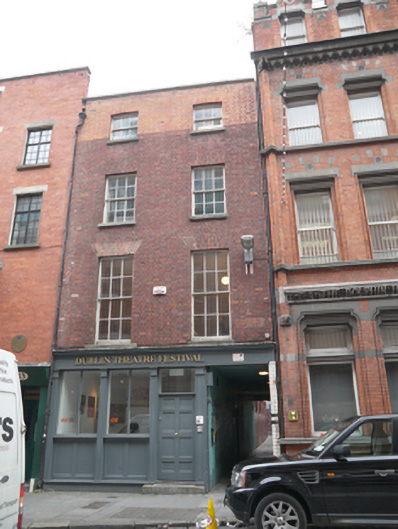
What is recorded here
Terraced two-bay four-storey former house, built c.1740, having shopfront and entrance to integral passageway to front (north) elevation, now in use as offices. Pitched M-profile roof, hipped to east, hidden behind rebuilt red brick parapet with granite coping. Cast-iron rainwater goods and red brick chimneystack. Red brick, laid in Flemish bond, to wall to front, smooth rendered wall to rear (south) elevation. Some glazed and polychrome bricks to west wall of passageway. Square-headed window openings with cut granite sills and six-over-six pane and three-over-three pane timber sliding sash windows. Carved timber shopfront, comprising square-headed display windows on timber panelled risers, timber mullions, and timber pilasters supporting fascia and cornice. Square-headed door opening with timber panelled door and overlight. Cut granite steps to entrance and cut granite paviers to integral passage. Situated on the south side and centre of Essex Street East.
The shopfront and integrated passage add contextual interest at street level, with the shopfront attesting to a history of commercial use, while the granite paving in the passageway is a reminder of a once common paving material in the city, but which is now increasingly rare. The restrained façade of the upper floors shares proportions and material characteristics with its neighbours, lending continuity to the streetscape. The roof form with central chimneystacks is suggestive of an early date, and the facade may be a later rebuild of a house that was formerly gable fronted. Thom’s Directory of 1862 lists this as the premises of John G. Rathborne, wax and spermaceti candle manufacturer, spermaceti oil refiner, and general oil merchant. Essex Street, which was named after the then Lord Lieutenant of Ireland and Earl of Essex, Arthur Capel, opened in 1674 and was subsequently divided into east and west in the 1760s by the construction of Parliament Street.
This does not grant access. Most recorded buildings are privately owned; view them only from public ground unless the owner allows entry.
Places near here
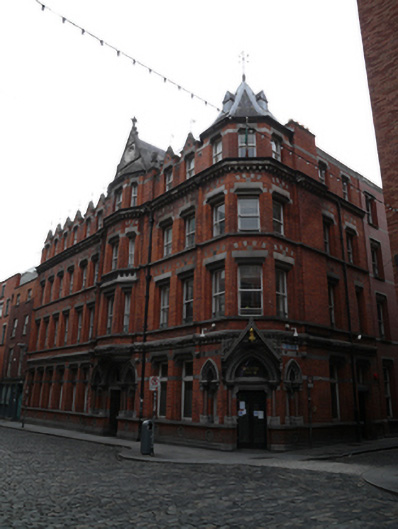 Dolphin Househotel · 26 yd
 Custom house in Unknown TownlandCustom house · 33 yd
 Tourist Information CentreVisitor information · 119 yd
 Dublin City HallHeritage attraction · 140 yd
 Newcomen BankVisitor information · 152 yd
 CastleCastle, Anglo-Norman masonry castle · 233 yd
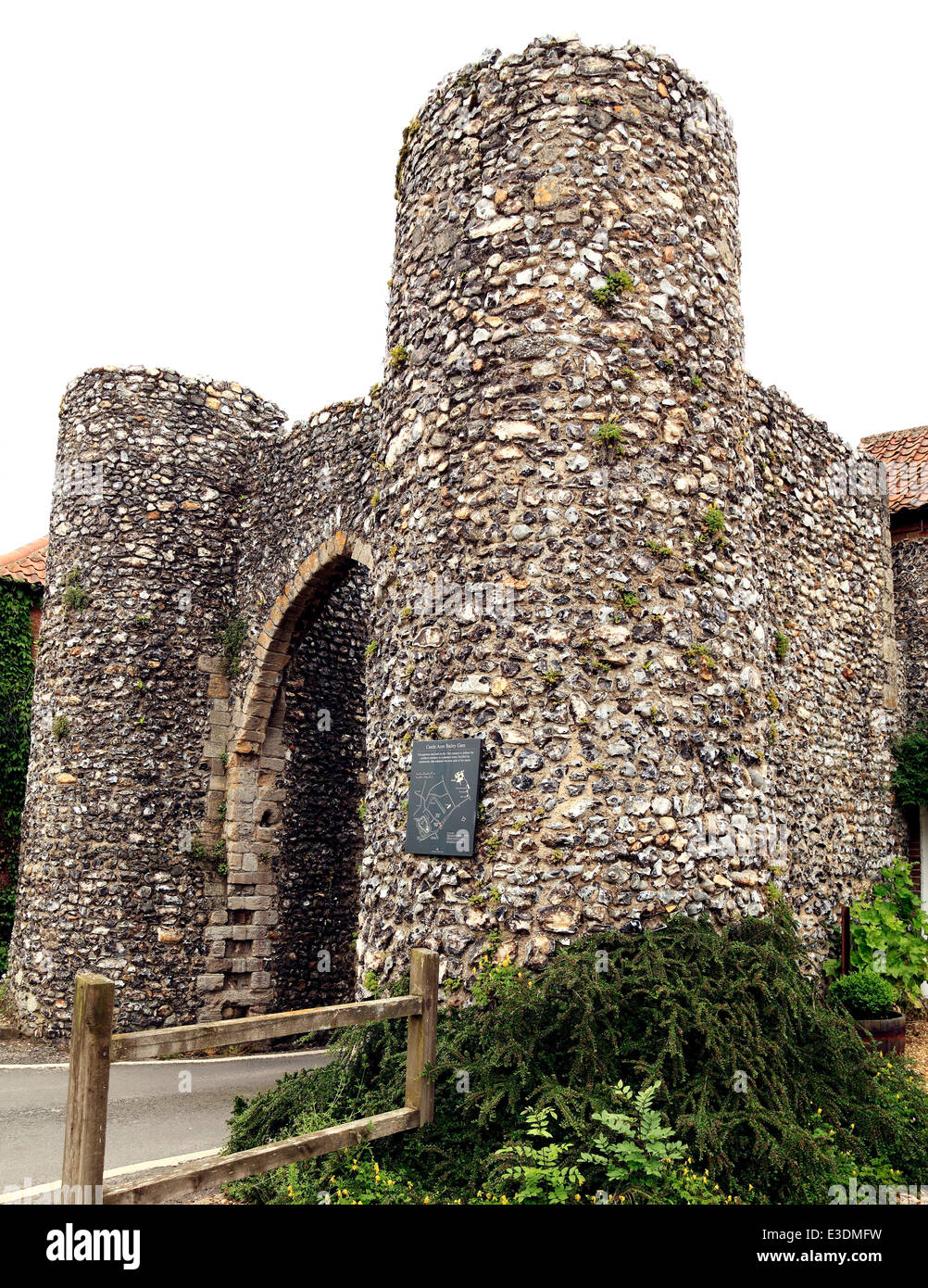 Town defences in Unknown TownlandTown defences · 247 yd
 Dublin Castlegates/railings/walls · 255 yd
 Battle of DublinMajor battlefield · 268 yd
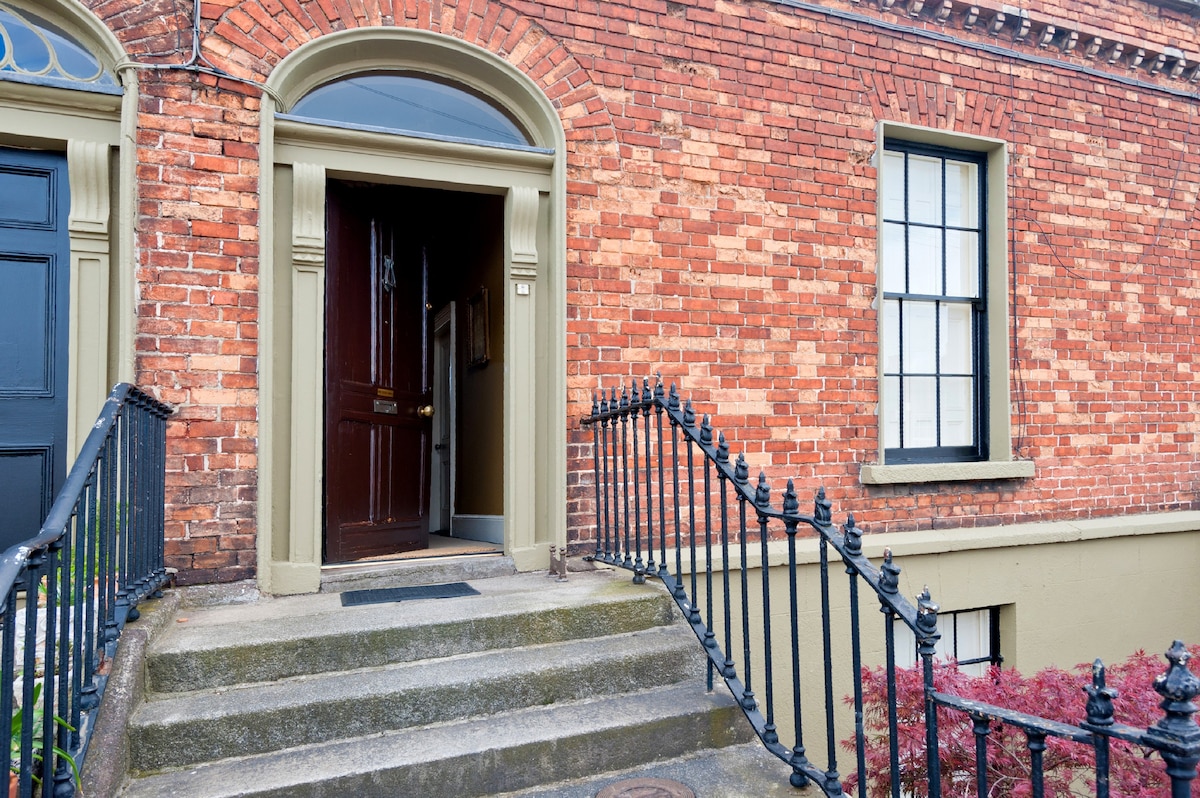 Habitation site in Unknown TownlandHabitation site · 269 yd
 John FieldMemorial · 340 yd
 Special Olympics MemorialMonument · 346 yd
Other information
Photo: National Inventory of Architectural Heritage · Website use allowed for educational or private purposes with source credit