
What is recorded here
Detached two-bay single-storey former railway crossing guards house, built c. 1893, having projecting gable-ended porch to the south gable end, single-bay shed/extension attached to the north gable end. Now in use as a private house/holiday home. Pitched natural slate roofs with red clay ridge tiles, some cast-iron/metal rainwater goods, and a central red brick chimneystack. Constructed of roughly squared and irregularly-coursed rock-faced masonry, now painted/whitewashed with pronounced rock-faced quoins to the corners. Square-headed window openings having two-over-two pane horned timber sliding sash windows and stone sills. Square-headed door opening to the east face of porch having painted timber panelled door. Set slightly back from road to the west/north-west of Donegal Town. Site of former railway line runs across site to the south.
This well-maintained small-scale former railway crossing guard’s house retains its early form and character. It is robustly built in rock-faced masonry, which is a characteristic feature of late Victorian railway engineering and architecture in Ireland. Its visual expression and integrity is enhanced by the presence of salient fabric such as the natural slate roof, cast-iron rainwater goods, and the timber sash windows. It was originally constructed by the Donegal Railway Company as part of the Donegal Town to Killybegs section of the Derry (Victoria Road) to Killybegs narrow gauge railway line, which opened in August 1893 and closed completely on January 1st 1960. Crossing guard’s houses along this line were probably built to a common design but few now remain intact, making this example at Drumstevlin a valuable survival of its type. This building may have later acted as a station associated with the railcar from 1944 until 1960. This former crossing guard’s house forms part of a group of structures associated with the former narrow gauge railway network in south Donegal, and is an important element of the built heritage and transport history of County Donegal.
From the Buildings of Ireland (National Inventory of Architectural Heritage) record 40909317
This does not grant access. Most recorded buildings are privately owned; view them only from public ground unless the owner allows entry.
Places near here
Photo credits
- National Inventory of Architectural Heritage
- Kenneth Allen, Geograph · CC BY-SA 2.0
- Ronnie Nijboer, Wikimedia Commons · CC0
- Andreas F. Borchert, Wikimedia Commons · CC BY-SA 4.0
- Becky McReynolds, Wikimedia Commons · CC BY-SA 4.0
- Gillfoto, Wikimedia Commons · CC BY-SA 4.0
- Willie Duffin, Geograph · CC BY-SA 2.0
- Thielfer, Wikimedia Commons · CC BY-SA 4.0
- Gerald England, Geograph · CC BY-SA 2.0
- Stephan van Helden, Wikimedia Commons · CC BY-SA 4.0
- David Dixon, Geograph · CC BY-SA 2.0
 Duncan's Bridge HouseHouse · 743 yd
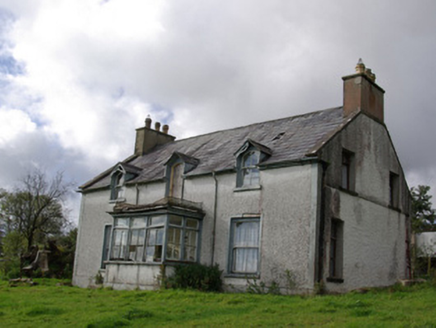 Drumark HouseHouse · 762 yd
 Killymard ChurchStone head · 1043 yd
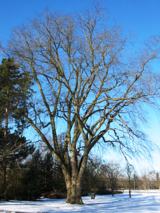 Wych Elm1688 yd
 Siege of DonegalSiege · 1.2 mi
 Donegal Friary GraveyardGraveyard · 1.2 mi
 Donegal CastleMuseum · 1.3 mi
 Donegal CastleVisitor information · 1.3 mi
 Four Masters MemorialMemorial · 1.3 mi
 DonegalHistoric town · 1.3 mi
 Horse-chestnut1.3 mi
 Ballyboyle IslandIslet · 1.5 mi
More historic places in County Donegal · All of County Donegal
What do you know about this place?