
What is recorded here
Dovecote on circular-plan, built c. 1700. Constructed of rubble limestone with cut stone coping over. Square-headed doorway to the north. Cut stone nesting boxes to interior. Located to the south of the remains of Portanure Castle (LF025-006----) and bawn, and to the west of Ballymahon.
This simple former dovecote\pigeon house is an interesting feature in the rural landscape to the southwest corner of County Longford. It is built to the south of the remains of a late-sixteenth or seventeenth century castle , known as Portanure Castle (LF025-006----), however, this structure may be associated with later house(s) that were built onto the east side of the bawn (Ordnance Survey first edition six-inch map 1838). Inside the dovecote there are six rows of rectangular nesting-boxes, which were built into the inner face of the wall to accommodate the nesting pigeons. Pigeon houses\dovecotes were used to provide a ready supply of eggs and meat, and were a relatively common feature in country demesnes in Ireland during the seventeenth and eighteenth centuries but appear to have gone out of fashion by the start of the nineteenth century. They are now rare survivals, making this an important example of its type. Portanure Castle appears to have been associated with the Fitzgerald family until it was seized as part of the Cromwellian Confiscations on the 1650s. It was possibly restored to the family by The Duke of Ormonde in 1664 (on list given by the Duke of Ormonde to select his nominees for restoration). The site was later associated with the Bray, Forth/fForth and Hawkes families.
This does not grant access. Most recorded buildings are privately owned; view them only from public ground unless the owner allows entry.
Places near here
 CastleBawn · 90 yd
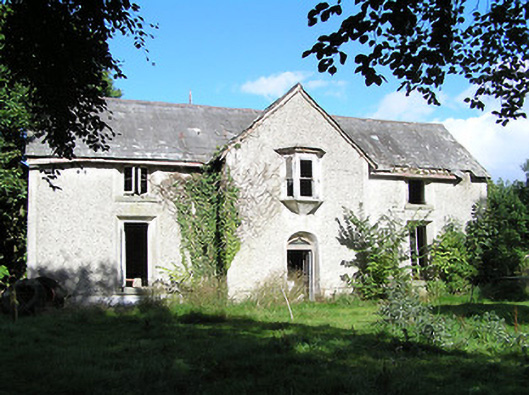 Ballyorney Househouse · 1083 yd
 Portanure Lodgehouse · 1509 yd
 Lady WellHoly well · 1.1 mi
 Pollagh BayBay · 1.2 mi
 Ecclesiastical enclosure in InchbofinEcclesiastical enclosure · 1.3 mi
 Bush IslandIslet · 1.4 mi
 InchbofinIslet · 1.5 mi
 Culnagore WoodForest · 1.6 mi
 Elfeet BayBay · 1.9 mi
 Elfeet CastleCastle, Anglo-Norman masonry castle · 2.1 mi
 RindoonWood · 2.6 mi
Other information
Photo: National Inventory of Architectural Heritage · Website use allowed for educational or private purposes with source credit