What is recorded here
One narrow sandstone slab from Durrow still bears a five-line cross so detailed it seems to move in shadow. The inscription “Or do aigidiu” remains a plain command: pray for Aigide. That much is carved, not invented. The slab may have marked Aigide, perhaps the father of Aed, mac Aicidi, lord of Teffia, who died in 954-55. If so, the cross did not decorate a church; it answered a loss.
National Monument No. 313. A sixth century monastery was founded at Durrow reputedly by Colum Cille [of the church] who died in 597 and whose feastday is celebrated on the 9th of June (Ó Riain 2011, 213-14). Early Christian cross-inscribed slab (H 1.1m; Wth 0.42m; T 0.19m) of possible 10th century date described by Crawford (1913, 263) as 'a narrow slab of sandstone 3ft. 7in.(1.09m) by 1ft. 4in. (0.41m), incised with one of the finest cross designs known. A ringed Latin cross of three lines, with square centre, and three rectangular extremities containing knots. The top is semicircular and contains a spiral pattern. The segments of the ring are ornamented with a running design of spirals. In one line down the sinister side is inscribed Or do aigidiu'. This can be translated as Pray for Aigide (Petrie and Stokes 1878, 56). The slab was described by Macalister (1949, 40-1) as `an unusually elaborate five-line cross, square expansions at the centre and the three lower terminals, a semi-circular expansion at the top, all decorated with interlacements and spiral patterns'. Listed as Durrow (b) in Crawfords catalogue of cross-slabs at Durrow. See attached image of cross-slab taken from Macalister 1949. According to Lionard (1961, 127) this slab was probably dedicated to Aegidium or Egidius who was probably the father of Aed, mac Aicidi, lord of Teffia who died in 954-55. This cross-slab has been moved into the C of I church (OF009-005013-) where it has been mounted on the S wall of the church. The church has been recently converted into a heritage centre by the OPW and now houses the Durrow high cross (OF009-005010-) and the cross-slabs (OF009-005015-/020-) that were located in the surrounding graveyard (OF009-005009-).
Compiled by: Caimin O'Brien
Date of upload: 23 April 2014
This cross-slab likely dates to the early medieval period, associated with the Christian monastic settlement at Durrow founded by St. Colum Cille in the 6th century. It may have served a liturgical or commemorative function, reflecting the spread of Christianity and the veneration of saints in early Irish monastic tradition.
The monument record does not grant public access. Check the route and ask the landowner before entering private land.
- What survives
- Recorded monument
Places near here
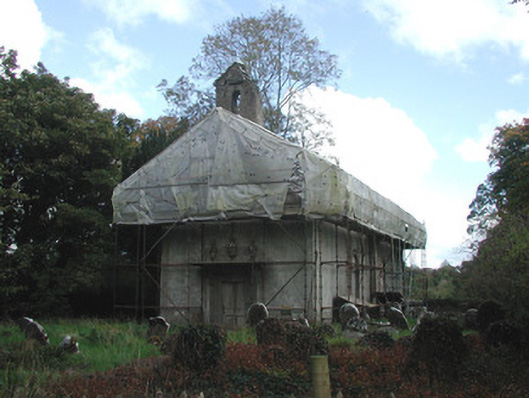 Durrow Abbeychurch/chapel · 3 yd
 St Columbas Ch (Disused)Church · 3 yd
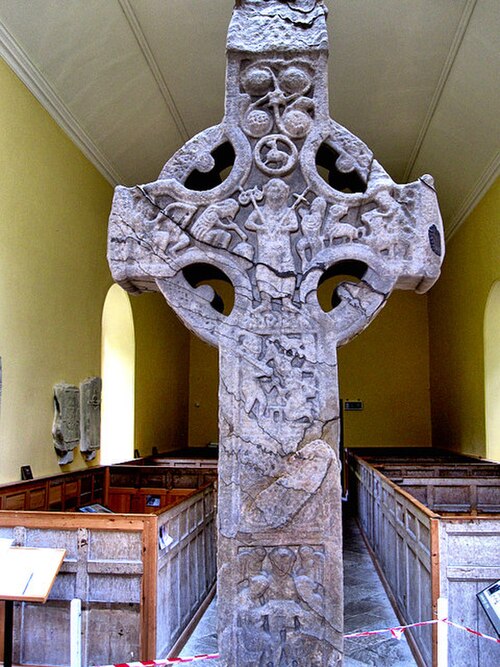 St. Columbkilles CrossCross, High cross · 4 yd
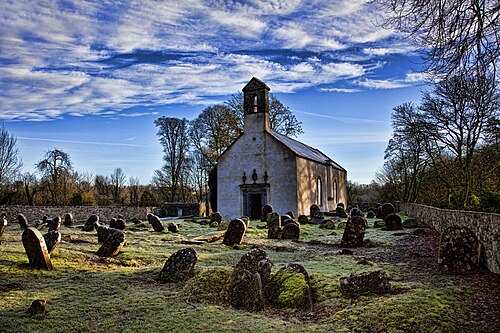 CrossCross, High cross · 45 yd
 St. Columba's WellSpring · 223 yd
 Durrow MoatCastle, motte · 245 yd
 High WoodWood · 863 yd
 Shancourt or MeeneglishCastle, unclassified · 1635 yd
 Durrow HillMountain / peak · 1.3 mi
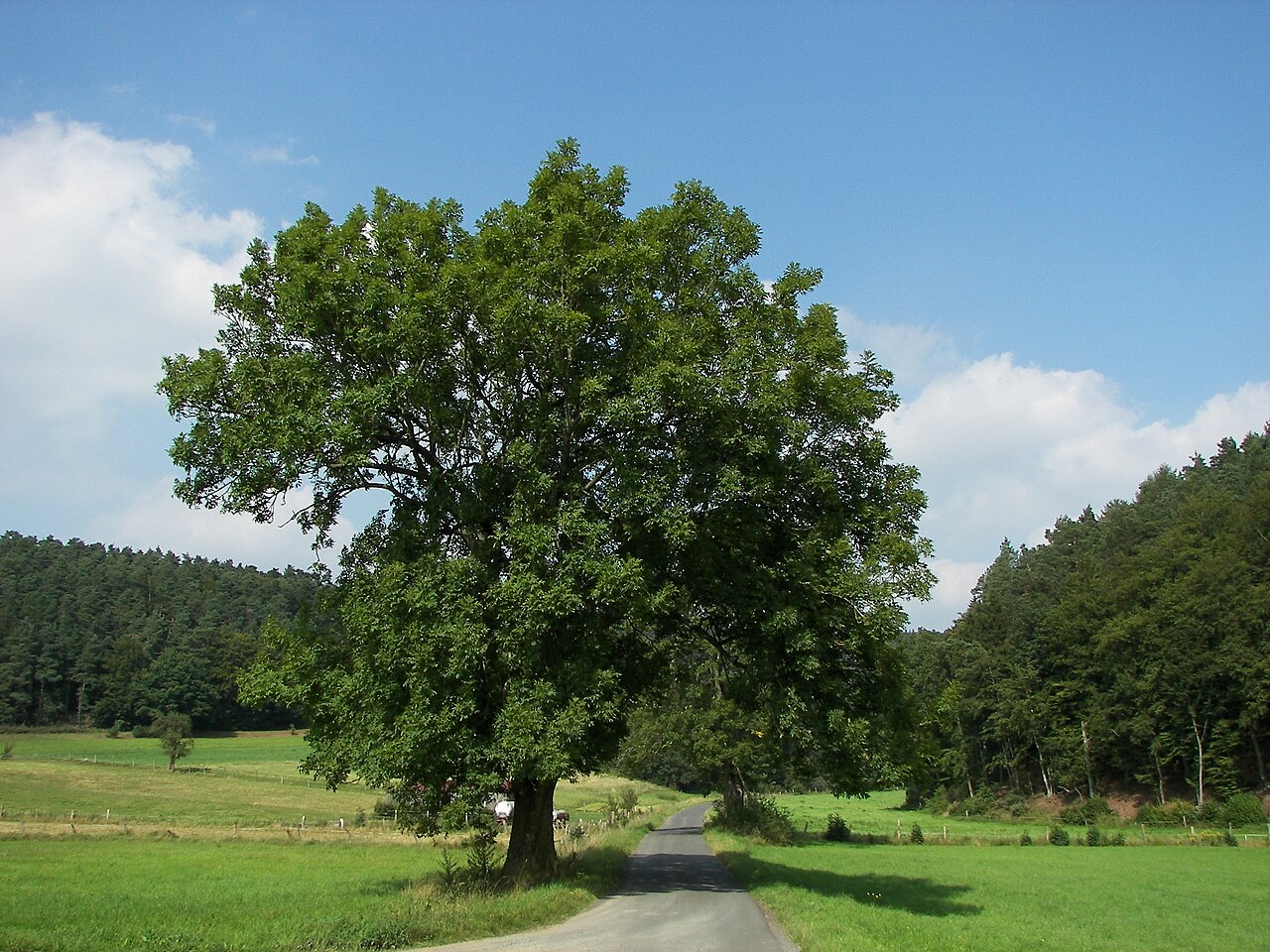 European ashEuropean ash · 1.4 mi
 Bonfire HillMountain / peak · 3.2 mi
 Grand Canal WayWalking route · 3.6 mi