What is recorded here
Breakthrough in Coosheen: An upright Chittagonian pillar stands in a children's burial ground, its east face carrying a tall cross-shaft above a Greek meander band. The west face holds four weathered squares and a fragmentary upper panel, likely added later. The stone is not a complete monument but a surviving fragment, preserving two layers of carving and a deadly sacred purpose.
The lower portion (H 0.7m; 0.3m x 0.18m) of an upright sandstone pillar, orientated N-S, stands in a children's burial ground (CO149-001----). The two narrow sides of the pillar are undecorated but both faces have been carved. In the centre of the E face is a tall narrow panel in raised relief, framed by a flat corner moulding in lower relief. Despite an apparent fracture in the upper right-hand corner of the panel 'it is likely to have been the shaft of a cross, probably ringed' (pers. comm. Peter Harbison). The bottom end of the moulding links with a simple Greek meander motif extending across the bottom of the stone and which is of the same high relief as the cross-shaft which rests upon it.
Into the W face of the pillar an upright panel has been sunk, its vertical sides framed by a slightly rounded moulding, with incised grooves. Slightly more than the lower two-thirds of this sunken panel is occupied by a 'boxed set' of four squares (each 0.11m x 0.11m), that though badly weathered have been interpreted as 'probably bearing angular fretwork patterns' (pers. comm. Peter Harbison). A horizontal moulding runs across the top of the squares, above which there is a further carved panel too fragmentary for its decoration to be made out. The lower end of the W face has a rough striated surface.
A 9th-century date has been suggested for the cross-shaft and the meander motif on the E face of the pillar and a later, possibly 12th-century date, for the decoration on the W face (pers. comm. Peter Harbison). (Ryan 1946, 192)
The above description is derived from 'The Archaeological Inventory of County Cork. Volume 5' (Dublin: Stationery Office, 2009).
Date of upload: 22 December 2009
Likely dating to the early Christian period (5th–10th century AD), the cross inscription suggests a Christian funerary or commemorative function, possibly associated with the nearby children's burial ground. Such stones often marked graves or served as symbols of faith in early Irish settlements.
The monument record does not grant public access. Check the route and ask the landowner before entering private land.
- What survives
- Recorded monument
Places near here
 Childrens Burial Gd (Disused)Burial ground · 9 yd
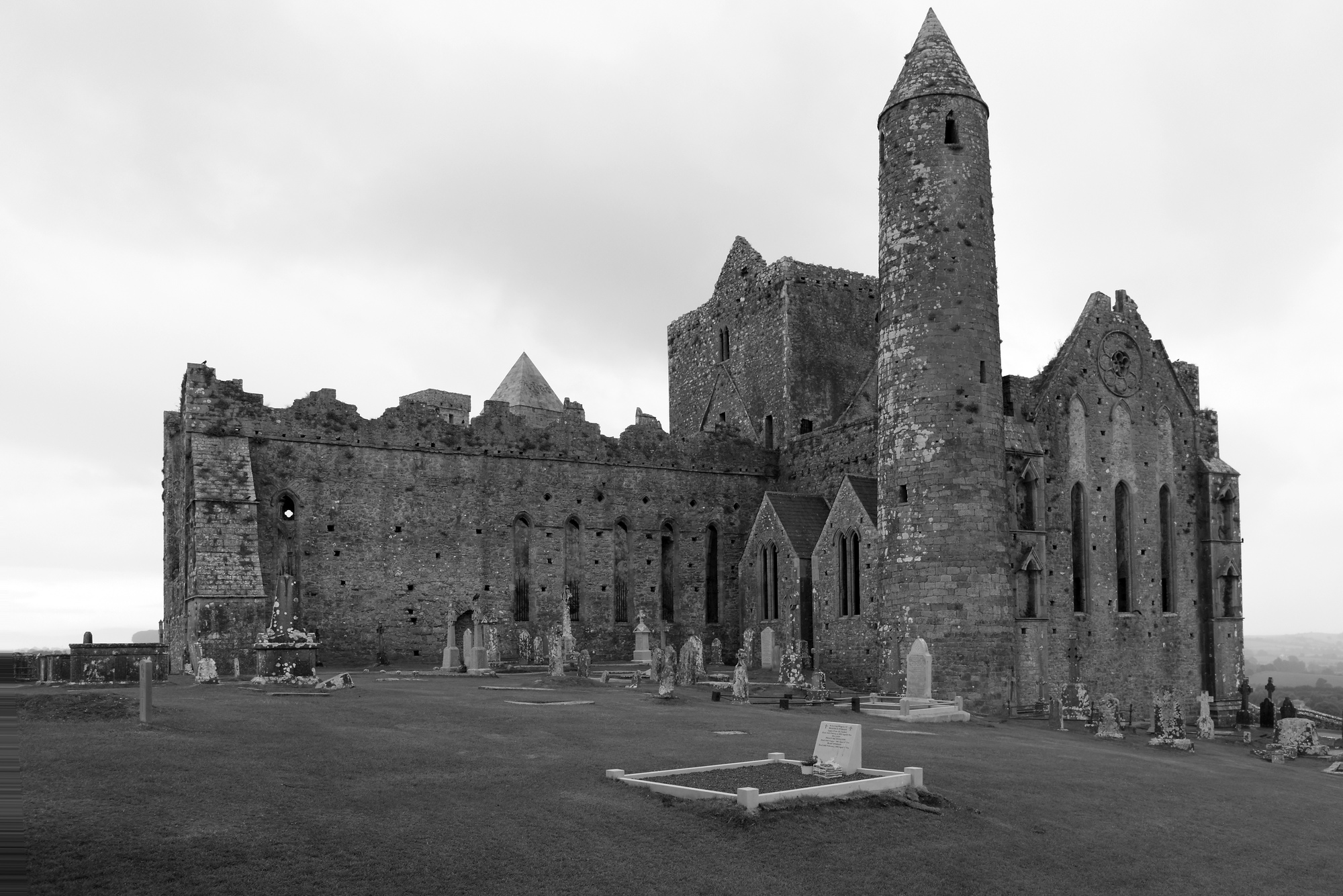 Mass-rock in CoosheenMass-rock · 56 yd
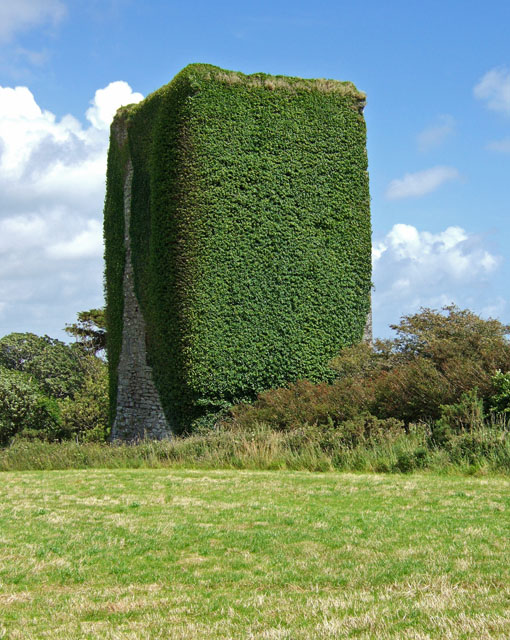 Bawn in ArdintenantBawn · 402 yd
 Mountgabriel MillsMine, barytes · 1169 yd
 Schull HarbourBay · 1297 yd
 Coosheen PointHeadland · 1305 yd
 Cadogan's StrandHeritage attraction · 1598 yd
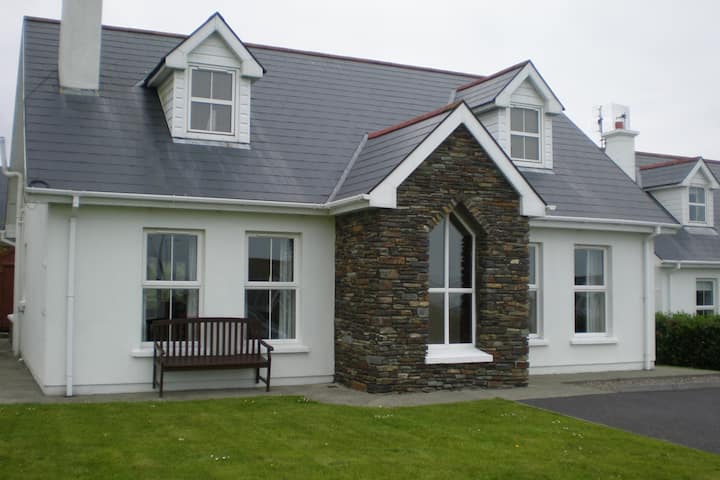 Schull "An Taisce"Visitor information · 1637 yd
 Castle (in Ruins)Castle, tower house · 1.1 mi
 McCarthy's Garagehouse · 1.1 mi
 Sailor's HillViewpoint · 1.4 mi
 Carthy's Island NorthIslet · 1.9 mi