DDiscover AloneMapAbout

Cremation pit in Lehinch

Cremation pit
Computer-made picture that does not show Cremation pit in LehinchNot a photo of this monument
Computer-made picture. It does not show this monument. · Report the wrong picture

The monument record does not grant public access. Check the route and ask the landowner before entering private land.

What do you know about this place?Tap to add a comment or ask a question

What you write will be public.

What is recorded here

No surface trace visible of any archaeological feature in the area excavated in 1978 by the National Museum. The museums excavation revealed six burials (OF008-012----) one of which was a cremation in a pit while the other five were extended unburnt burials in pits with head to the NW. A small pennanular ditch…

Read the whole record
No surface trace visible of any archaeological feature in the area excavated in 1978 by the National Museum. The museums excavation revealed six burials (OF008-012----) one of which was a cremation in a pit while the other five were extended unburnt burials in pits with head to the NW. A small pennanular ditch (OF008-012001-) was discovered to the S of the burials (Waddell 1990, 129). The National Museum of Ireland recorded that 'in March 1978 three human skeletons and a bowl were discovered during gravel-digging operations at Lehinch, near Clara, Co. Offaly. The site was a low natural hillock composed almost entirely of sand and gravel, and an oval pit measuring 8m by 7m by 3m deep had been dug into the centre of it for the purposes of obtaining sand. According to the landowner, Mr David Connor, the human remains—one apparently an extended inhumation—and bowl sherds were found towards the eastern side of the hillock. The site was first reported by Brother Angelo Holmes, a member of the Franciscan community at Clara, to Mr Etienne Rynne, who informed the NMI. A three-week excavation was undertaken by Raghnall Ó Floinn in July 1978, when six burials were excavated (Cahill and Sikora Vol. 2, 139-66, for the report on these burials, graves 1-5). A second season in 1979 comprised the excavation of a ring-ditch (OF008-012001-), which had been partially exposed the previous summer. A single extended skeleton had been discovered also in the same townland by Mr Connor in 1977. This was investigated by Mr Michael Ryan of the NMI. This report describes the early Bronze Age burial, grave 6, and the bowl found in 1978 (grave 7). This was probably associated with one of the three skeletons also found at that time. Two of these individuals are likely to represent parts of the skeletons uncovered in graves l and 2. No evidence survived of the grave associated with the bowl but it almost certainly, represents a second early Bronze Age burial which is referred to as grave 7 in this report. This monument was located at the edge of the gravel pit, just 0.25m west of grave 3. A large, natural boulder, 0.35m by 0.2m by 0.25m, that formed the southern edge of the gravel pit became dislodged, thus exposing this burial. It consisted of a shallow, rectangular pit measuring 0.35m by 0.25m by 0.15m deep, dug into the natural gravel. It was bordered on three sides by stones (approx. 15cm by 10cm) and lay at a depth of 0.1-0.2m below the base of the sod, which had been mechanically removed at this point. The floor of the pit was lined with clay. There was no evidence for a stone covering over the grave. The grave fill consisted of cremated bone mixed with a fill of brown clay and some gravel. The remains represented those of an adult (1979:30). Set at an angle in the pit, with its lower point at the centre of the pit, was a shale-like stone covered with fossil shell impressions—this may have been deliberately included with the cremated remains but it did not penetrate more than 5cm into the cremation. The cremated remains from this grave represent one efficiently cremated individual. Then does not seem to have been a deliberate attempt to crush the cremation after removal from the pyre but there was not a great quantity of very large fragments either, suggesting that the remains were not treated as carefully as they could have been. Most skeletal elements were recovered, although there was a slightly higher proportion of skull and a lower proportion of lower limbs than would be expected in a normal cremation. The remains represent one adult male individual. A sample of the human remains from grave 6 was submitted for AMS dating and yielded a date of 3360±45 BP, which calibrates to 1740-1520 BC at 95.4% probability. Brindley (2007, 174-5) places this vessel in stage -3 of the development of bowl typology. This phase is dated to 1980-1930/20 BC. ' (Cahill and Sikora 2011, vol. 1, 386-93). See attached location map taken from Cahill and Sikora 2011.

From the National Monuments Service (Archaeological Survey of Ireland) record OF008-012003

Places near here

Photo credits
  • National Inventory of Architectural Heritage
  • Maker not stated on source page, commons.wikimedia.org
  • Maker not stated on source page, www.gettyimages.in
  • Maker not stated on source page, www.pinterest.com
  • Maker not stated on source page, za.pinterest.com
  • Maker not stated on source page, www.flickr.com
post box409 yd

Explorer Tom The Post Box in Lehinch witnessed a love story that went horribly wrong right next to it in the old days. It was made…

The MonasteryMonastery · 427 yd

Explorer Tom Lehinch Monastery is the most domestic religious institution in Ireland, which means it probably has a kettle on.…

Mapped cemeteryCemetery · 439 yd

Explorer Tom Mapped cemetery in County Offaly would win a county fair by simply standing there and being mysterious. No flashy…

Clara Monastery CemeteryCemetery · 537 yd

Explorer Tom Clara Monastery Cemetery in County Offaly had a feud with the next village over whose turnips were bigger, which is now…

Lismoyny BridgeBridge · 1572 yd

Explorer Tom Lismoyny Bridge in Ballynagall is playing two-step with history. Two lads bet a pint that they could build it twice…

Kilcoursey CastleCastle, tower house · 1664 yd

Explorer Tom Kilcoursey Castle in Kilcoursey is basically just a very opinionated pile of stones on a hill. It claims it took forty…
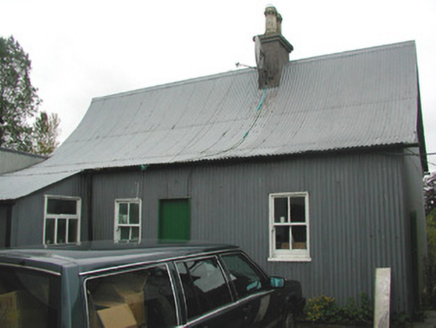
Beechmount HouseSchool · 1678 yd

Explorer Tom Beechmount House built a tiny iron schoolroom just for the kids, which is basically a giant ego trip for a big house.…

Saint Bridget's Abbey (ruins)Ruins · 1.0 mi

Explorer Tom Saint Bridget's Abbey in County Offaly would complain to the council about the number of pigeons nesting in its roof…

Saint Brigid's ConventConvent/nunnery · 1.1 mi

Explorer Tom Saint Brigid's Convent in Kilcoursey has been having a staring contest with that one big oak tree for decades. It wins…

gates/railings/walls1.1 mi

Explorer Tom Gates in Ballard would say in a job interview that they have excellent gate-keeping skills and are very good at…
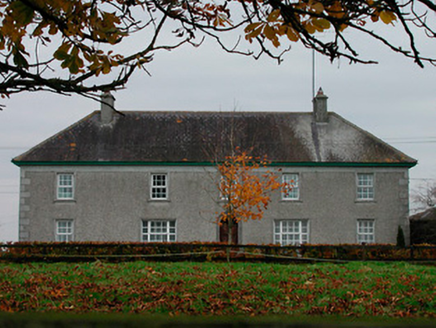
Ballard HouseHouse · 1.1 mi

Explorer Tom Ballard House is stretched thin like taffy, with extensions on both sides making it look like it’s trying to reach its…

CastleCastle, unclassified · 1.5 mi

Explorer Tom Castle in Erry has local sheep who think it’s just another hill to nap on near Maryborough. It used to be a rectangular…

More archaeology and monuments in County Offaly · All of County Offaly

Add to this placeAdd a picture Add a detailed tip Add a story

Explore the map1,095,414 places to discover

Next place · or swipepost box