Places near here
Photo credits
- Michael O'Sheil, Wikimedia Commons · CC BY-SA 4.0
- National Inventory of Architectural Heritage
- Derek Harper, Geograph · CC BY-SA 2.0
- Jonathan Thacker, Geograph · CC BY-SA 2.0
- HarryLande, Wikimedia Commons · CC BY-SA 4.0
- The Speckled Bird, Wikimedia Commons · CC BY-SA 4.0
- John M, Wikimedia Commons · CC BY-SA 2.0
- P L Chadwick, Wikimedia Commons · CC BY-SA 2.0
 National MonumentMemorial · 68 yd
Explorer Tom National Monument in County Cork is having a bit of a go at the local council for letting the moss get this thick on its shoulders. It says it’s been standing there since the good old days, but nobody even remembers what it’s actually for anymore. Have a wander and a wonder.
 post box77 yd
Explorer Tom Post box in Cork City on Grand Parade is an Edwardian pillar from 1905 that’s still doing its job while everyone else forgets how mail works. Bring a flask of something warm and a story to swap with the letters inside.
 Bank of ScotlandHouse · 93 yd
Explorer Tom Bank of Scotland in Cork City is friends with a famous actor who only visits to hide his car. It’s an imposing building on the riverside, so it’s got status. Sit on a bench and pretend you’re waiting for a star.
 Fire Station109 yd
Explorer Tom Fire Station on Sullivan's Quay is a substantial late nineteenth-century former fire house that closes the axis with Grand Parade. It’s prominent enough to command attention without trying too hard. Saint Patrick would have loved the fire extinguishers here.
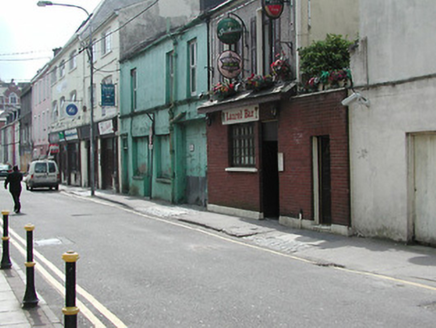 cobbles/flags/paving/kerbing129 yd
Explorer Tom Cobbles in Cork City have been rolling around since the early 1800s and they’re tired of being paved over by concrete nonsense. They’d tell their younger selves to hold firm because the limestone cut here is actually quite impressive, even if your ankles aren’t. Step carefully now, or you’ll be explaining to the granite why you slipped.
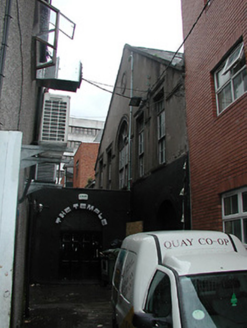 church/chapel134 yd
Explorer Tom Church or chapel in Cork City is playing dress-up on Blackmore Lane. It’s got a Georgian flair but keeps getting rebuilt like it can’t make up its mind. If you see a ghost complaining about the terrace, tell them Tom said hi.
 office137 yd
Explorer Tom Office in Cork City is on Oliver Plunkett Street and has this amazing stained-glass shopfront from around 1900. It was once a hotel where coaches to Dublin used to wait in the courtyard. Now it's furniture, but it still smells of old money.
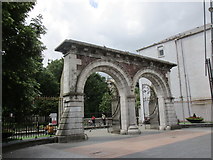 Bishop Lucey Park at Grand ParadeVisitor information · 204 yd
Explorer Tom Bishop Lucey Park at Grand Parade hides a bit of old market history that got moved here like an unwanted piece of furniture. The first owner probably fled in a hurry, leaving behind some very confused architectural decisions. Go on, count the windows and get it wrong like I did.
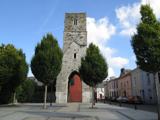 Red Abbey (Site of)Religious house, Augustinian friars · 253 yd
Explorer Tom Red Abbey in Cork City has only its crossing tower left standing on Red Abbey Street. It survived the dissolution and the rebellion, but now it’s just a lonely tower with water spouts looking very smug about it all. Snap one for me if you see it!
 Elizabeth FortHeritage attraction · 375 yd
Explorer Tom Elizabeth Fort was built to defend Cork, and Cork people promptly knocked the first version down. Sir George Carew began the timber-and-earth work in 1601 on high ground beyond the old city walls. Citizens demolished it in 1603 amid political fears, and the fort had to be rebuilt. Since then it has taken turns as barracks, prison and police station; I could suggest it apply for a quieter job next. Its star-shaped walls became a regular public attraction in 2014, giving you a view over streets that eventually grew around the once-outside fort. There had even been an older church on the hill before the defensive works. Check today's visiting hours and any restrictions before climbing the walls, and keep to the permitted walkways. From up there, ask whether you would have trusted this fort as a neighbour in 1603.
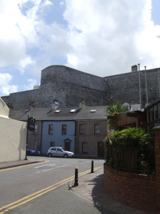 Elizabeth Fort (Disused) (1949-50)Bastioned fort · 390 yd
Explorer Tom Elizabeth Fort (Disused) (1949-50) is a stone beast in Cork City that survived Cromwell and Queen Elizabeth’s fancy plans. The citizens actually demolished it once because they were paranoid it’d be used against them, which is very on-brand for history. Check out those limestone blocks!
 Lavitts QuayMemorial · 550 yd
Explorer Tom Lavitts Quay is a memorial where, legend has it, a goat once ruled the harbour by eating all the navigation charts before the tide came in. Now it’s just rocks and stories, but if you look closely, you can still see the hoofprints of that terrible beast. Bring your worst joke, the place has heard worse.
More memorials and graveyards in County Cork · All of County Cork

What do you know about this place?Tap to add a comment or ask a question