
What is recorded here
Freestanding four-bay single-storey mortuary chapel, designed 1867, on a half-octagonal apse-ended rectangular plan; cone spire-topped single-bay three-stage turret (north-west) on a circular plan. Disused, 2003. Half-octagonal "fish scale" banded pitched slate roof, roll moulded ridge tiles with Cross finial to apex (east), margined tooled cut-limestone crow stepped coping to gable (west), and no rainwater goods. Part repointed coursed rubble stone walls with margined tooled cut-limestone flush quoins to corners. Round-headed window openings with margined tooled cut-limestone block-and-start surrounds having chamfered reveals framing concrete block infill. Square-headed door opening in round-headed recess (west) with two cut-granite steps, cut-limestone block-and-start surround having engaged colonnette-detailed reveals with hood moulding on inscribed archivolt framing diagonal timber boarded double doors. Round-headed window opening (gable) with margined tooled cut-limestone block-and-start surround having chamfered reveals. Set in shared grounds.
A mortuary chapel erected to designs by Abraham Denny (1820-92) of Dublin (Waterford Standard 13th March 1867, 2; 25th May 1867, 2) representing an important component of the mid nineteenth-century ecclesiastical heritage of Waterford with the architectural value of the composition confirmed by such attributes as the compact plan form; the construction in a ochre- and umber-mottled fieldstone with silver-grey limestone dressings producing a mild polychromatic palette; the pillared doorcase inscribed "Thanks Be To God Which Giveth Us The Victory"; the slender profile of the openings underpinning a restrained Romanesque theme; and the miniature round tower-like turret rising above the high banded roof as a picturesque eye-catcher in the landscape. NOTE: Erected 'for the memory of [the] late esteemed and beloved' Reverend Richard Hopkins Ryland (1788-1866) with Bishop Robert Daly (1783-1872) donating £50 towards the cost of construction (Egan 1895, 269).
This does not grant access. Most recorded buildings are privately owned; view them only from public ground unless the owner allows entry.
Places near here
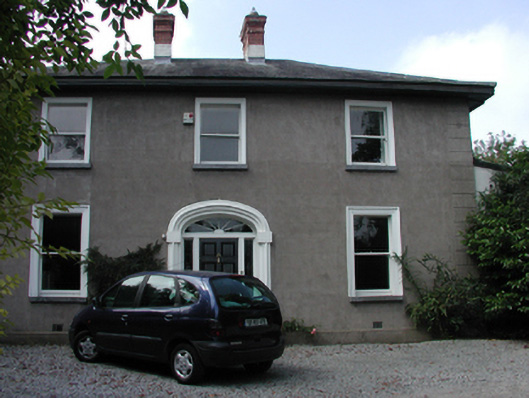 The Limeshouse · 145 yd
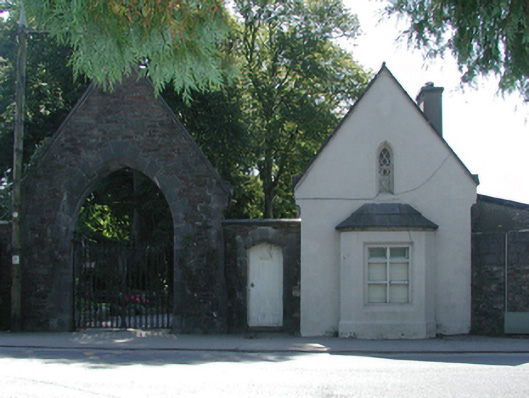 gate lodgegate lodge · 146 yd
 French TowerHeritage attraction · 1377 yd
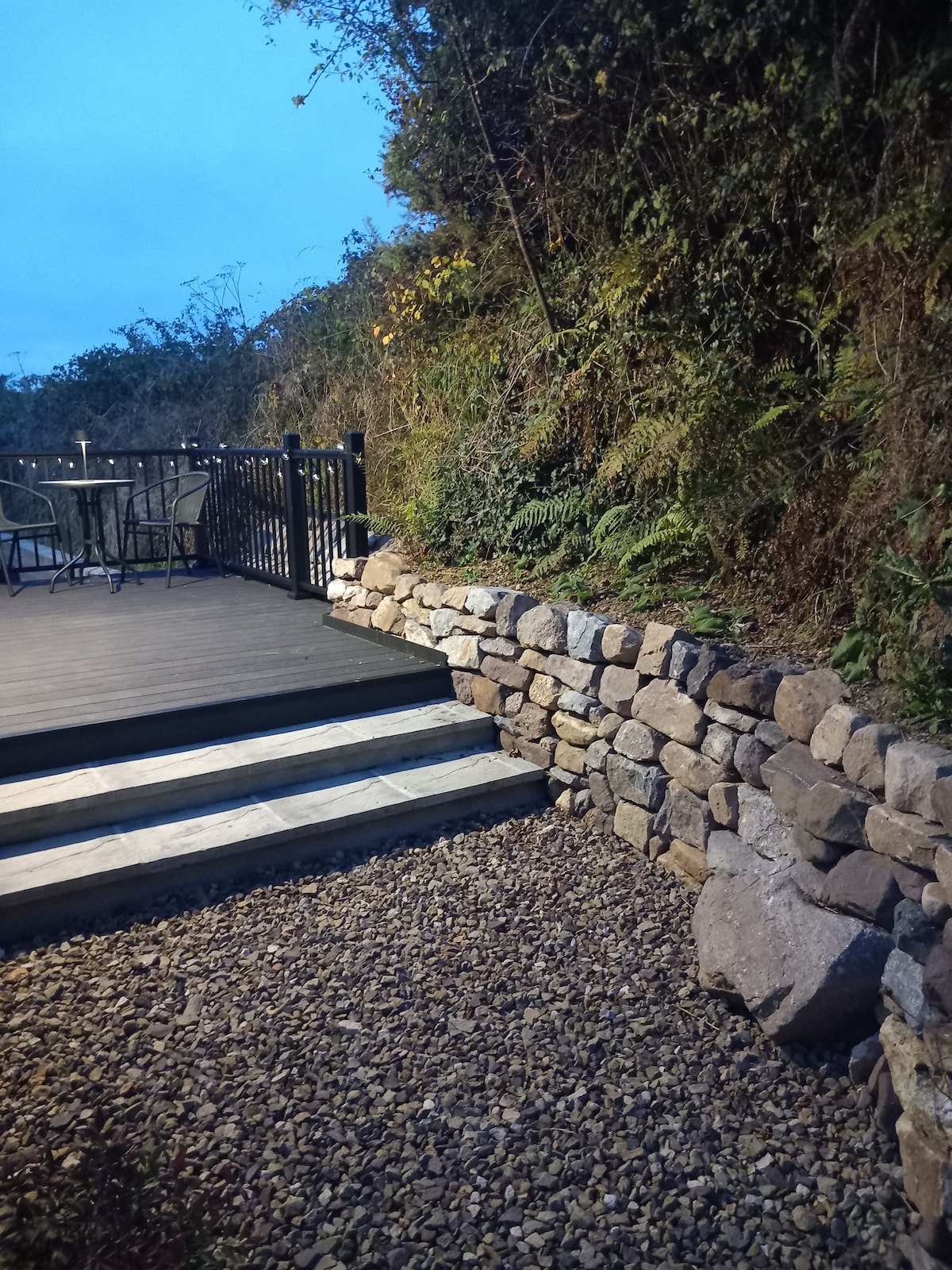 Hearth in KilcohanHearth · 1473 yd
 Fulacht fia in CoveFulacht fia · 1520 yd
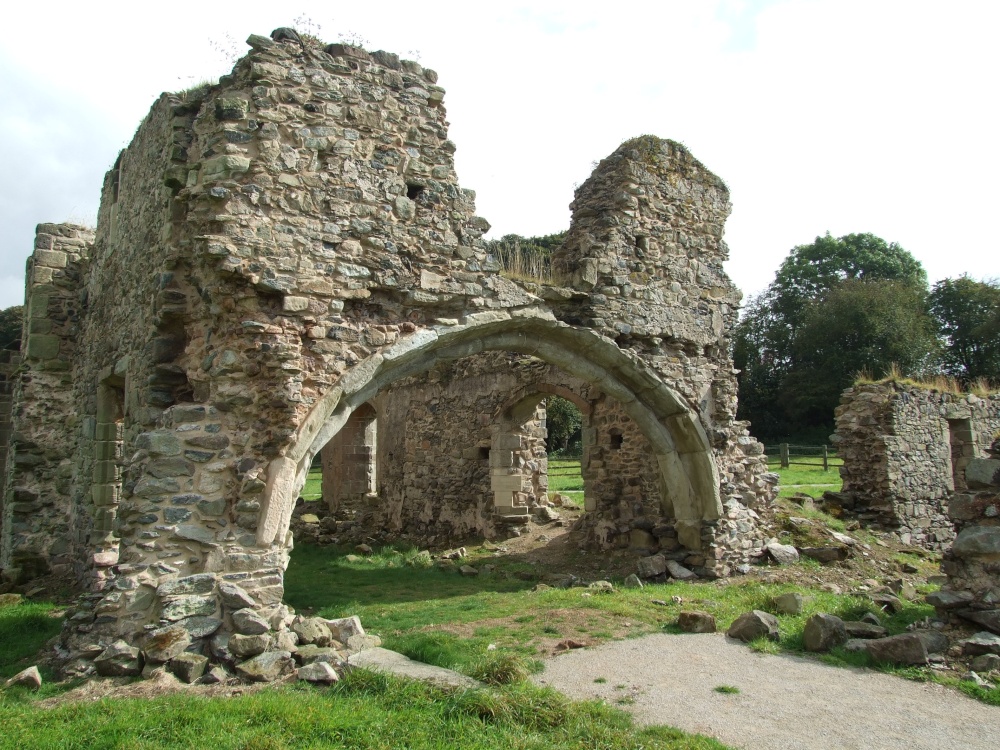 Native Woodland Trust:Grace Dieu ReserveWood · 3.2 mi
 Native Irish Tree TrailWood · 3.2 mi
 Granny CastleCastle, tower house · 3.3 mi
 Sugar Loaf RockMountain / peak · 3.8 mi
 Corluddy Castle (in Ruins)Castle, tower house · 4.5 mi
 Mount Congreve GardensHeritage attraction · 4.6 mi
 Ballyscanlon HillMountain / peak · 7.4 mi
Other information
Photo: National Inventory of Architectural Heritage · Website use allowed for educational or private purposes with source credit