
What is recorded here
Under King John's Castle lies a forgotten ringwork built around 1175-6 by an Anglo-Norman garrison. Its stone-revetted bank and broad ditch predate the later castle, revealing that military ambition reached Limerick before the familiar stone walls rose. The 1642 siege cut countermines through those ancient defences, mixing centuries of conflict in one narrow strip of earth.
Ringwork identified during 1990-1 excavations of King John's Castle (LI005-017014-), the discovery of which was described by Wiggins (2001, 30-3) as following; 'In February 1990 two terraces of corporation houses in the castle were demolished, allowing the development of the castle as a tourist attraction to get under way. Archaeological involvement was commenced by Celie O'Rahilly of Limerick Corporation, who monitored preliminary groundwork activity by the building contractor Brian O'Connell Ltd, which quickly evolved into full-scale excavation under the direction of the writer, until work was completed in September 1991. The purpose of the investigation was to uncover the surviving remains of the eastern curtain wall of the castle, together with the northern flank and eastern face of the bastion, which had been demolished around 1800. The excavated area measured approximately 47.5m north, south, extending from the standing north-eastern tower of the castle to the standing southern wall of the bastion. The width of the excavated area east, west varied between 17m and 30.5m, covering a wide area on both sides of the eastern curtain wall, including the whole interior of the bastion, as well as an area outside the bastion to the east.
In the course of the excavation a good many structural remains other than those of the eastern curtain wall and the bastion emerged. Several features originating in the twelfth century were found, pre-dating the construction of the castle. These included part of the large-scale ringwork enclosure incorporating a stone-revetted bank and broad external ditch, originally constructed by the Anglo-Norman garrison around 1175, 6. These early defences were aligned east, west, at right angles to the surviving foundations of the eastern curtain wall. The remains of both the ringwork bank behind the retaining wall and the ditch in front of it were disturbed by the digging of countermines during the siege of 1642'.
Compiled by: Caimin O'Brien
Date of upload: 26 November 2019
The ringwork in Limerick City was likely constructed in the late 12th or early 13th century, possibly by Anglo-Norman forces expanding their control in the region. It is remembered as an early defensive structure associated with the establishment of English authority in Limerick, later incorporated into or near the site of King John's Castle.
The monument record does not grant public access. Check the route and ask the landowner before entering private land.
- What survives
- Recorded monument
Places near here
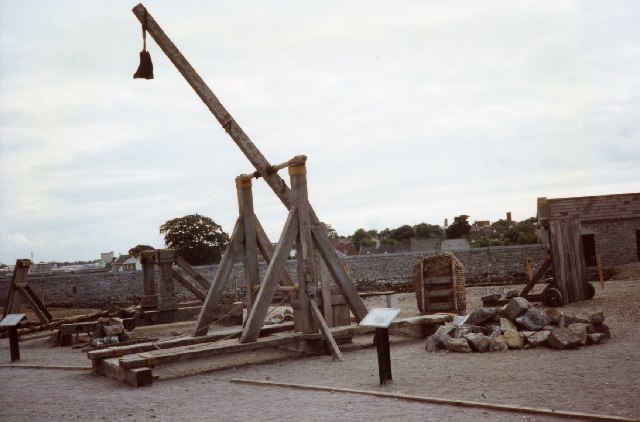 Castle BarracksCastle, Anglo-Norman masonry castle · 34 yd
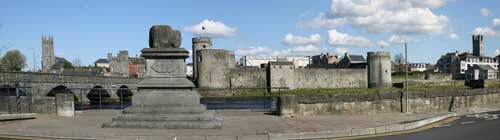 King John's CastleHeritage attraction · 35 yd
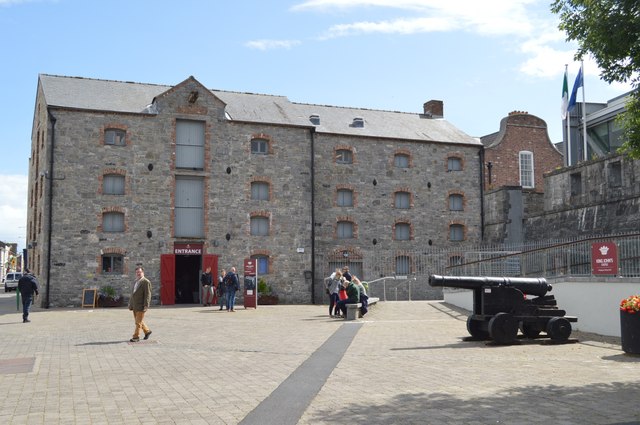 King John's Visitor's CentreMuseum · 39 yd
 Michael HoganMemorial · 45 yd
 Graveyard in Limerick CityGraveyard · 58 yd
 Bishop's Palacebishop's palace · 75 yd
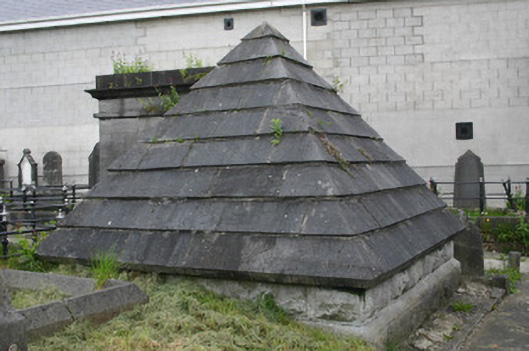 Saint Munchin's Churchmausoleum · 89 yd
 Town WallTown defences · 130 yd
 Heritage FountainMonument · 184 yd
 Curragower FallsWaterfall · 223 yd
 CastleCastle, unclassified · 357 yd
 King's IslandIsland · 376 yd
Other information
Photo: Colin Park · CC BY-SA 2.0