Local tradition asserts that Croom Castle or a fortification at Croom was first built by the O’Donovan’s before passing into the hands of the Fitzgerald family in the 13th century. However John O’Donovan was doubtful about this O’Donovan claim and in the appendix of the Annals of the Four Masters, O’Donovan recorded his doubts when he stated that the O’Donovan’s of Castle Donovan and Bawnlahan were descended from Crom O’Donovan who resided at Croom Castle until he ‘was driven thence by Maurice Fitzgerald, second Baron of Offaly who was Lord Justice of Ireland in the year 1299; but this has not been proved’ (O’Donovan 1856 vi, 2437). A branch of the family descended from Crom O’Donovan who was killed in 1254, claim that this family were originally ‘in possession of the great Castle of Crom or Croom, on the River Maigue, in the present county of Limerick, and this was the tradition in the country in 1686, when the manuscript called Carbriae Notitia was written’ (O’Donovan 1856 vol. 6, 2437). It is possible that there was a pre-Norman fortification at Croom which was the residence of the O’Donovan clan. In 1151 the Annals of the Four Masters recorded that a ‘great predatory excursion was made by Ruaidhri, son of Toirdhealbhach Ua Conchobhair, into Thomond; and he carried away many cows, and burned Cromadh [Croom]’ (O’Donovan 1856, 1101). Whatever about the origins of the castle we can be certain that during the late 12th or early 13th century this castle was in the possession of the FitzGerald family who became the Earls of Kildare and remained in their hands until the early 18th century. Croom Castle appears to have been built by Gerald FitzMaurice in the late 12th or early 13th century, his death is recorded in the year 1203 (Cal. doc. Ire., 30) suggesting that this castle may have been built before this date. The first reference to Croom Castle dates from 1215 when ‘Maurice FitzGerald made a fine with the King of 60 marks, to have the lands of Gerald his father in Ireland with the castles of Crumech [Croom] and Dungarvan in Oglassin, which belong to Maurice by right of inheritance. Mandate to the justiciary of Ireland, that having received security for the 60 marks he cause seisin to be given to Maurice’ (Cal. doc. Ire., 91, 94). The lands of Croom came into the possession of the FitzGerald family as early as 1197 when the Anglo-Normans acquired lands in County Limerick. Around this time Thomas FitzGerald son of Maurice FitzGerald, founder of the House of Desmond was granted the cantred of Shanid which resulted in the construction of Shanid Castle (
LI019-081001-) (Orpen 1911-20, ii, 165). The type of castle constructed at Shanid was a shell keep which was built encircling the summit of an earlier motte castle. According to Orpen it was probably around this time that the lands of Croom were granted to Gerald brother of Thomas Fitzgerald who had been granted the cantred of Shanid (ibid., 165). Between the years c. 1200 – 1220 Anglo-Norman castles were constructed in Limerick City, Kilmallock, Caherconlish, Ardpatrick and elsewhere (Westropp 1907, 31). Croom Castle was probably constructed during this period by the FitzGerald’s in order to secure their newly acquired lands. The shell keep castle may have been built on the site of a pre-Norman fortification which was associated with the O’Donovan family. This pre-Norman fortification may have been built beside the fording point on the River Maigue. According to Westropp (1906-07, 65) the castle at Croom had been built at the ‘old fort of Cromadh or Croom, on the river Maigue by about 1216, and was given to Maurice FitzGerald’. By the late 13th century the manor of Croom was in the possession of Juliana de Cogan [nee FitzGerald] (Mac Niocaill 1964, 31-2) who was the granddaughter of Maurice FitzGerald 2nd Lord of Offaly, and great granddaughter of Gerald FitzMaurice, 1st Lord of Offaly and founder of the FitzGerald dynasty and later the Earls of Kildare. Juliana FitzGerald was the daughter of Gerald who was married to a daughter of Hamo de Valognes of nearby Askeaton Castle (Orpen 1911-20, 165). In 1329 the lands of Kildare, Maynooth, Croom, Adare, and Estgrene were granted by Edward III to Sir John Darcy, Lord Justiciar and stepfather to Maurice FitzGerald during his minority (Wyndham-Quin & Wyndham-Quin 1865, 139). In 1357 Maurice FitzGerald 4th Earl of Kildare was appointed Lord Justiciar of Ireland and was ordered to strengthen his castles on pain of forfeiture. During the middle of the 16th century the Earl of Desmond took possession of this castle for a short period of time. In 1534 Silken Thomas FitzGerald rebelled against Henry VIII and during this rebellion, Sir John the 13th Earl of Desmond took possession of Croom and placed a garrison in the castle (McCormack 1997, 510). In 1541, his son James, 14th Earl of Desmond wrote a submission to King Henry VIII requesting ‘the preferment to have the leasse of Crom [Croom] and Adar [Adare], and other the late Erle of Kyldares landes, in the countie of Lymerike’ (Anon. 1834, 286). This land grant was confirmed in 1546 when Henry VIII granted ‘James earl of Desmond of the manors and dominions of Crome [Croom] and Adare, co. Limerick, for life, by fealty at 4d. rent’ (Gairdner & Brodie 1910, 476). By the late 16th century the castle was back in the possession of the Earls of Kildare. In 1600 there is a reference to the strategic location of the castle and to the presence of thatched houses standing inside the bawn of Croom Castle. In this year Sir George Carew wrote to the Privy Council that when he came to ‘the castle of Cromme [Croom], which was held by Piers Lacy, being now part of the Countess of Kildare's jointure, upon sight of the enemy, the ward, which Lacy had left in it, quitted the place, where some spoil fell unto the soldiers, and by mischance the house was burnt; but the loss not great, being old thatched houses, and the walls thereof standing good and firm, as they did before. This place gave great annoyance unto the subject being seated at the entry into Connello, which is the chief receptacle for all the rebels’ (Cal. S.P. Ire., 316-17). The castle is described in the 1654-56 Civil Survey of Limerick (Simington 1938, 135) as’ consisting of a ‘Castle a Bawne, an orchard & a Mill out of repaire and two Eele weares. There is a broaken bridge uppon ye river of Maige neer the Castle’. The owner of the castle in 1640 is listed as George Earle of Kildare’ (ibid., 135). In 1683 Thady Quin of Adare purchased a long lease of Croom Castle and its lands from the Earl of Kildare (Wyndham-Quin & Wyndham-Quin 1865, 180). In 1707 John Fitzgerald the 18th Earl of Kildare died and his lands including Croom passed into the hands of the Duke of Richmond who was the principal creditor to the Earl of Kildare. In 1711 the Duke of Richmond sold the lands of Croom to the Croker family of Ballyneguard / Ballynagarde (Lewis 1837, 436). In 1837 Lewis’s Topographical Dictionary of Ireland recorded that the castle was abandoned and left in a ruinous condition after 1691 and ‘remained unoccupied till recently rebuilt by John Croker Esq., its present proprietor’ (ibid., 436). In 1837 the castle appears to have been incorrectly described by Lewis in his Topographical Dictionary of Ireland as he records that ‘the castle originally consisted of a central keep flanked by four circular towers’ (ibid., 436). This description of four circular towers does not match up with the depiction of the castle on the 1840 edition of the Ordnance Survey six-inch map, and does not match the upstanding remains of the castle on the ground today. Croom Castle is situated on the west bank of the River Maigue on high ground over-looking the village of Croom. This castle is a multi-period monument the extent of which encompasses the footprint of the 19th century Croom Castle House and its courtyard walls which are depicted on the Ordnance Survey 25-i

 Coom CastleCastle · 8 yd
 Croom CastleHouse · 46 yd
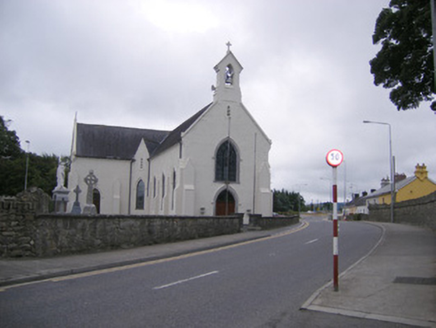 Catholic Church of Saint Mary of the AssumptionChurch/chapel · 98 yd
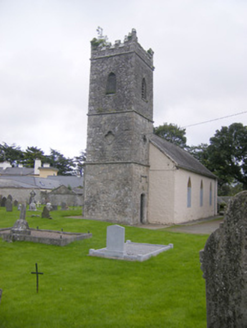 Saint Mary's Church (Croom)Church/chapel · 194 yd
 Church in CroomChurch · 195 yd
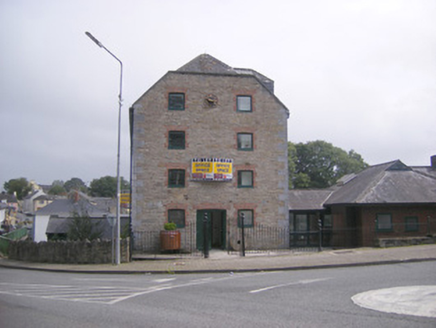 Croom MillsMill (water) · 204 yd
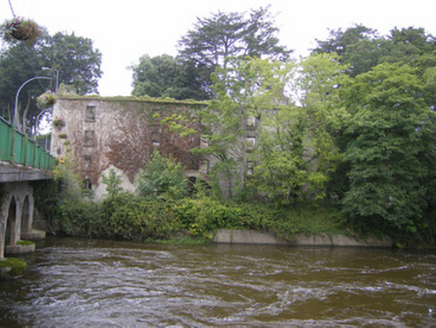 mill (water)239 yd
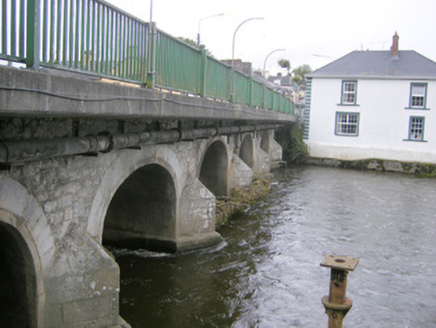 bridge239 yd
 MillMill, unclassified · 242 yd
 Páirc Na nGael Cromadh, CroomGAA ground · 836 yd
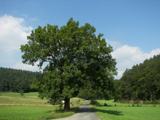 European ash1080 yd
 Anhid CemeteryCemetery · 1.1 mi

What do you know about this place?Tap to add a comment or ask a question