What is recorded here
Cashel Megalithic Tomb is a ruined single-chamber structure on the Fanad peninsula in County Donegal, first noticed in 1994 after centuries of bushes hiding its stones. It faces north toward the sea, while a disused quarry and old roadway sit upslope, suggesting people worked the land around this quiet burial place for generations. The chamber still holds displaced slabs and angled supports, preserving the shape of a room built for death long before written records reached this remote coastline.
This ruined structure, much overgrown by bushes, first came to notice in 1994. It stands on a slight break on a relatively steep fall of ground. Just upslope from the site is an old roadway, and immediately beyond this is a large stone quarry that was in use until the beginning of the 20th century. The site, at the northern end of the Fanad peninsula, commands an extensive view northward out to sea.
The monument seems to have been a single-chamber structure, perhaps polygonal in outline, measuring 2.5m long (N-S) and 2m in maximum width, which it attains at mid-length, from where it narrows to both ends. A single set stone, 0.4m high, forms the narrow N end of the chamber. A single orthostat, set at an obtuse angle to the N end of the chamber, remains on the E side. It is 0.7m in internal height. The W side of the chamber is concave in outline and consists of three set stones and some dry-walling. There is a gap of 0.6m between the N end of the chamber and the northernmost of the three set stones, which is 0.15m high. Two small pad-stones (not on plan) rest on this and support an almost prostrate slab, the outer end of which is now buried. It measures 1.7m by at least 0.8m by 0.25m thick. The status of this stone is uncertain, but it may be a corbel. It partly overlies but does not touch the next set stone on the W side, which is 0.2m high. The third stone on this side is 0.7m high. Beyond this are two blocks of stone that appear to be the remnant of a dry-wall infill. Each is c. 0.25m long and c. 0.25m high. A prostrate slab, 1.45m by 0.5m by 0.4m, now marks the S end of the chamber. It is likely, though not certain, that it originally stood here. There are two displaced slabs within the chamber. One, shown on the plan, measures 1.25m by 0.8m by 0.25m thick. It partly overlies another (not on plan), which measures at least 0.6m in maximum dimension.
This seems to be some form of ancient burial chamber, the age and precise nature of which remain to be determined.
RMP 1995, 8:25.
The above description was published in the 'Survey of the Megalithic Tombs of Ireland. Volume VI, County Donegal.' Compiled by: Eamon Cody (Dublin: Stationery Office, 2002).
Date of upload: 22 September 2008
A Neolithic passage tomb, dating to approximately 3000–2500 BCE. Its location suggests it may have been part of a broader prehistoric landscape, though its specific significance remains poorly understood due to limited investigation.
The monument record does not grant public access. Check the route and ask the landowner before entering private land.
- What survives
- Recorded monument
Places near here
 Former Cashel FortFairy fort / ringfort · 621 yd
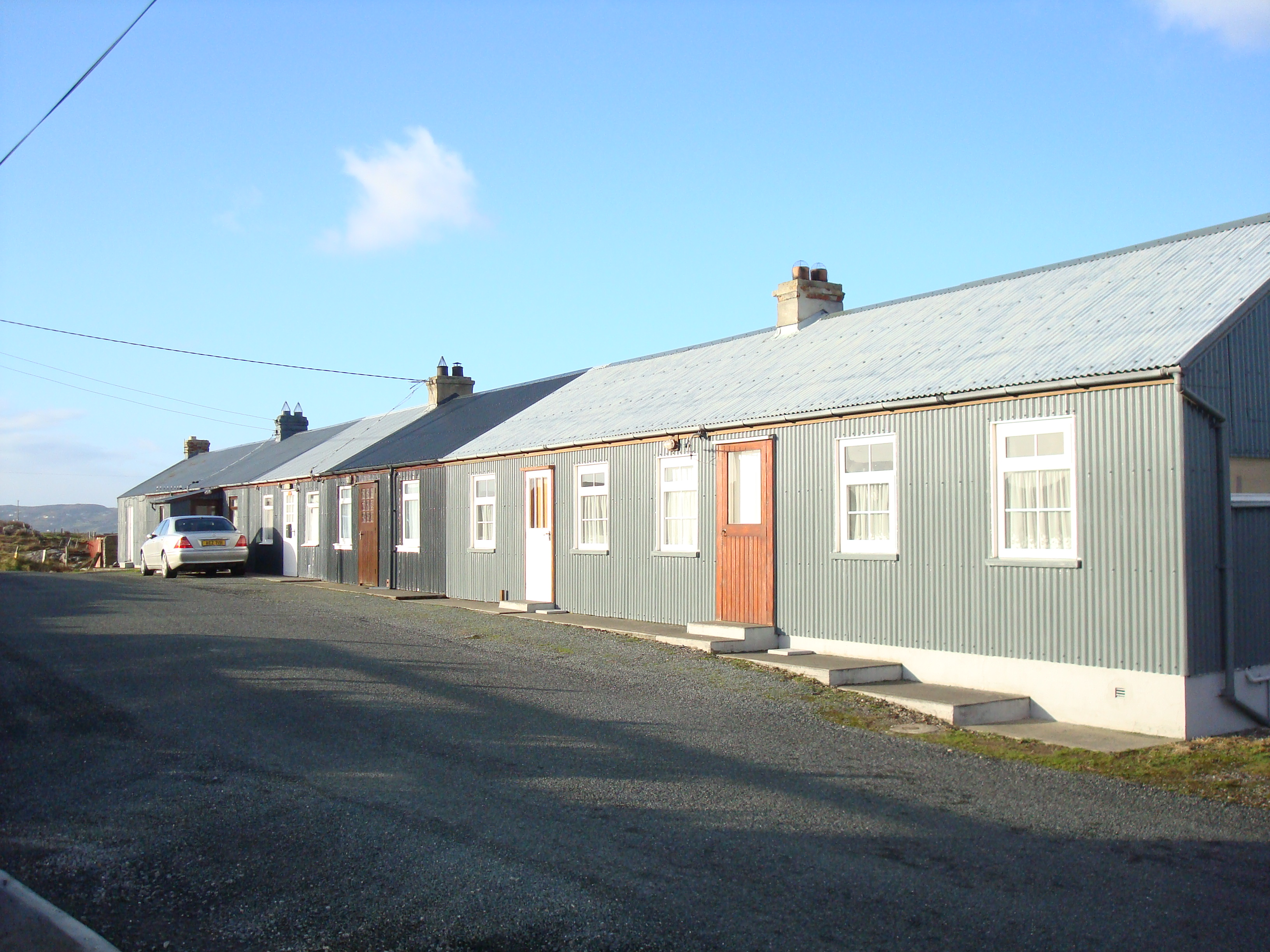 worker's houseworker's house · 1264 yd
 Turras DavaddogHoly well · 1431 yd
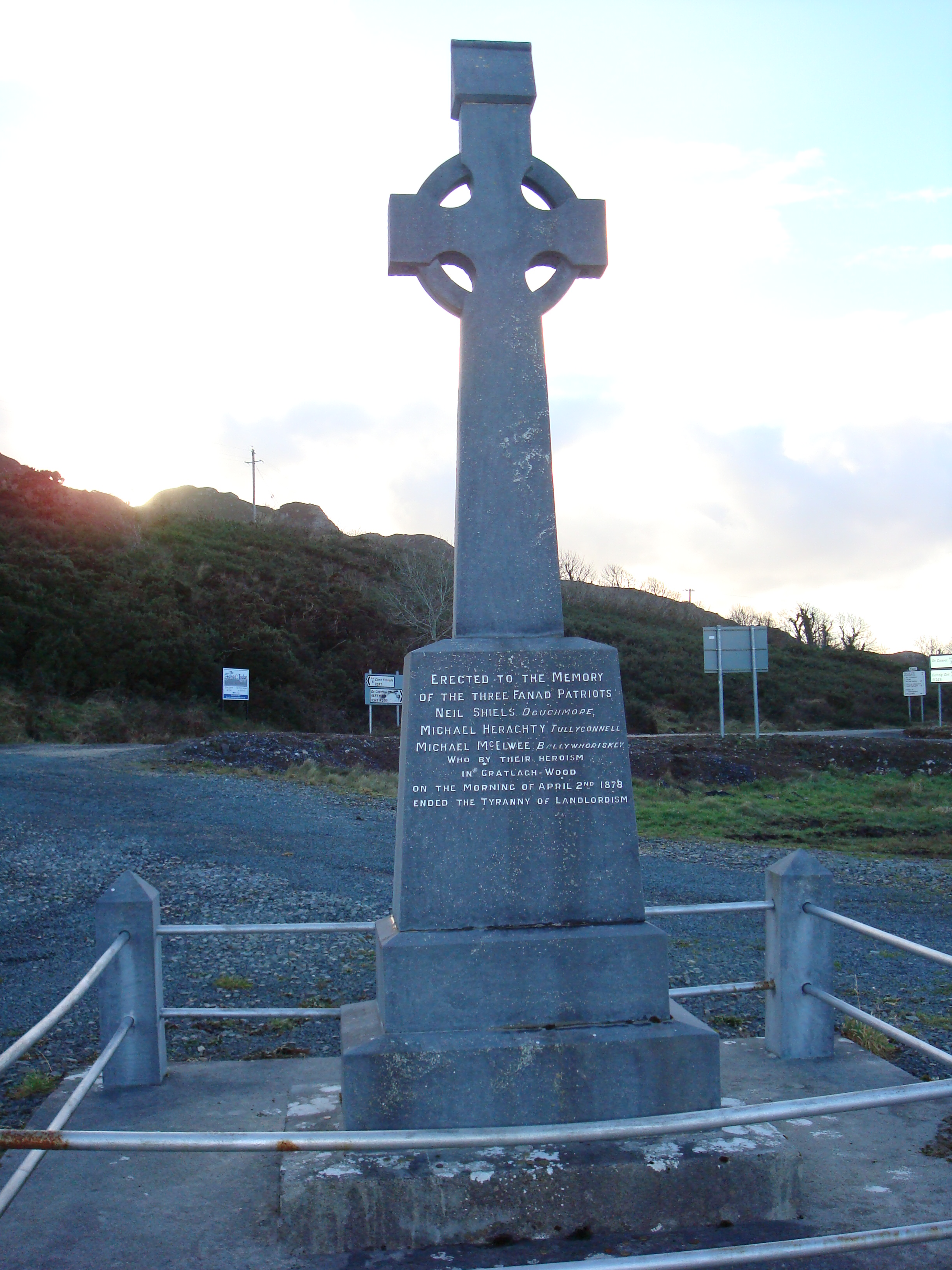 Fanad Patriots Monumentmonument · 1.6 mi
 Ballyhiernan, FanadOfficial bathing water · 1.9 mi
 Moross CastleCastle, tower house · 2.6 mi
 Cnoc na SleáMountain / peak · 2.7 mi
 The Murder HoleCave · 2.7 mi
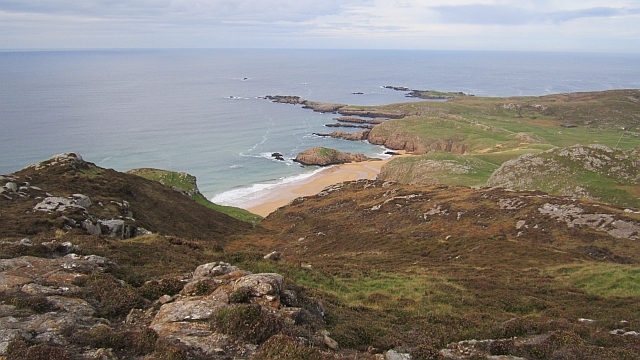 Boyeeghter StrandBeach / strand · 2.8 mi
 HazelHazel · 4.6 mi
 Old CastleCastle, unclassified · 4.8 mi
 Fanad Head Lighthouse Visitor CentreVisitor information · 5.1 mi