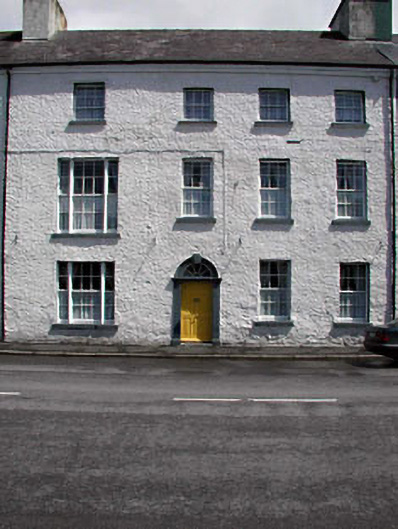
What is recorded here
Terraced four-bay three-storey house, c.1800, retaining early aspect with round-headed door opening to ground floor. Gable-ended roof with slate. Clay ridge tiles. Rendered chimney stacks. Rendered coping to gables. Cast-iron rainwater goods on rendered eaves course. Roughcast walls. Painted. Square-headed window openings (tripartite to left ground floor and to left first floor). Stone sills. Original 6/6 and 3/3 timber sash windows (with 2/2 sidelights to tripartite windows). Round-headed door opening. Cut-stone doorcase with lintel and keystone to archivolt. Timber panelled door. Spoked fanlight. Road fronted. Tarmacadam footpath to front.
This house is a fine, middle-size edifice of considerable social and historic interest, having been built as a product of the commercialisation and industrialisation of Monasterevin following the development of the Grand Canal in the locality in the late eighteenth century. The house represents the substantial dwellings of the prosperous merchant class that capitalised on the potential of the introduction of the canal to the area. Composed as a sophisticated piece of architecture, borrowing motifs from the Classical style, the house includes refined features such as a cut-stone doorcase with keystone, and tripartite window openings. Well-maintained, the house retains most of its original form and character. Early or original features and materials survive in situ, including multi-pane timber sash fenestration, a spoked fanlight to the timber doorcase, and a slate roof with cast-iron rainwater goods. The house is an integral component of a terrace of middle-size houses that flanks both West End and Moore Street, leading to Main Street to the south-east, and is an attractive landmark from the River Barrow to south-west. An unusual feature, and something that is shared with its neighbours, thus distinguishing the street, is the detached garden plot located on the opposite side of the street on the bank of the River Barrow. Many of these plots have now become disused and/or overgrown, and are picturesque features that ought to be maintained and preserved.
This does not grant access. Most recorded buildings are privately owned; view them only from public ground unless the owner allows entry.
Places near here
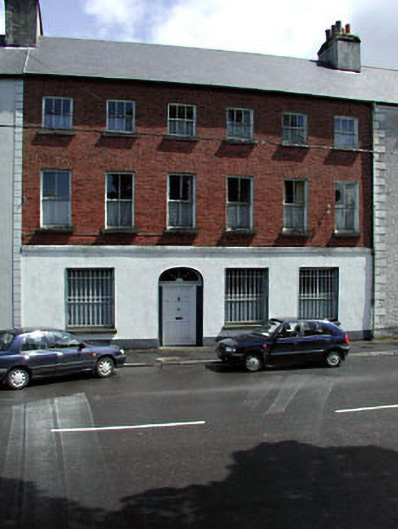 Hibernian Househouse · 43 yd
 Mearachánhouse · 60 yd
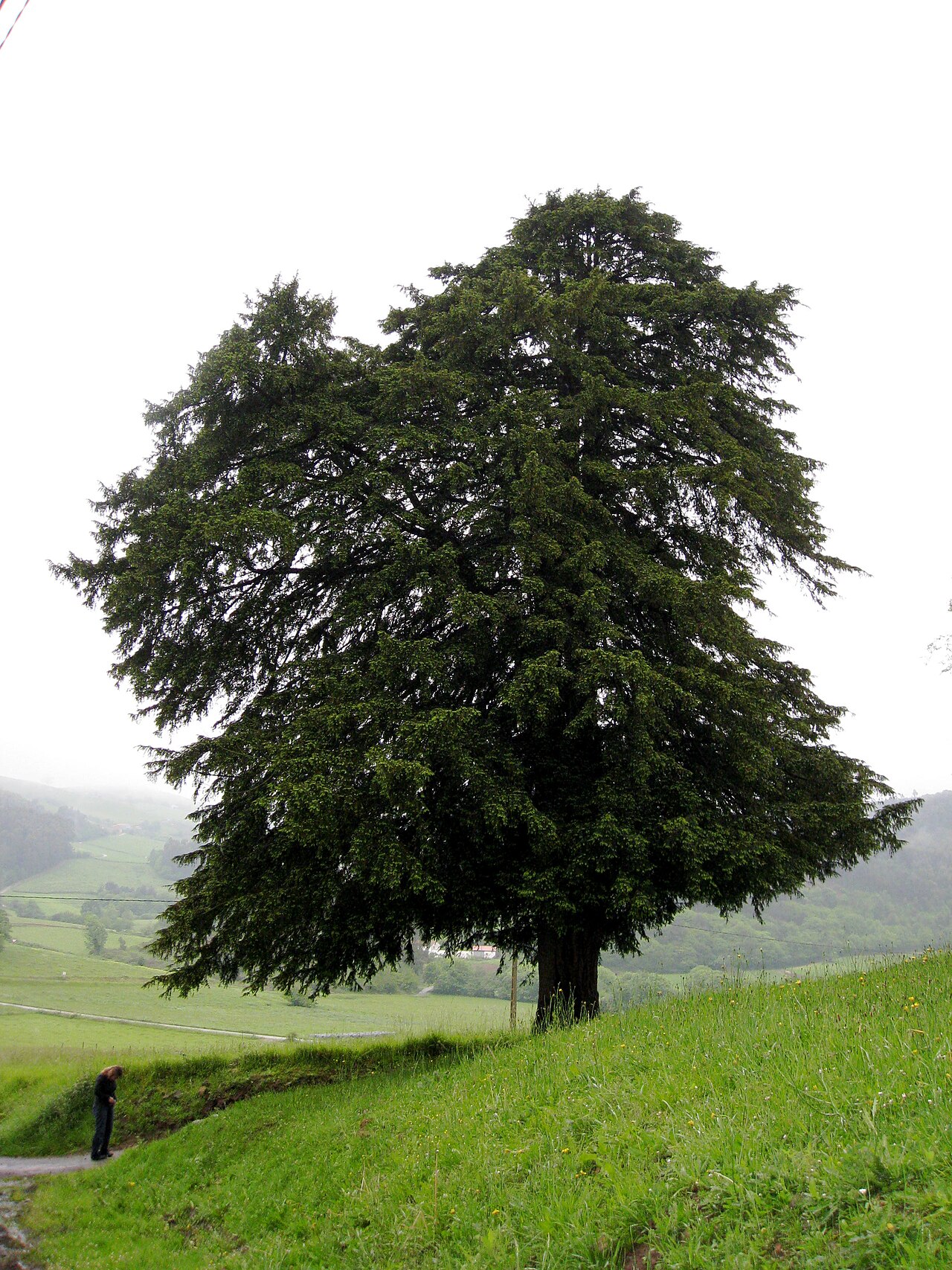 European YewEuropean Yew · 284 yd
 Font in Mooreabbey DemesneFont · 751 yd
 Lodge GroveWood · 884 yd
 Enclosure in Clogheen (monasterevin Ed)Enclosure · 917 yd
 Lea Castle (in ruins)Castle, Anglo-Norman masonry castle · 3.5 mi
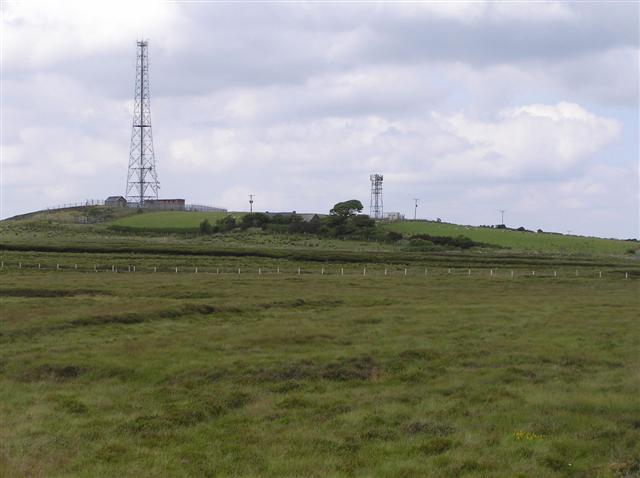 Bawn in Lackagh BegBawn · 3.5 mi
 Church (in Ruins), GraveyardChurch · 4.1 mi
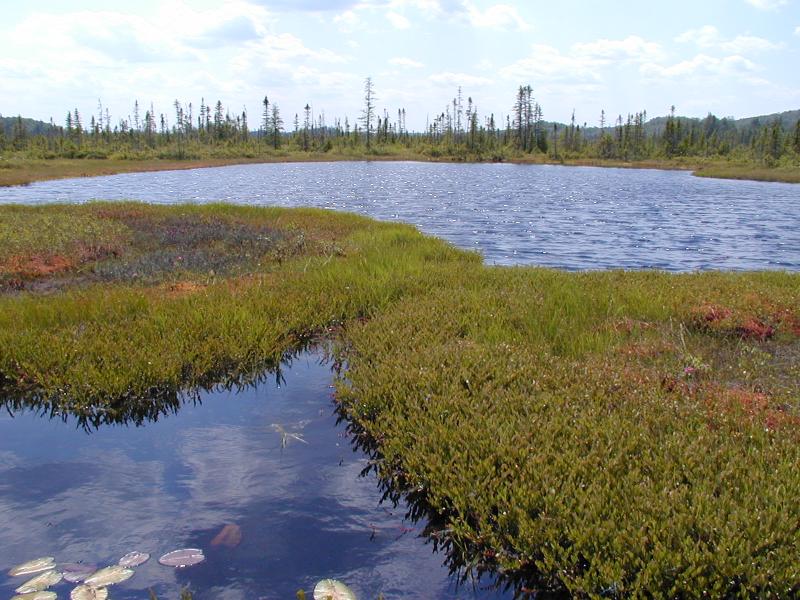 Bog Lake WalkWalking route · 5.5 mi
 Derryounce Walk (Yellow Loop)Walking route · 5.7 mi
 Bithia Mary CrokerMemorial · 6.2 mi
Other information
Photo: National Inventory of Architectural Heritage · Website use allowed for educational or private purposes with source credit