What is recorded here
Donegal’s buried dead still hold a flint knife and two pottery vessels, tools of the last meal or the first journey. Moville’s mound has lost its shape but not its purpose: to keep what the living let go.
A vase foodvessel, another pottery vessel and a flint knife are said to have come from a 'tumulus' here. (UJA 1969, 62)
The above description was derived from the 'Archaeological Survey of County Donegal. A description of the field antiquities of the County from the Mesolithic Period to the 17th century.' Compiled by: Brian Lacey with Eamon Cody, Claire Cotter, Judy Cuppage, Noel Dunne, Vincent Hurley, Celie O'Rahilly, Paul Walsh and Seán Ó Nualláin (Lifford: Donegal County Council, 1983). In certain instances the entries have been revised and updated.
Date of upload: 22 September 2008
A Neolithic burial mound (tumulus); dates to the early to middle Neolithic period. Its significance lies in the associated finds of pottery and flint tools, which contribute to understanding burial practices and material culture in early Irish prehistory.
The monument record does not grant public access. Check the route and ask the landowner before entering private land.
- What survives
- Recorded monument
Places near here
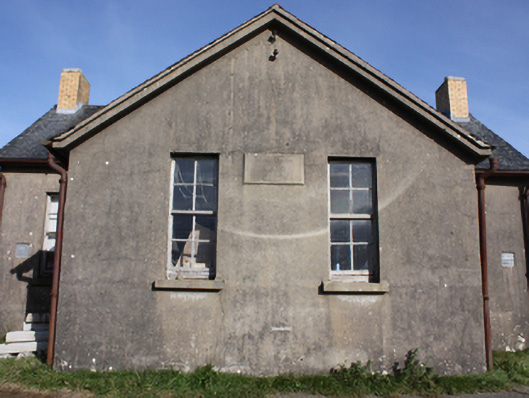 Scoil Bhrídeschool · 1109 yd
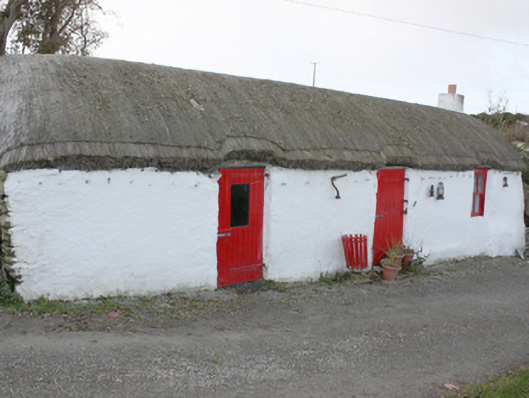 outbuildingoutbuilding · 1651 yd
 CrockavishaneMountain / peak · 1.1 mi
 Old CrossCross, High cross · 1.1 mi
 Cooley CrossMemorial · 1.1 mi
 Cooly Cat's Eyes Cross SlabCross-slab · 1.1 mi
 Castle CaryCastle, unclassified · 1.2 mi
 Site of Red CastleCastle, unclassified · 2.6 mi
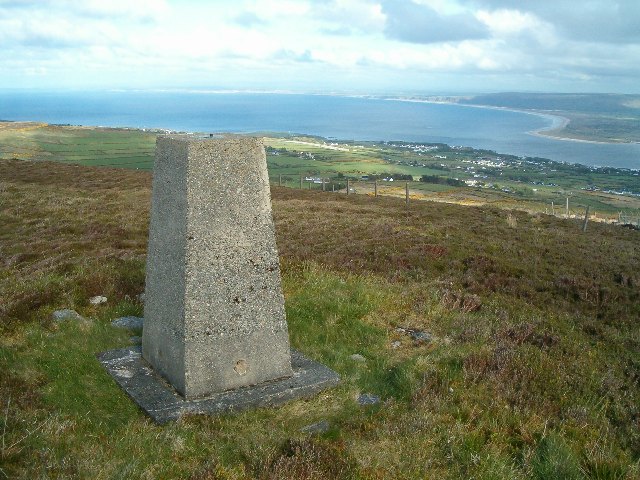 CrockaulinMountain / peak · 3.4 mi
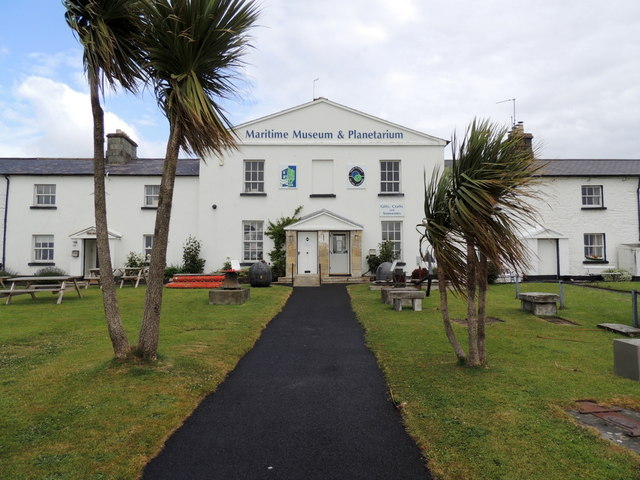 Inishowen Maritime Museum and PlanetariumMuseum · 4.1 mi
 The Spanish Armada 1588Memorial · 5.5 mi
 Sweet Nellie'sBeach / strand · 5.7 mi