What is recorded here
Site was visited and described in 1982 as 'All that remains of this well is a small rectangular shaped grassy depression. No trace of stone lining although some rough boulders are visible defining edges of well (dims. 2.5m by 3.1m). The surrounding land is low lying and covered with earthworks of Kilbixy borough…
Read the whole record
Site was visited and described in 1982 as 'All that remains of this well is a small rectangular shaped grassy depression. No trace of stone lining although some rough boulders are visible defining edges of well (dims. 2.5m by 3.1m). The surrounding land is low lying and covered with earthworks of Kilbixy borough (WM011-151----). Rush covered area surrounding well is probably fed from it' (SMR file 1982). A motte and bailey (WM011-039----) is located 370m to the N, the site of a medieval church (WM011-040002-), a medieval hospital (WM011-040001-) and graveyard (WM011-040005-) are located 220m to the NE. Site of holy well described by Bradley (1985, 110) as; 'Marked by the O.S. and shown within the borough. There is now no trace of it'. A hollow depression now marks the site of 'Bridget's Well'. It is possible that this may have been the town well for the deserted medieval settlement of Kilbixy. In 1938 the following folklore from Rathowen School was recorded by Nuala Cregg, pupil of the school, then aged 12 who collected the story below from her Grandfather James Killean, then aged 85 of Joanstown, Co. Westmeath; ‘In ancient times there was a spring well in the glebe grounds of Kilbixy near Ballynacarrigy. Tradition states that St. Brigid in her wanderings through Westmeath blessed the well - it was therefore called St. Brigid's Well. The well accommodated the people of the locality which was then thickly populated. There was a trout in the well but it was never known how it came there. The people taking water from the well used to feed the trout with crumbs of bread which made it quite a pet. A man from the locality named Friel caught the trout killed, cooked, and ate it. Next morning he was a cripple and that day twelve months he died. A new parson was appointed to the district. His wife objected to the people trespassing on the land and had the well closed. Next morning it was functioning with full force on the rocky slope of an adjoining farm [WM011-047----?]. The parson and his wife soon afterwards left the district’ (The Schools’ Collection, Volume 0741, Page 161;https://www.duchas.ie/en/cbes/5009102/4986814/5121645)
Compiled and revised by: Caimin O'Brien
Date of revised upload: 20 October 2022
From the National Monuments Service (Archaeological Survey of Ireland) record WM011-038
Places near here
Photo credits
- Stephan van Helden, Wikimedia Commons · CC BY-SA 4.0
- National Inventory of Architectural Heritage
- Mike Searle, Geograph · CC BY-SA 2.0
- Miguel Angel Masegosa Martínez, Wikimedia Commons · CC BY 2.0
- Richard Webb, Geograph · CC BY-SA 2.0
 Horse-chestnut266 yd
 Saint Bigseach's Church (Kilbixy)Church/chapel · 289 yd
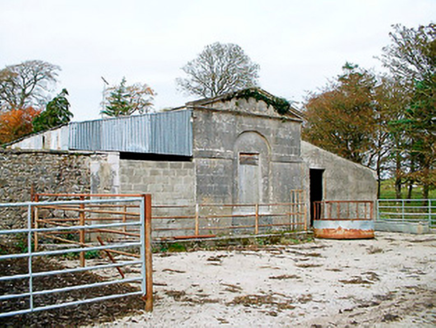 Baronstown HouseOfficially recorded historic building · 319 yd
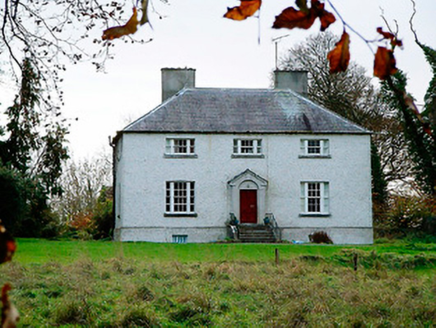 The Old RectoryRectory/glebe/vicarage/curate's house · 389 yd
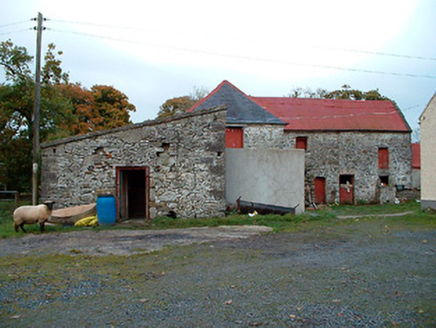 Caher Corn MillMill (water) · 684 yd
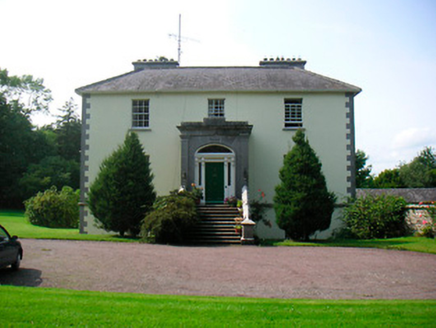 Willifield HouseHouse · 1.0 mi
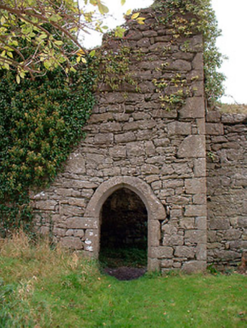 Templecross Grave YardGraveyard/cemetery · 1.2 mi
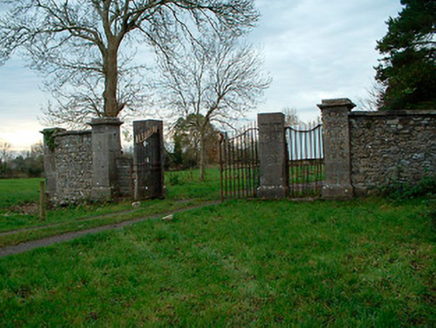 Tristernagh HouseDemesne walls/gates/railings · 1.2 mi
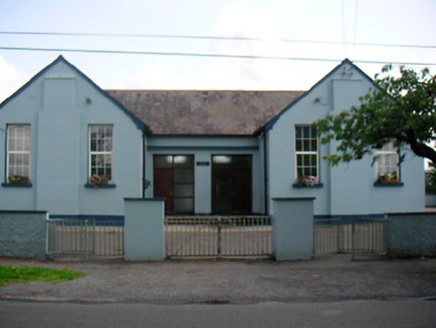 Saint Bridget's National SchoolSchool · 1.4 mi
 Carrick CastleCastle · 3.2 mi
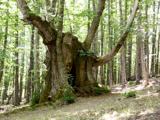 Sweet Chestnut3.3 mi
 CastleCastle, motte · 4.3 mi
More archaeology and monuments in County Westmeath · All of County Westmeath

What do you know about this place?Tap to add a comment or ask a question