What is recorded here
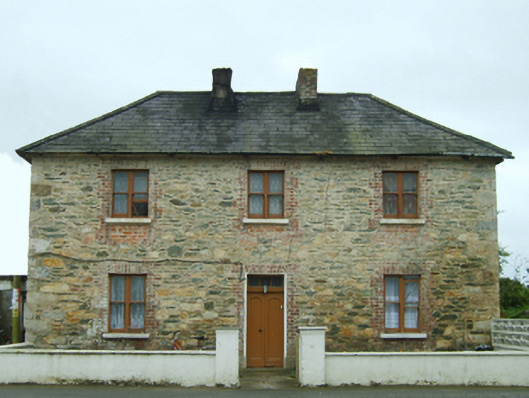
Detached three-bay two-storey constabulary barrack, occupied 1901, on a rectangular plan; three-bay single-storey lean-to return along rear (south) elevation. Occupied, 1911. Attacked, 1921. Hipped slate roof; lean-to slate roof (south), clay ridge tiles, paired rendered red brick Running bond central chimney stacks with capping now missing, and cast-iron rainwater goods on slate flagged eaves retaining cast-iron downpipes. Repointed coursed rubble stone walls originally fine roughcast with hammered rubble stone flush quoins to corners; fine roughcast surface finish to side (east) elevation. Square-headed central door opening with threshold, and red brick block-and-start surround framing timber panelled double doors having overlight. Square-headed window openings in bipartite arrangement with cut-granite sills, timber mullions, and red brick block-and-start surrounds framing one-over-one timber sash windows. Square-headed central door opening to rear (south) elevation with red brick block-and-start surround framing timber door having overlight. Road fronted on a corner site with rendered piers to perimeter having cornice capping.
A constabulary barrack representing an integral component of the later nineteenth-century built heritage of south County Wexford with the architectural value of the composition suggested by such attributes as the compact plan form centred on a restrained doorcase; and the diminishing in scale of the openings on each floor producing a graduated visual impression with those openings showing pretty bipartite glazing patterns. Having been reasonably well maintained, the elementary form and massing survive intact together with substantial quantities of the original fabric, both to the exterior and to the interior, including some fittings showing evidence of an attack (1921) by a local faction during "The Troubles" (1919-23; The New York Times 16th May 1921, 1): however, the disintegration or removal of the surface finish has not had a beneficial impact on the character or integrity of a constabulary barrack making a pleasing visual statement in a rural village setting presently (2007) undergoing extensive "suburban" development. NOTE: Occupied (1901) by Thomas Walsh (----), 'Sergeant [in] Royal Irish Constabulary' (NA 1901); and (1911) by Hugh Gallagher (----), 'Acting Sergeant' (NA 1911).
This does not grant access. Most recorded buildings are privately owned; view them only from public ground unless the owner allows entry.
Places near here
 St. Davids Well (Site of)Holy well · 139 yd
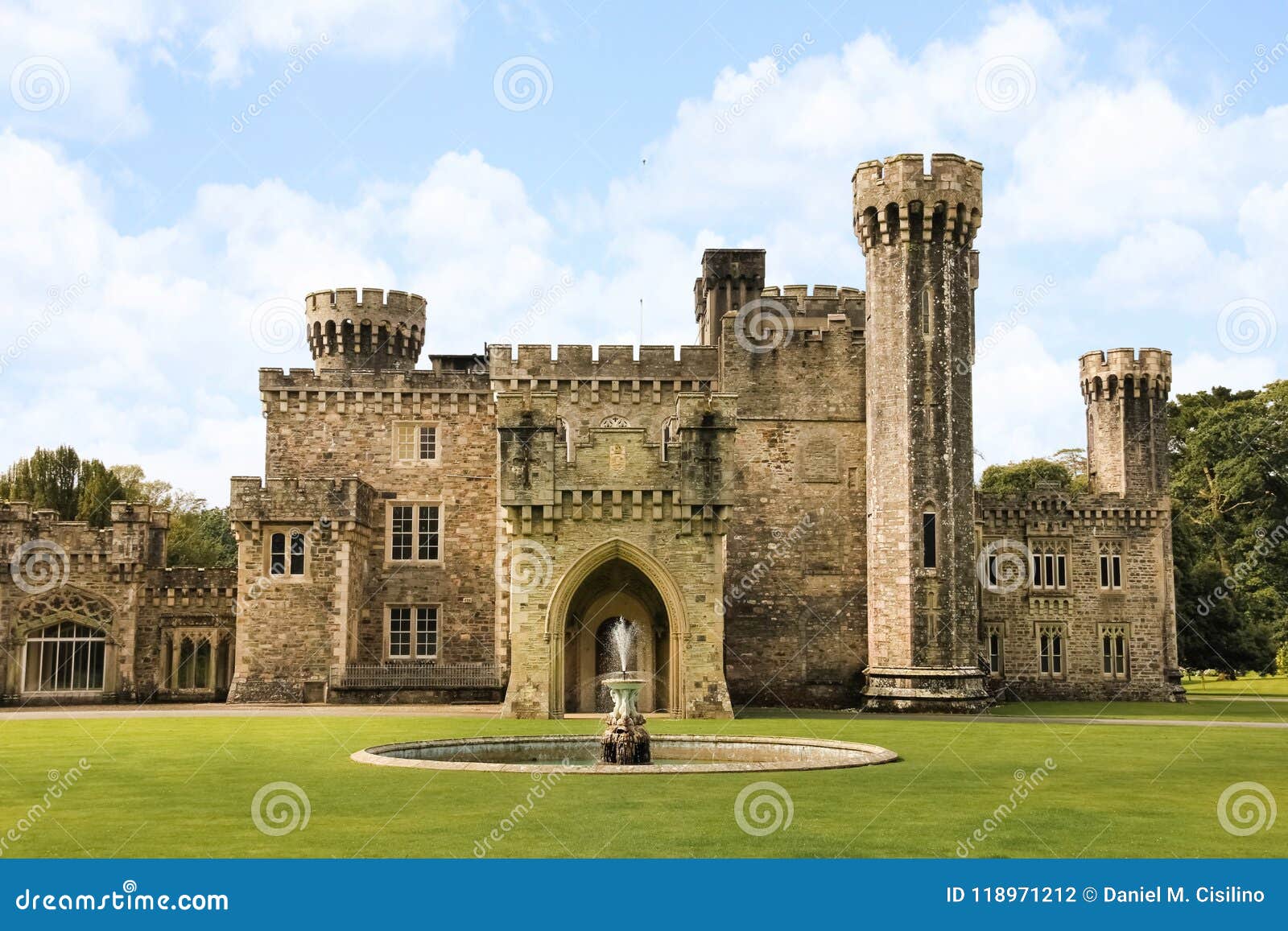 site of CastleCastle, unclassified · 164 yd
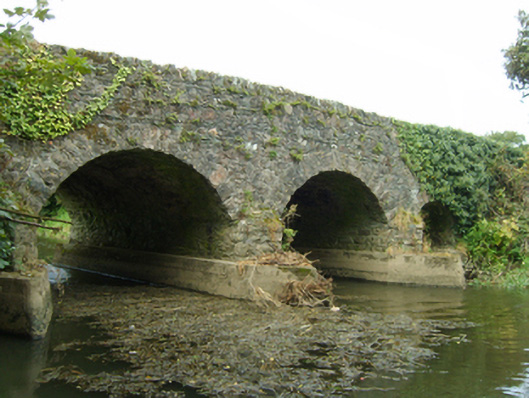 bridgebridge · 174 yd
 Corn MillWater mill, unclassified · 432 yd
 Church (Site of)Church · 449 yd
 TumulusCastle, motte · 1022 yd
 1798 Memorial PlaqueMemorial · 2.6 mi
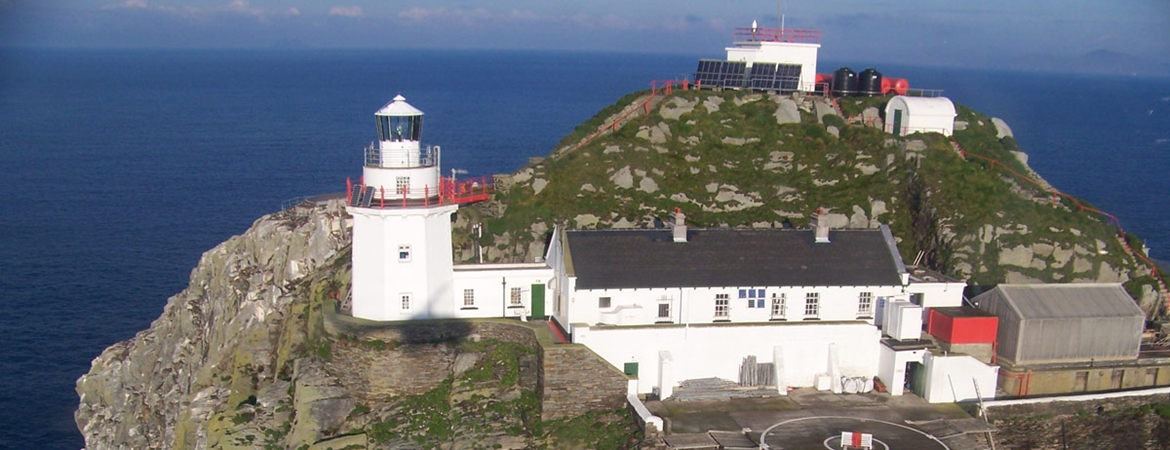 The Bull RockForest · 2.7 mi
 The Heron's MeadowForest · 2.7 mi
 Ballyhealy BeachBeach / strand · 3.2 mi
 The White Hole BeachBeach / strand · 3.7 mi
 Cull IslandIsland · 4.1 mi
Other information
Photo: National Inventory of Architectural Heritage · Website use allowed for educational or private purposes with source credit