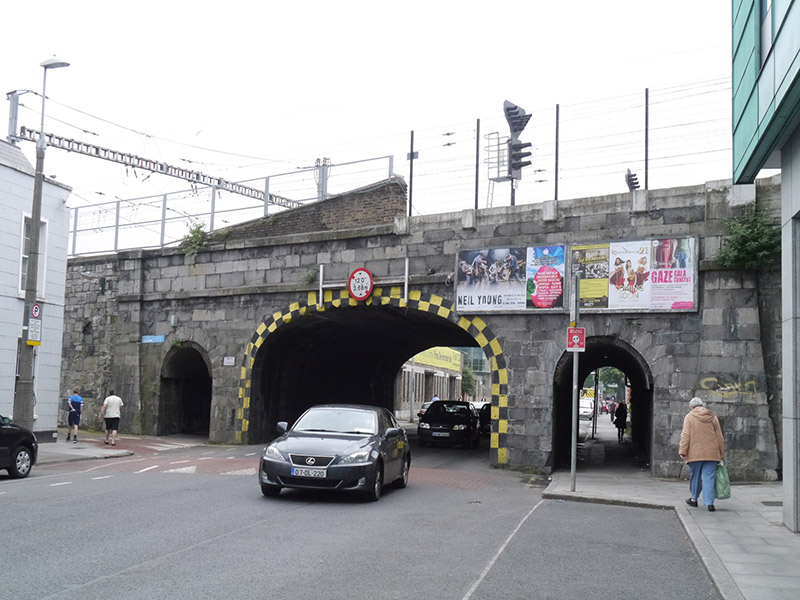
What is recorded here
Railway bridge, built c. 1833, carrying railway over Sandwith Street Upper, comprising elliptical-headed vehicular archway flanked by lower round-headed pedestrian archways. Extended to south c. 1960. Tool-faced ashlar limestone walling with projecting cut limestone stringcourse and coping to north parapet. East part…
Read the whole record
From the Buildings of Ireland (National Inventory of Architectural Heritage) record 50100314
Places near here
Photo credits
- National Inventory of Architectural Heritage
- Osama Shukir Muhammed Amin FRCP(Glasg), Wikimedia Commons · CC BY-SA 4.0
- Imelda Casey, Wikimedia Commons · CC BY-SA 4.0
- Angilbas at English Wikipedia, Wikimedia Commons · Public domain
- Superchilum, Wikimedia Commons · CC BY-SA 4.0
- Rossographer, Geograph · CC BY-SA 2.0
- Eric Jones, Geograph · CC BY-SA 2.0
- Diliff, Wikimedia Commons · CC BY-SA 4.0
- Smirkybec, Wikimedia Commons · CC BY-SA 4.0
- Agence Rol, Wikimedia Commons · Public domain
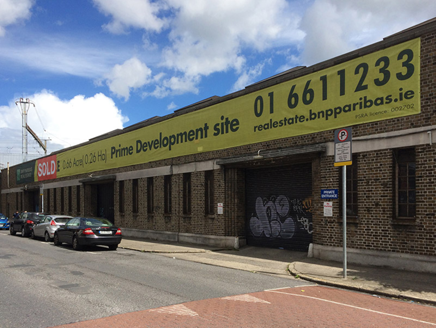 Post Office GarageBuilding misc · 54 yd
Explorer Tom Post Office Garage on Sandwith Street Upper is a 1939 concrete beast with steel trusses and burnt yellow bricks. It’s disused but looks like it could park a spaceship. Wave to the skylights and imagine the future.
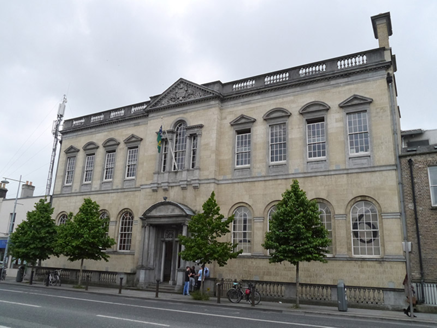 Dublin City Library and ArchiveLibrary/archive · 86 yd
Explorer Tom Dublin City Library and Archive is where they keep all the boring stuff so you don't have to carry it around. Count the windows on that grand façade while I pretend I'm reading a very important, dusty document.
 Bernardo O'HigginsMemorial · 363 yd
Explorer Tom Bernardo O'Higgins in County Dublin is a Chilean liberator memorial, which is a bit random here, but salute him and wonder why he’s not back in South America.
 Michael CollinsMemorial · 390 yd
Explorer Tom Michael Collins 1890-1925 in County Dublin is another spot honoring the same big guy. It seems he had quite an impact on the area. Check out this second memorial and compare notes with the first!
 Trinity College DublinHistoric university campus · 598 yd
Explorer Tom Trinity College Dublin is the big one at College Green, and I bet the books in there are whispering secrets to each other. It’s the whole campus, not just one building, so get lost for a bit. It’s safe... probably, but check the rules!
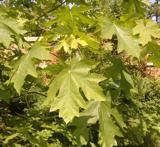 Bigleaf Maple641 yd
Explorer Tom Another Bigleaf Maple in County Dublin, this one pretending it doesn't know I'm here. It’s probably posting about its 'roots' on social media, acting like a deep thinker when it's just a tree. Bring your own legend, I've run out of facts for you.
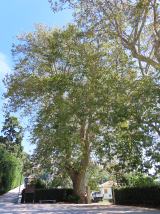 Oriental plane664 yd
Explorer Tom Oriental plane in County Dublin is eavesdropping on everything through its leaves. Go with someone who loves old stuff and watch them melt into a puddle of awe, or just envy it.
 Dublin Port Diving Bell and Visitors CentreHeritage attraction · 693 yd
Explorer Tom Dublin Port Diving Bell and Visitors Centre in County Dublin has been under water for a while. It used to be in use from 1865 to 1958, which is quite a run. Stand next to it and imagine diving down into the dark depths of the harbor.
 Samuel Beckett BridgeVisitor information · 703 yd
Explorer Tom Samuel Beckett Bridge is strutting across the Liffey like it owns the place. The North Wall view looks mint from up there. Get a shot of the arch for me, yeah?
 Library in Unknown TownlandLibrary · 773 yd
Explorer Tom Library in Dublin got its start when an archbishop left his books behind, which is like leaving your wallet at a fancy club. Bring a notebook and write down the bit I made up about the ghost librarian.
 St. Patricks WellHoly well · 828 yd
Explorer Tom St. Patricks Well in County Dublin is hiding out in Trinity's Provosts garden, probably judging your academic performance from under Nassau Street. Bring a pen pal; they'll be jealous of how much you know now.
 Burning of the Custom HouseArmed conflict · 846 yd
Explorer Tom Burning of the Custom House in County Dublin was a bargain gone wrong with fire involved. It looks dramatic from a distance, which is good for photos. Stand back, squint, and it looks like a castle.
More historic places in County Dublin · All of County Dublin

What do you know about this place?Tap to add a comment or ask a question