DDiscover AloneMapAbout

Botanic House

Hotel
Botanic House
Photo: Dr Neil Clifton, Geograph · CC BY-SA 2.0 · Report the wrong picture

This does not grant access. Most recorded buildings are privately owned; view them only from public ground unless the owner allows entry.

Recorded change of use
Originally hotel; recorded by the architectural inventory as restaurant
What do you know about this place?Tap to add a comment or ask a question

What you write will be public.

What is recorded here

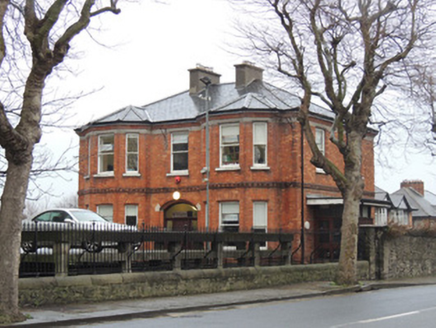
Attached five-bay two-storey L-plan former hotel with dormer attic, dated 1913, having castellated canted oriel window on corbelled limestone base to first floor centre, and full-height square block to southwest. Now in use as public house. Faces east onto Botanic Road, with rear vehicular entrance screen facing west…

Read the whole record
Attached five-bay two-storey L-plan former hotel with dormer attic, dated 1913, having castellated canted oriel window on corbelled limestone base to first floor centre, and full-height square block to southwest. Now in use as public house. Faces east onto Botanic Road, with rear vehicular entrance screen facing west onto Prospect Avenue. Hipped slate roof with angled ridge tiles, six dormer windows to east pitch having slate-hung sides; raised brick screen-verges with saddleback terracotta copings; two tall red brick chimneystacks to north and south gables and one to west pitch, having limestone banding and corniced caps; ogee profile cast-iron rainwater goods with fleur-de-lys fixings. Red and orange brick walling, laid in Flemish bond, to east elevation and having limestone banding and plinth; red brick walling to north and south elevations; brown brick walling to rear elevations and to southwest block. Square-headed windows; first floor openings are three-light to front of oriel and single-light to each side, and two-light to flanking bays, with limestone transoms, mullions and surrounds, continuous flush limestone lintels and sills with slightly recessed semi-circular panels above having basket-weave tiles, voussoired heads and limestone key blocks, and flush timber four-over-four-over-six-pane casement windows; dormers have hipped roofs and flush casement four-over-six pane windows; oriel one-over-one pane timber sliding sash windows to rear with red brick soldier arch heads and stone sills. Arrangement of three square-headed pubfront windows to ground floor to each side of front entrance; flush multiple-pane timber transomed and mullioned casements with bevelled glass, and having moulded limestone sill and dividing piers, and red brick aprons; timber fascias with scrolled brackets to each end. Round-headed central recessed doorway with chamfered jambs, limestone impost moulding, quadripartite staged head; double-leaf half-glazed timber door with cross-shaped lower panels; and tiled floor. Rear yard enclosed by extension and by red brick screen wall stepped over round-headed vehicular entrance having timber-sheeted doors. Interior has timber panelled porch with red and black tiled floor, and double-leaf door with etched glass upper panels to each side leading to fully refurbished contemporary bars.
A fine early twentieth-century dormered former public house and hotel, distinguished by balanced proportions, high-quality materials and an elegant palette of fine-matrix red and orange brick and Portland stone, in a stripy Flemish-influenced Domestic Revival style. It is composed on a symmetrical plan with features characteristic of the style, including flush casement windows, dormers, and a fine ordered door surround balanced by a crowning oriel above. The frontage exhibits notably high-quality brickwork by skilled artisans, further enhanced by the basket-weave panels over the first floor windows. The building occupies a substantial site on Botanic Road, having street frontages on two sides, including a purpose-built garage, reflecting changing modes of transport. It is representative of the expansion of the north Dublin suburbs beyond the confines of the Royal Canal in the early twentieth century, and contributes to the architectural variety and social history of the area.

From the Buildings of Ireland (National Inventory of Architectural Heritage) record 50130106

Places near here

Picture notes
  • National Inventory of Architectural Heritage
  • Computer-made picture. It does not show this playground.
  • Gareth James, Geograph · CC BY-SA 2.0
  • Cograng, Wikimedia Commons · CC BY-SA 4.0
  • Kurt Stüber [1], Wikimedia Commons · CC BY-SA 3.0
  • Computer-made picture. It does not show this monument.
  • Darkone ( talk · contribs ), Wikimedia Commons · CC BY-SA 2.5
shop/retail outlet84 yd

Explorer Tom Shop or retail outlet on Botanic Road is called Hart's Buildings, which sounds like a bird sanctuary but is really just shops from the 1920s. The canted corner is doing its best to look important.

gates/railings/walls126 yd

Explorer Tom The gates on Prospect Road are all that’s left of an orphanage for boys, established by the Christian Brothers in 1860. They’re got arabesques and rosettes, which is a fancy way of saying 'we ran out of money for the building but not for the door handles'.

Children's playground200 ydComputer-made picture

Explorer Tom Children's playground in County Dublin is waiting for you to wake up its sleeping giant statue. It’s just a rock, but pretend it’s magic.

Welcome to PhibsboroughVisitor information · 315 yd

Explorer Tom Welcome to Phibsborough in County Dublin is near a great pub. It’s probably trying to hide the fact that it’s just a street sign with attitude, so smile at it.

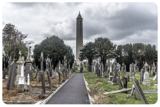
Glasnevin cemetery Ireland's necropolisVisitor information · 367 yd

Explorer Tom Glasnevin cemetery Ireland's necropolis is full of people who are definitely not listening to me right now. They’re buried under all that history and moss. Leave them a little stone if you're feeling generous.

Frank DuffMemorial · 459 yd

Explorer Tom Frank Duff in County Dublin is where the Legion of Mary boss was born back in 1889. He kicked off a whole religious movement from that house, which is pretty wild for just a birthplace.

Michael CollinsMemorial · 523 yd

Explorer Tom Michael Collins in County Dublin is resting in Glasnevin Cemetery, according to the pictures. He's a legend, no doubt about it. Visit his final resting spot and give him a quiet salute!

Glasnevin CemeteryGates/railings/walls · 600 yd

Explorer Tom Glasnevin Cemetery is older than your excuses for not visiting yet, probably by a few centuries. The walls have been watching Finglas Road since the 1830s like strict nans. Why this place matters? It’s basically Dublin's memory bank.

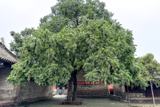
Caucasian zelkova600 yd

Explorer Tom Caucasian Zelkova in County Dublin is judging the road that leads to it with intense leafy contempt. It looks like it’s waiting for a taxi that isn't coming and has no patience whatsoever. Ideal stop for a big stretch and a bigger yawn, if you're brave enough.

Glasnevin ChapelMonument · 657 ydComputer-made picture

Explorer Tom Glasnevin Chapel in County Dublin is keeping its secrets close. I bet the ghosts inside are arguing about whose turn it is to haunt the visitors.

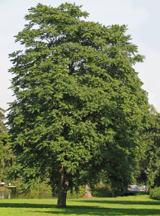
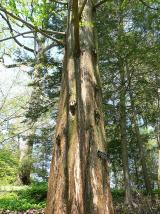
Tree of Heaven705 yd

Explorer Tom Tree of Heaven in County Dublin sounds like it fell from the sky but probably just moved house. Bring a pen pal, they’ll be jealous you’re hanging out with a tree that has such a dramatic name.

Old boundary stone739 ydComputer-made picture

Explorer Tom Old boundary stone in County Dublin is just standing there looking very important for no good reason. It’s pretending it holds the map to the whole area. I’d bet it’s just a fancy paperweight.

More historic places in County Dublin · All of County Dublin

Add to this placeAdd a picture Add a detailed tip Add a story

Explore the map1,093,392 places to discover

Next place · or swipeshop/retail outlet