
What is recorded here
Killanin recorded the well in 1947, but water has likely wet that granite since before counting began. Seven daughters may have lived, bled, birthed or disappeared there; the stone does not correct or explain. The loose stones in front mark a place where humans kept returning, shaping the edge of the world into a container for prayer.
In a field close to low cliffs on E shore of the island. Known locally as Tobar na Seacht nlníon, it consists of a natural spring issuing from a granite boulder. In front of this are many loose stones which probably once formed part of a surround or altar; recently reconstructed (pers. comm. T. Robinson). (Killanin 1947, 103)
The above description is derived from the published 'Archaeological Inventory of County Galway Vol. I - West Galway'. Compiled by Paul Gosling (Dublin: Stationery Office, 1993).
Date of upload: 05 August 2010
The Well of the Seven Daughters (Tobar na Seacht níon) is associated with a local legend of seven sisters who, according to folklore, wept at the site until their tears formed the spring. The tradition of leaving loose stones at the well may reflect a ritual of remembrance or healing connected to the story.
The monument record does not grant public access. Check the route and ask the landowner before entering private land.
- What survives
- Recorded monument
Places near here
 Oileán na CaraIslet · 1288 yd
 Holy well in MaínisHoly well · 1361 yd
 Roisín an ChalaidhIslet · 1405 yd
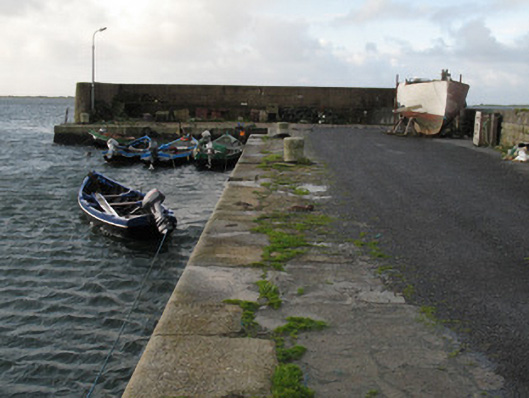 Cé Charna [Carna Quay]quay/wharf · 1675 yd
 Holy well in FínisHoly well · 1.3 mi
 Cé an Aird Thiar [Ard West Quay]pier/jetty · 1.7 mi
 Ard Castle (in ruins)Castle, tower house · 1.7 mi
 Cora na hAirde MóireHeadland · 2.9 mi
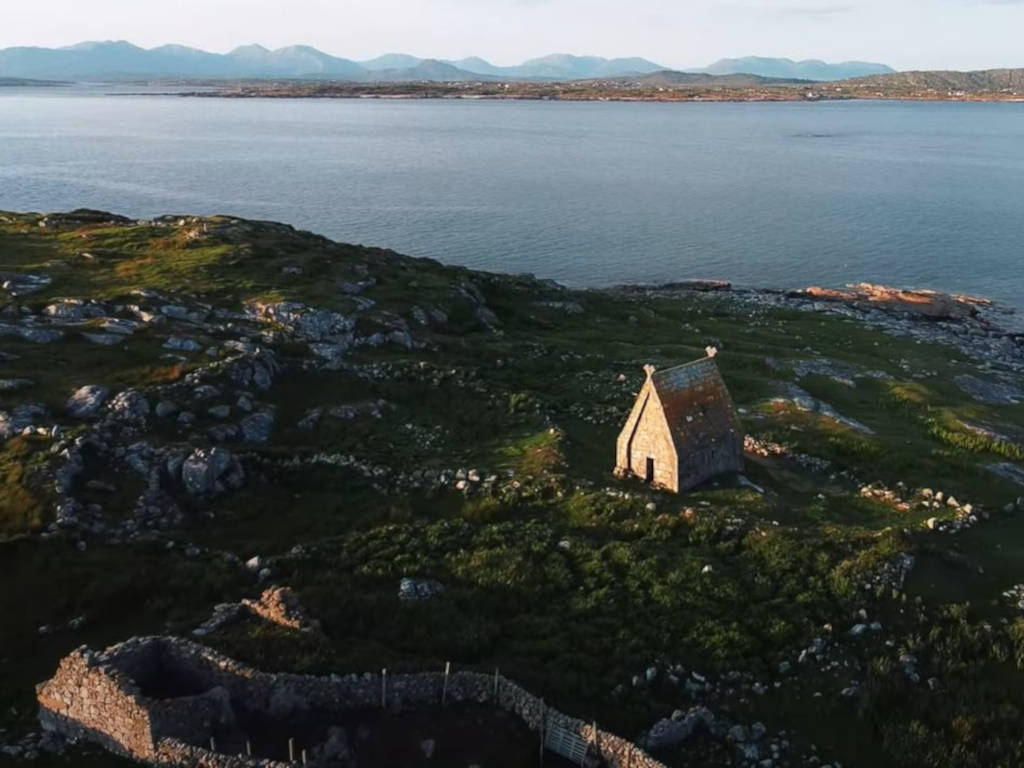 St. MacDara's Island Early Medieval Ecclesiastical SiteHeritage attraction · 3.1 mi
 Ceann MhásaHeadland · 3.2 mi
 Trá MhaíroisBeach / strand · 3.3 mi
 Knockboy ForestryForest · 3.6 mi
Other information
Photo: Credit not shown in the picture search · Rights wording not checked; contact us if this picture should be removed