What is recorded here
False relief carves a knight in a niche on the south side of the nave, his pointed bascinet touching a cusped canopy while his left foot rests on a dog looking upward. The plates, mail and gloved hands are still life-sized enough to suggest that he waited there for battles already forgotten. Without an inscription to give him back a name, the tomb becomes a chamber of shadow where the watcher and the watched exchange places.
In a niche at the E end and the S side of the nave, is the effigy (dims 1.92m x 0.64m; H 12cm) of a knight with the head to the W. The effigy is in false relief, but there is no inscription. The date is probably early 16th century. (FitzGerald 1911, 415-16; Moore 1970, 29, No. 12; Hunt 1974, 208-09, No. 191)
It is described by Hunt as: In a niche on the south side of the nave lies a figure of a knight carved in high false relief. He is armed in a pair of plates below which three rows of the mail habergeon can be seen. His head-piece is a pointed bascinet, the cheek-pieces descending nearly as low as the chin and the visor hinged at the level of the eyes. The bascinet comes to an acute point within the ogee-shaped canopy over his head which is cusped below and has foliate crockets in the spandrels. His shoulders are covered with the pisane, but there are no besagews on them. The arms are defended with vambraces of plate with rondels over the cubitus. He wears no gauntlets but his hands are gloved, having short cuffs with long pendant points below. His legs are presumably defended with plates, but they are much worn. There are sabatons on the feet which are shown in profile, the left resting on the back of a dog which looks up towards him. The sword hangs from a belt at the waist by an arrangement of straps and it has a medium-sized round pommel and a straight cross-guard with descending angular terminations. The effigy may be dated to the mid-fifteenth century.
Date of upload: 18 March, 2015
Effigial tomb of a knight, dating to the early 17th century. It is significant as a rare example of a false-relief effigy tomb without inscription, reflecting early modern funerary art in a possibly unrecorded local context.
The monument record does not grant public access. Check the route and ask the landowner before entering private land.
- What survives
- Recorded monument
Places near here
 AbbeyChurch · 3 yd
 Killeen CastleCastle, tower house · 86 yd
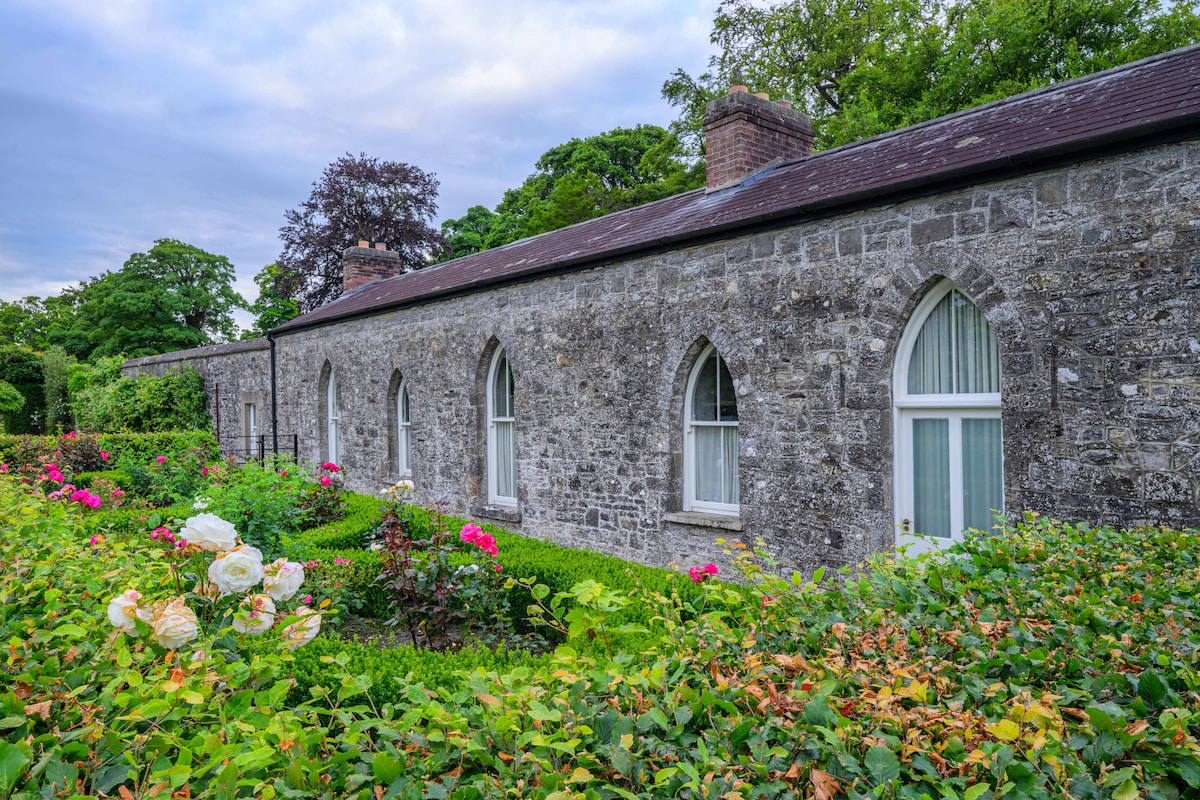 Lady WellHoly well · 199 yd
 CrossCross, Wayside cross · 300 yd
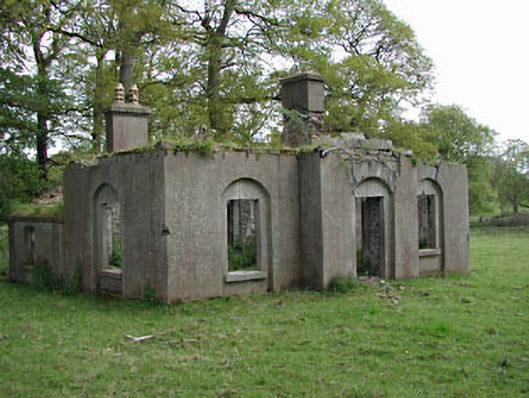 Dunsany Castlegate lodge · 1397 yd
 Laurel WoodsWood · 1412 yd
 Barrack WoodsWood · 1.1 mi
 Battle of Tara Hillbattle · 2.9 mi
 Battle of Tara (Ireland)Major battlefield · 2.9 mi
 Tara Open StudioGallery · 3.1 mi
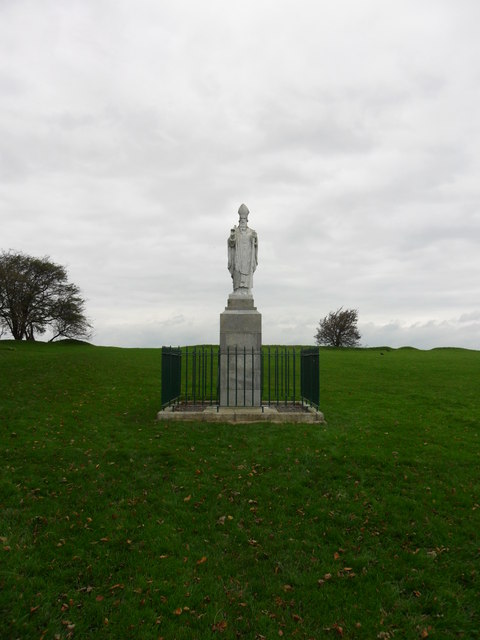 Saint Patrick'sMemorial · 3.2 mi
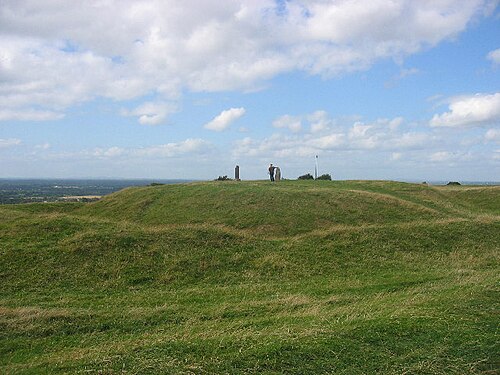 Hill of TaraVisitor information · 3.2 mi