What is recorded here
One broken tomb in a small Irish church still displays a skeleton aiming an arrow at a dead lawyer while a mermaid swims beside him. Sir Thomas Cusack died in 1571, his son carved the tomb, and a grandson wrote the warning that death comes even to powerful men. The stones moved across counties and one vanished, yet the chamber remains beside the altar where people still walk past a skull, a shroud and a family badge cut into rock.
Two stones associated with the memorial of Sir Thomas Cusack dated 1571 (FitzGerald 1917; Hickey 1971, 82-90) are in the chancel area of Trevet parish church (ME038-017----), but a small armorial stone (ME032-001003-) was moved to Staffordstown church, probably before 1750, where it cannot now be located, and a large side-stone depicting the family is now displayed in the Church of Ireland church at Tara (ME031-033084-) (Hickey 1971, 77-82). A broken heraldic stone (ME038-017002-) with the family tree is in the chancel of Trevet.
Another stone (dims 2.15m x 0.87m), also in the chancel, is broken in several places and has an incised inscription in Latin commemorating Sir Thomas, who was Lord High Chancellor of Ireland, or chief law officer, at one point (FitzGerald 1917). The stone was carved by his son John, and the epitaph composed by a grandson, James. The inscription is surrounded by mementes mori – death as a skeleton aiming an arrow at Sir Thomas who holds an hour-glass, a shroud with a spirit arising from it, and a mermaid for the Cusack family. Hickey (1971, 82-3) concludes that the stones were commissioned c. 1604-09 by Sir Abrose Forthe, who held the tithes of Trevet and was married to a granddaughter of Sir Thomas.
See the attached PDF document for a description of the stone and inscription by Hickey (1971).
Compiled by: Michael Moore
Date of upload: 19 March, 2015
Chest tomb, late 16th century. Associated with Sir Thomas Cusack, it reflects the presence of gentry funerary monuments in early modern Ireland.
The monument record does not grant public access. Check the route and ask the landowner before entering private land.
- What survives
- Recorded monument
Places near here
 Enclosure in TrevetEnclosure · 89 yd
 Enclosure in GarretstownEnclosure · 1294 yd
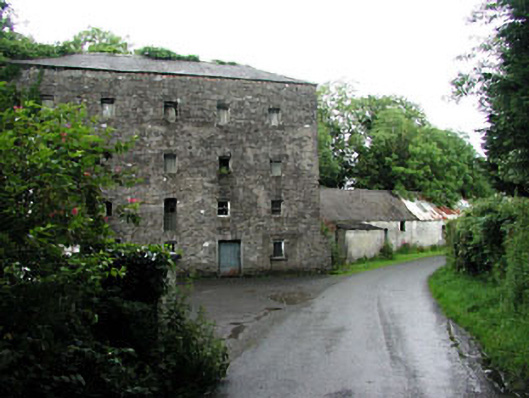 mill (water)mill (water) · 1.8 mi
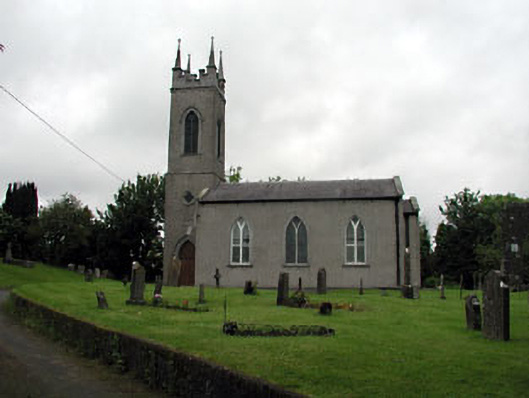 Saint Seachnall's Church (Dunshaughlin)church/chapel · 1.9 mi
 Killeen CastleCastle, tower house · 2.3 mi
 Clusker Wood SouthWood · 2.4 mi
 The Pond WoodWood · 2.4 mi
 CastleCastle, motte · 3.0 mi
 Candle HillMountain / peak · 3.2 mi
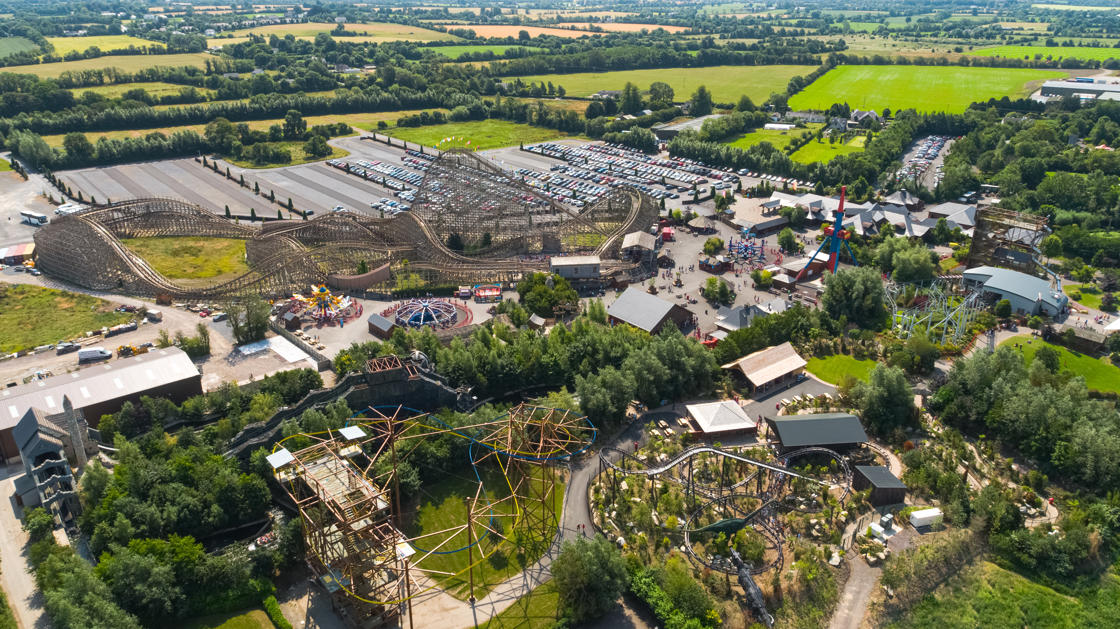 Emerald ParkHeritage attraction · 3.3 mi
 Battle of Tara Hillbattle · 3.9 mi
 Battle of Tara (Ireland)Major battlefield · 3.9 mi