What is recorded here
Tobernamanna is a holy well at Teelin where three women named Ciall, Tuigse and Naire are said to have become nuns and blessed the water. Pilgrims still gather there on Bonfire Night, sometimes sitting awake until daylight, while fishermen passing Teelin Bay lower their sails and remove their caps in salute. The well has stood at the edge of human memory for centuries, marked by a cairn and surrounded by stories of burials, gardens and crossed seas.
'Tobernamanna' a modernised holy well surrounded by a cairn. Described by Ó Muirgheasa in 1936 as 'Tobar na mBan Naomh or " The Well of the Holy Women," at Teelin. The turus is still made on the 23rd June, "Bonfire Night" Often if this night is fine the pilgrims sit up all night at the well until daylight. Stations are also made on the 29th June, probably because it is a Church holiday. The "Holy Women" are called locally Ciall, Tuigse, and Naire (Sense, Under standing and Modesty), and are said to have been three sisters (some deny, however, that they were sisters) who were reared at Rann na Cille, beside the well, and who became nuns, and blessed this well. Two of them are buried at Roilig na mBan, " the Graveyard of the Women," also near the well, and the third is buried east of Teelin Bay in Dúinín, and there is a Garraidh na Roilige, or Garden of the Cemetery in James Doherty's (Jimmy Antoine) land in Dúinín. But another tradition says one of the trio is buried in Cladach na gCaorach. Stations used to be made at both Dúinín and Cladach na gCaorach, but not in the present generation. The well at the former place is now dried up by artificial drainage, but the well in the latter place exists still. One old woman says there was but one turus and that the pilgrims used cross over from the Teelin to the Derrylahan side. The station on Bonfire Night suggests that it was originally a pagan sanctuary, christianised by early missionaries. Fishermen sailing out from Teelin Bay to fish in the open sea lower their sails by way of salute on passing Tobar na mBan Naomh, take off their caps, and ask the help and blessing of the holy women. An almost similar custom is observed by fishermen on the North-West coast of County Mayo, who, when passing under a jutting cliff known as the Cailleach Crom, salute it bareheaded three times in occult terms, at the same time striking the water with the flat of their oars. Crom is undoubtedly pagan, and the similarity of these customs strengthens the belief that Tobar na mBan Naomh is a christianised pagan sanctuary. But it has been the scene of Christian devotion now for thirteen centuries, and it is to be hoped our remarks will not lessen the veneration in which it is still held locally' (Ó Muirgheasa 1936, 148-9). (Ó Muirgheasa Nos. 23, 24, 25)
The above description was derived from the 'Archaeological Survey of County Donegal. A description of the field antiquities of the County from the Mesolithic Period to the 17th century.' Compiled by: Brian Lacey with Eamon Cody, Claire Cotter, Judy Cuppage, Noel Dunne, Vincent Hurley, Celie O'Rahilly, Paul Walsh and Seán Ó Nualláin (Lifford: Donegal County Council, 1983). In certain instances the entries have been revised and updated.
Compiled by Caimin O'Brien
Date of upload/revision: 06 January 2012
Tobernamanna, also known as Tobar na mBan Naomh, is associated with holy women and is linked to a tradition of pilgrimage or turas on 23rd June, a date possibly connected to St. John's Eve or local saintly observances. The site's cairn and continued ritual activity suggest a blend of pre-Christian and Christian traditions.
The monument record does not grant public access. Check the route and ask the landowner before entering private land.
- What survives
- Recorded monument
Places near here
 Cross in Rann Na CilleCross · 10 yd
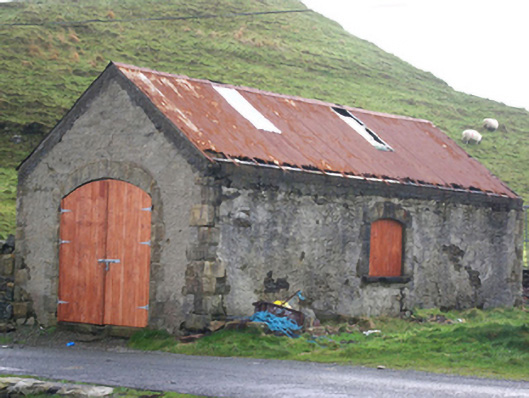 Stáisiún Garda Cósta an Teileannboathouse, coastguard station · 316 yd
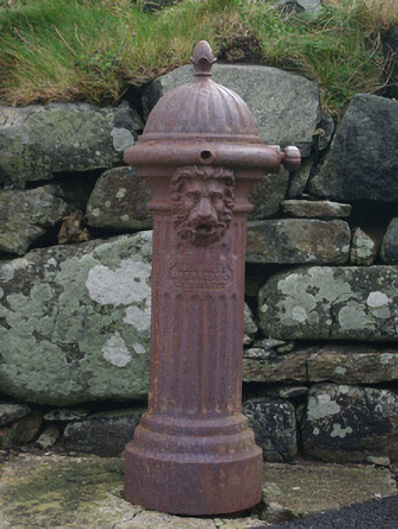 water pumpwater pump · 330 yd
 Cliffs at TeelinPublicly named cliff or headland · 410 yd
 Doire Leathan Coastal Promontory FortPromontory fort, coastal · 788 yd
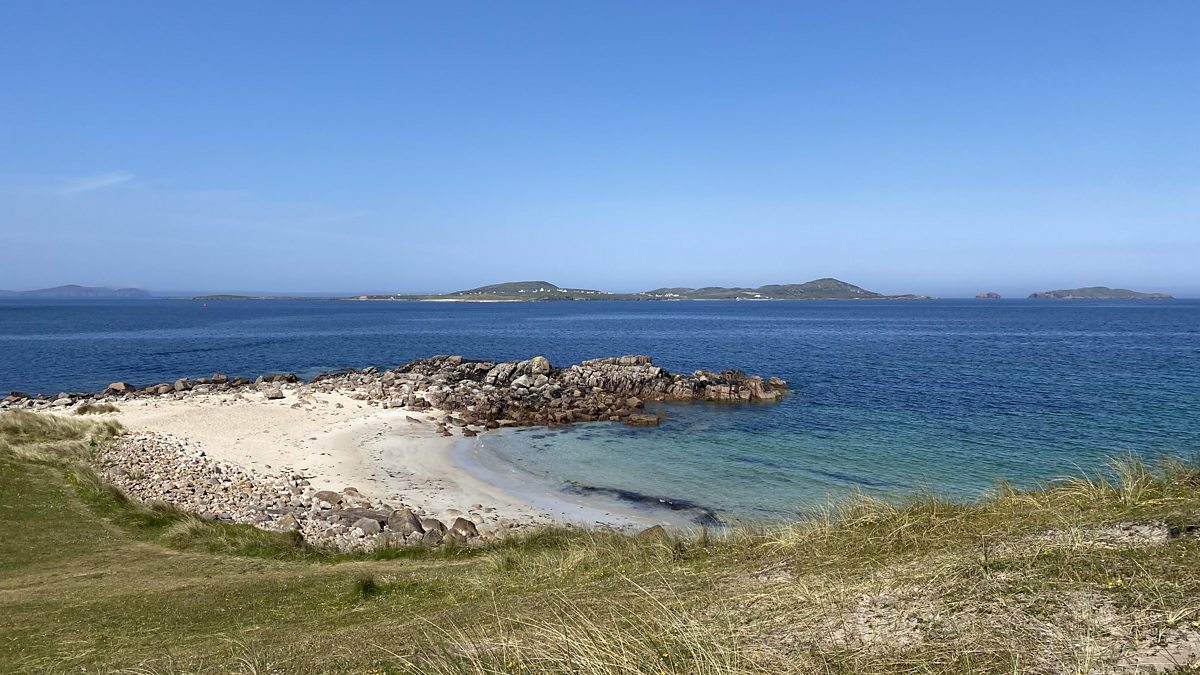 Dundawoona Point / Pointe an DúinHeadland · 1282 yd
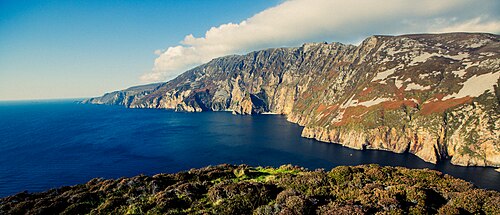 Slieve LeagueViewpoint · 1.9 mi
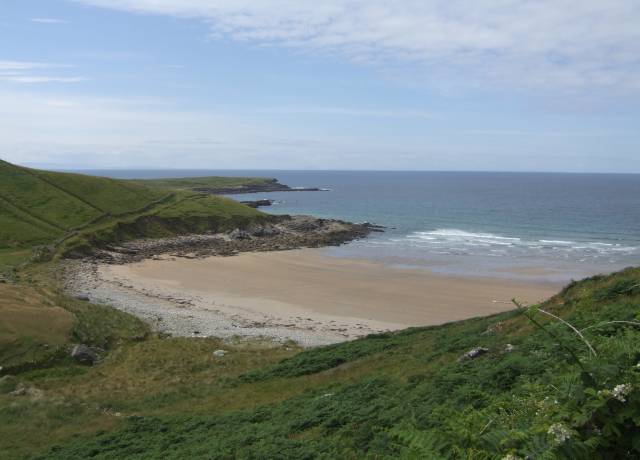 TraloarBeach / strand · 2.1 mi
 CroaghmuckrosMountain / peak · 2.2 mi
 International Appalachian Trail Ulster-IrelandWalking route · 2.4 mi
 TrabaneBeach / strand · 2.5 mi
 Slieve League SE TopMountain / peak · 2.9 mi