What is recorded here
Half a metre of carved stone hangs in the south wall of Clonbun Church, its Virgin crowned by God the Father while angels swing censers beneath. Made in the late fifteenth century and reset in 1842, it still glows with confident life. The birds on either side turn their heads inward as if listening to prayer, and the woman’s face below them watches with quiet pride. What is remembered is not loss but recognition: even buried detail can reappear when someone takes the time to see it.
Outside the S doorway of the parish church of Clonbun (ME036-049005-) the ornate arch (Wth 1.66m; H 0.83m; D 0.26m) of a tomb recess with a carved representation of the crowning of the Virgin at the apex is set high in the wall, probably as a result of conservation works. It has been described by Hunt (1974, 1, 211) as:
No. 198 Newtown Trim. Niche-head with the Crowning of the Virgin. Late 15th century
On the outer face of the south wall of the small medieval church to the east of the Cathedral is a round-headed niche built into its present position in 1842. It is not clear whether it was part of a doorway or a canopied tomb of Western type. The arch is decorated with foliate crockets and from the centre springs the commencement of a pinnacle, containing within its spandrels a finely carved group of the Coronation of the Virgin. On the sinister side is God the Father placing a crown upon the head of the Virgin who sits upon his right with her hands raised in prayer. On either side below their knees are angels with re-curved wings and flowing drapery, swinging censers. Below this, on the surface of the moulding of the face of the arch, is a female head, the hair parted and hanging in two tresses at the sides of the face. This is flanked by two figures of birds, their heads turned inwards and with their wings half-opened. This and the group above are highly competent and quite masterly pieces of carving in the full European idiom of the late fifteenth century.
Compiled by: Michael Moore
Date of revision: 17 February 2014
Likely dating to the 14th or 15th century, this stone sculpture reflects the influence of late medieval Christian art in Ireland. The carved scene of the Crowning of the Virgin suggests a devotional or commemorative function, possibly associated with a local noble or ecclesiastical figure.
The monument record does not grant public access. Check the route and ask the landowner before entering private land.
- What survives
- Recorded monument
Places near here
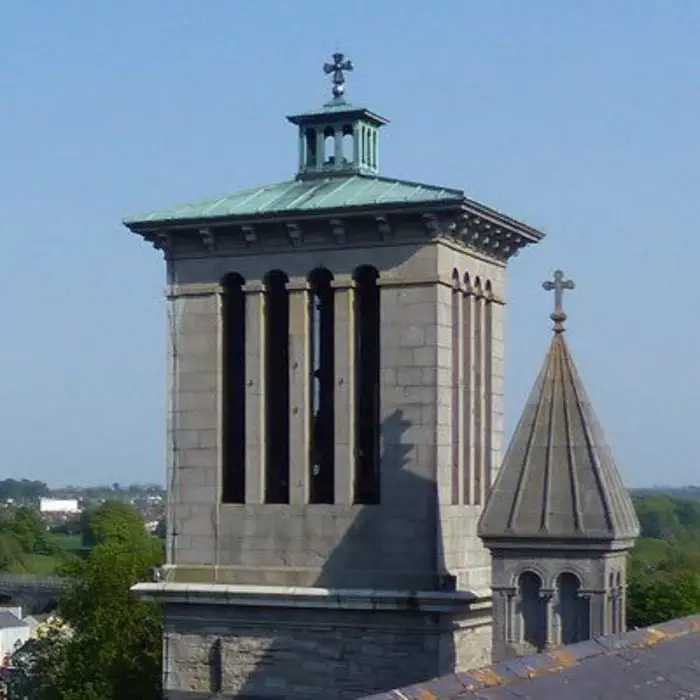 Church (in Ruins)Church · 4 yd
 Newtown AbbeyCathedral · 93 yd
 IndicatedCastle, tower house · 219 yd
 St. Johns FriaryReligious house, Fratres Cruciferi · 261 yd
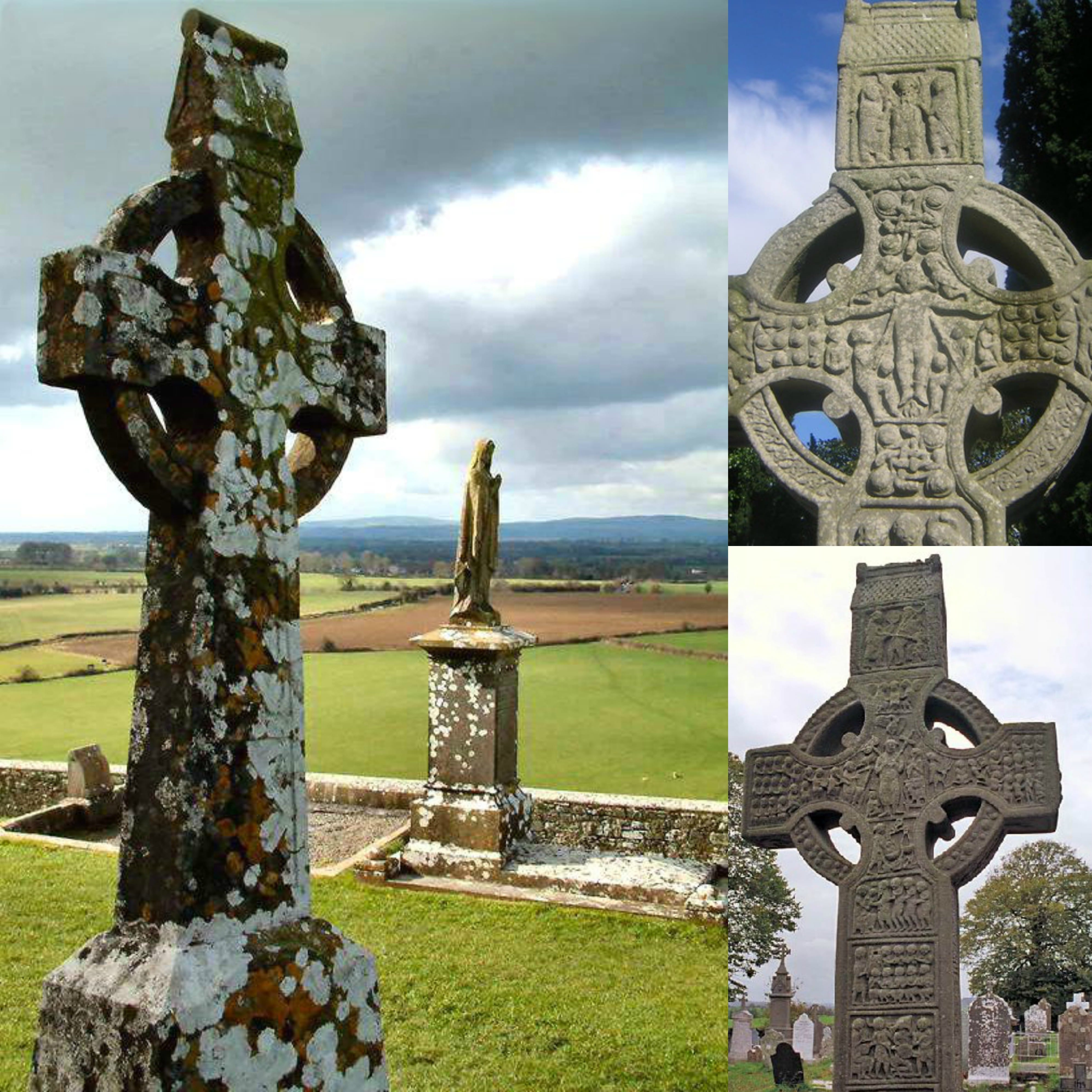 CrossCross, High cross (present location) · 296 yd
 CastleCastle, hall-house · 1332 yd
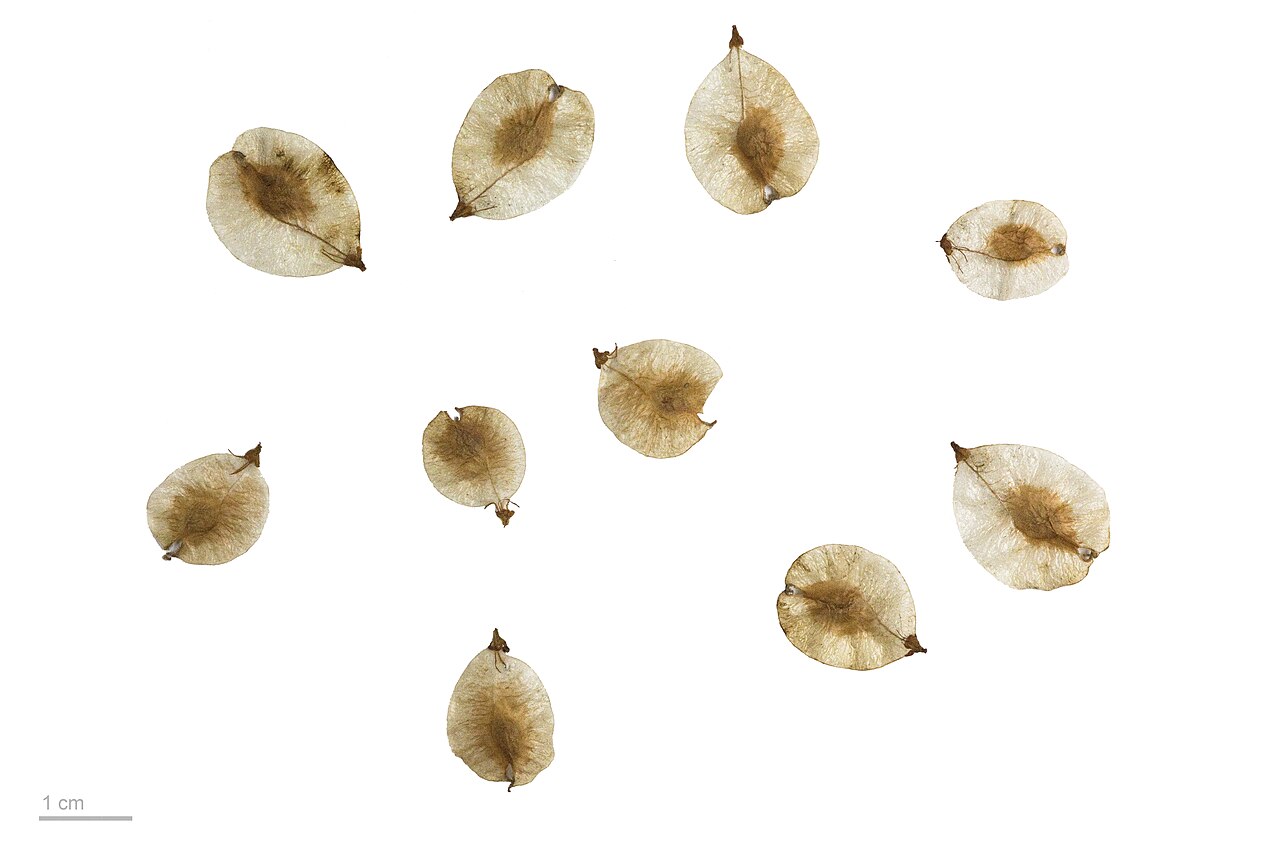 Small-leaved ElmSmall-leaved Elm · 3.1 mi
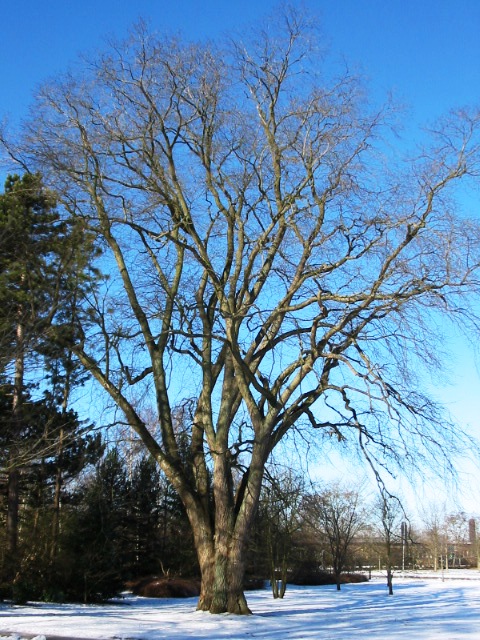 Wych ElmWych Elm · 3.2 mi
 MullaghMountain / peak · 8.8 mi
 Kilgar GardensHeritage attraction · 9.0 mi
 Larchil Arcadian GardensHeritage attraction · 9.2 mi
 Old Bog Road made famous by Teresa Bryton 1868-1943Memorial · 9.3 mi