What is recorded here
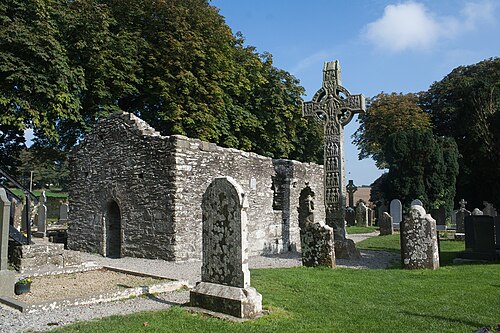
Monasterboice still holds two complete high crosses and the recovered head of a third, their sandstone surfaces crowded with pictures rare even in Ireland. The South and West crosses face one another like witnesses, while the North cross stands rebuilt on a newer shaft, its old crucifixion scene exposed to rain and memory. Grave-diggers once pulled further fragments from the earth, suggesting the field contained more than the visible stones. What is certain is that the place preserved a whole language of carvings when so much elsewhere was lost.
The Crosses at Monasterboice have been described in some detail by Roe (1981) and Harbison (1992) with full references. Two crosses remain complete (the South: LH021-062007- and West: LH021-062008-), while there is also the head and part of the shaft of a third (North Cross: LH021-062009-), now re-erected on a partly modern shaft. Two other cross fragments (LH021-062020-; LH021-062021-) were found while grave-digging and are stored in the National Museum of Ireland (Lucas 1973, 198). One is the arm of a cross, badly damaged and worn, and the other is possibly the head of a similar cross. Both are of sandstone and appear to be from crosses of the same proportions (Roe 1981, 67-9). Roe (ibid. 15) states that the wealth and variety of the pictorial illustrations on the South and West Crosses are unparalleled elsewhere in Ireland.
The North Cross is of sandstone and has only the upper part of the shaft and a ringed-cross head remaining. It is sparsely decorated and has a crucifixion scene on the W face. ]
This is a National Monument, in state ownership: No. 94.
The above description is derived from the 'Archaeological Survey of County Louth' (Dublin: Stationery Office, 1991). In certain instances the entries have been revised and updated in the light of recent research.
Revised by: Con Manning
Date of upload: 11 May 2016
The two remaining complete stone crosses at Monasterboice were likely built in the 9th or 10th century by a monastic community, possibly under the influence of the nearby Monasterboice monastery dedicated to St. Patrick and St. Brigid. They are carved in the Insular High Cross style, featuring Christian iconography and script, and are significant as outstanding examples of early medieval Irish religious art and craftsmanship.
The monument record does not grant public access. Check the route and ask the landowner before entering private land.
- What survives
- Recorded monument
Places near here
 CrossCross, High cross · 2 yd
 Monasterboice AbbeyRuins · 28 yd
 MonasterboiceEarly monastic site · 35 yd
 Stone CrossesCross, High cross · 40 yd
 Muiredach's High CrossHeritage attraction · 40 yd
 Church (in Ruins)Church · 1261 yd
 BarabonaMountain / peak · 1523 yd
 Drummond TowerCastle · 1.6 mi
 CastleCastle, unclassified · 1.7 mi
 Black HillMountain / peak · 2.2 mi
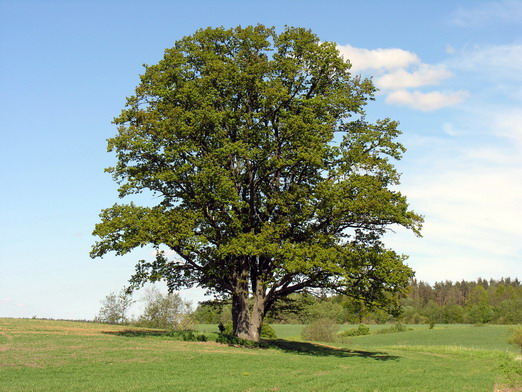 Pedunculate OakPedunculate Oak · 2.6 mi
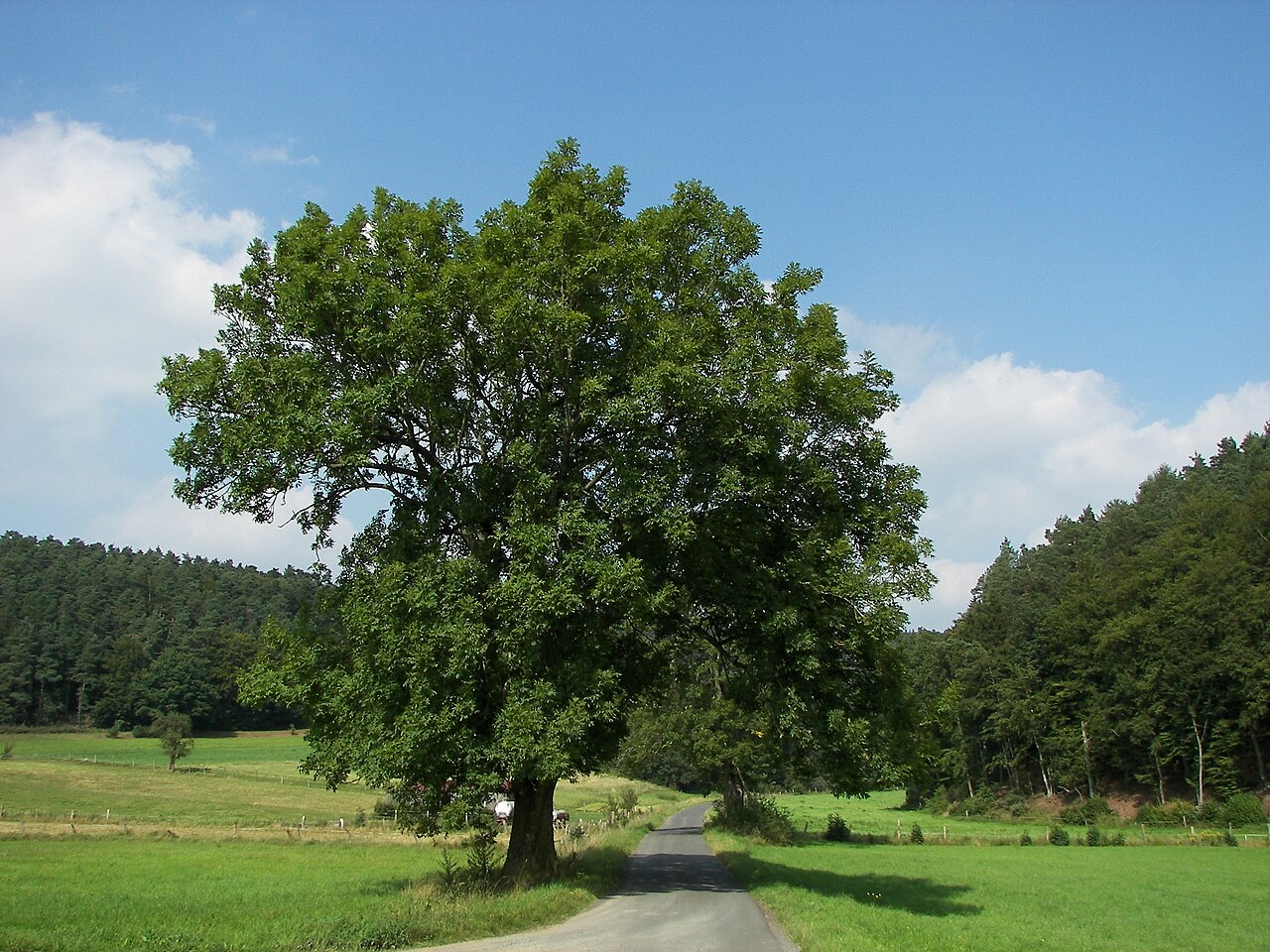 European ashEuropean ash · 3.1 mi