What is recorded here
Three grey stones still stand near Airmount crossroads, watched the Suir Valley for centuries, and were moved only when the bypass cut through their field. The smallest once ringed twelve post-holes, as if people gathered there to mark time or remember the dead. The largest leans slightly, not from age alone but perhaps from the weight of every road built around it. They are called The Three Friars, though no monk is named, only the shape of their patience.
On the NW side of Airmount crossroads, on almost level ground. There are good views to the W over the low-lying Suir Valley and to the Comeraghs. The stones are known locally as 'The Three Friars' (Carrigan 1905, vol. 4, 202). The group consists of three conglomerate standing stones, the largest incorporated into a field wall, with the other two standing stones c. 60m to the NW. The largest stone (H 1.85m; Wth 1.05m by 0.7m) leans to the SW. The smallest stone (H 1.25m; L 1m; W 0.35m) aligned NW-SE and the third stone (H 1.5m; Wth 0.7m by 0.6m) which was 12m NE of the smallest, aligned NW-ESE. The standing stones were excavated and re-located in 2003 to facilitate the construction of the N25 Waterford Bypass (Wren 2006, 276-7). All three stones had been set into sockets cut into the natural boulder clay. The smallest stone (total H 1.45m) had a circle of twelve post-holes surrounding it (ibid.). Testing had revealed the remains of a possible cist burial at the base of the third stone (ibid.). Immediately N of this stone there was a square cut in the natural boulder clay which was interpreted as possibly a socket for a fourth stone (ibid.). This socket was cut on the N side by an oval pit, the vertical sides and base of which were lined with limestone, forming a polygonal cist, with a split red sandstone capstone (ibid.). A fourth conglomerate stone (H 0.79m; Wth 0.68m; T 0.43m tapering to 0.14m), lying prostrate, may have been part of the group but excavation revealed no socket where it was lying (ibid.).
Compiled by: Jean Farrelly
Date of upload: 29 March 2017
Probably dating to the late prehistoric or early Christian period, the stone may have had ritual or commemorative significance. The local name 'The Three Friars' suggests medieval or later folklore, possibly reflecting a Christian reinterpretation of an earlier tradition.
The monument record does not grant public access. Check the route and ask the landowner before entering private land.
- What survives
- Recorded monument
Places near here
 Catholic Church of the Assumptionchurch/chapel · 864 yd
 CrossCross, Wayside cross · 1215 yd
 Rathpatrick Church RuinArchaeological place · 1491 yd
 Chapel in Kilmurry (ida By.)Chapel · 1.1 mi
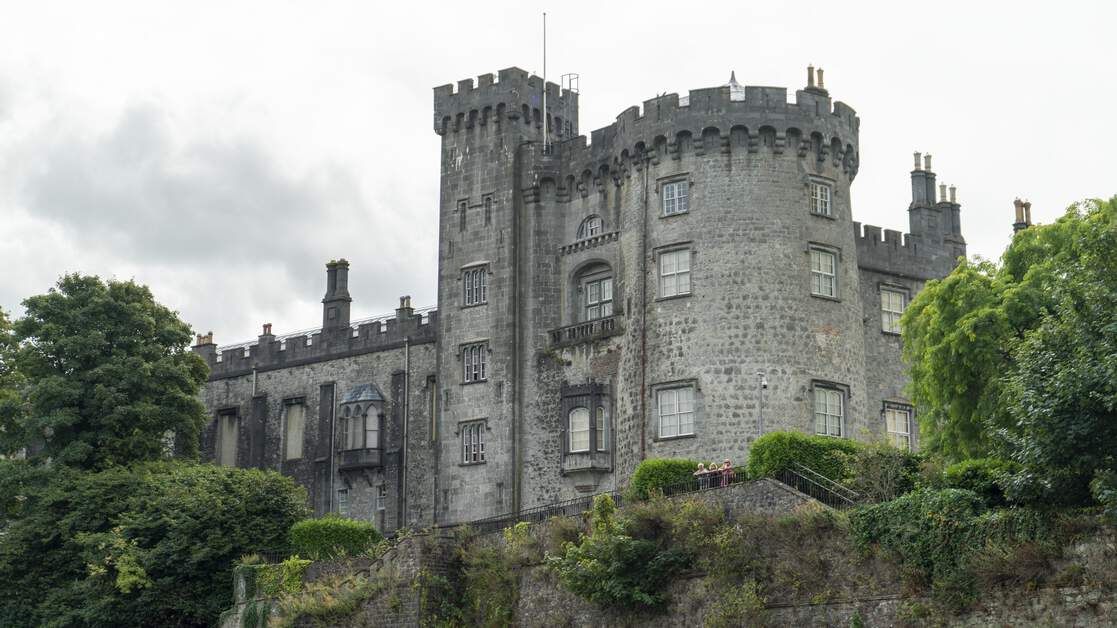 CastleCastle, unclassified · 1.8 mi
 Gorteens Castle (in Ruins)Castle, unclassified · 1.8 mi
 Slí na SláinteVisitor information · 2.5 mi
 Clock TowerHeritage attraction · 2.5 mi
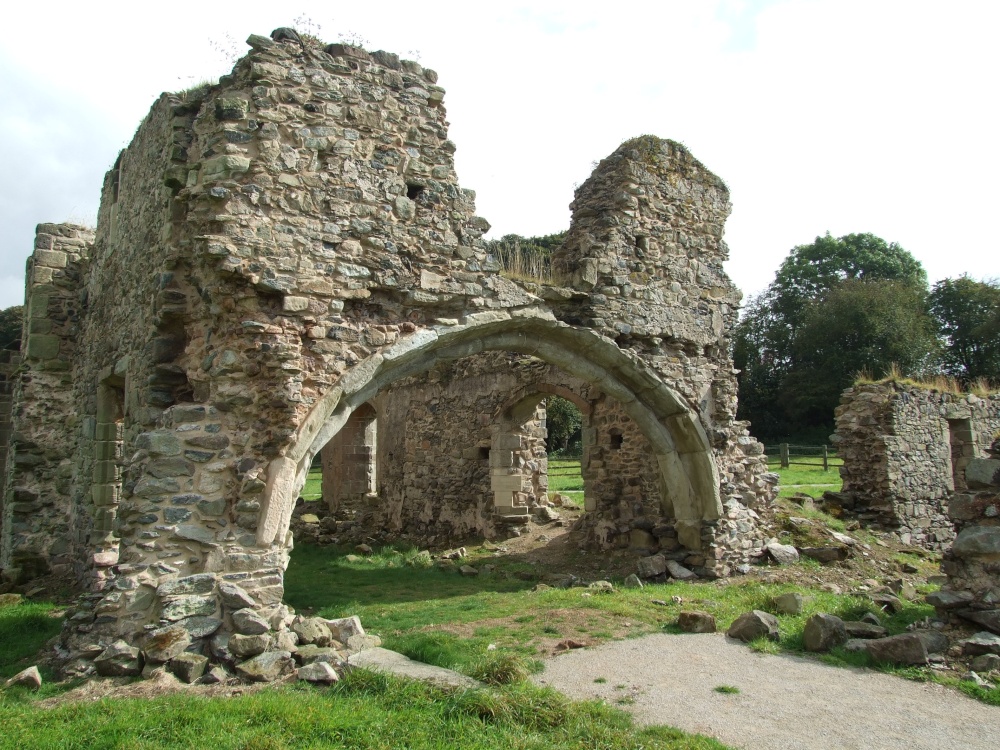 Native Woodland Trust:Grace Dieu ReserveWood · 4.5 mi
 Native Irish Tree TrailWood · 5.2 mi
 Mount Congreve GardensHeritage attraction · 6.9 mi
 Sugar Loaf RockMountain / peak · 6.9 mi