What is recorded here
Saint Dympna’s Holy Well is a small flagstone-edged spring in Galway pastureland where travellers still seek relief from rheumatism. The story told locally is that her own joints ached, she drank from this water and walked away easy. That is the shape of the place: a body in pain, a drink of cold water, and the road kept clear.
In low-lying undulating pastureland, c. 9m to the W of a N-S running road. Named St. Dima’s Well on the 1838 and 1929 editions of the OS 6-inch maps, though details from The Schools’ Collection (https://www.duchas.ie/en/cbes/4583354/4582269 last accessed 29 March 2023) indicate that it is known locally as Saint Dympna’s Holy Well. People would visit it especially in August and September and, according to tradition, the water of the well helped cure rheumatism.
On inspection this roughly D-shaped spring well (L 0.8m; Wth 0.5m; D 0.3m) was delimited by flagstones. A stone-lined pathway lead to it from a roadside gateway mounted with a cross. To the WNW a statue of St Dympna, according to the School’s Collection (ibid.), was encased in a glass-fronted concrete shrine, beneath which there was a fragment of worked stone. A bullaun stone (GA105-124002-) lay to the E of the well, while to the SE there was a rough cut-stone ‘seat’ (H 1.14m). There was a pattern tree (GA105-124003-) with rags tied to its branches to the SW. Current aerial imagery (OSi Digitalglobe (2011-2013)) indicates that the well is now obscured by trees and bushes. (O’Flanagan 1927, Vol. 2, 29; Killanin and Duignan 1967, 363).
Compiled by: Galway Archaeological Survey, UCG
Date of Upload: 12 April 2023
St. Dimas Well is associated with St. Dima, a lesser-known early Irish saint, and was historically visited for its supposed curative properties, particularly for ailments of the eyes and general ill health. The well's name and location appear on early Ordnance Survey maps, indicating its longstanding local religious and folkloric significance.
The monument record does not grant public access. Check the route and ask the landowner before entering private land.
- What survives
- Recorded monument
Places near here
 Ritual siteRitual site, holy tree/bush · 3 yd
 ToberemonHoly well · 426 yd
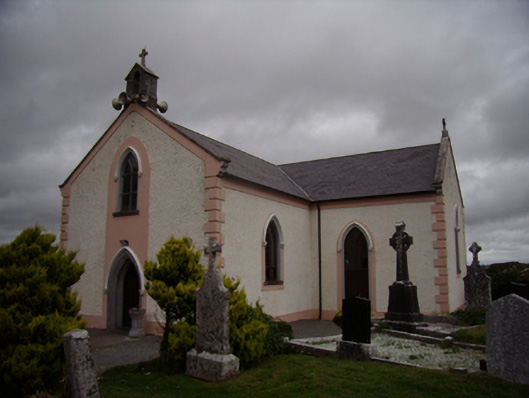 Saint Dympna's Catholic Churchchurch/chapel · 497 yd
 Old R.C. ChapelChapel · 524 yd
 Island McCooIslet · 1732 yd
 Stone Islands SouthIslet · 1.1 mi
 Long PointHeadland · 1.2 mi
 Site of CastleCastle, unclassified · 2.0 mi
 CastleCastle, tower house · 3.0 mi
 Scalpeen RockNamed rock · 3.7 mi
 KnockapollboyMountain / peak · 5.4 mi
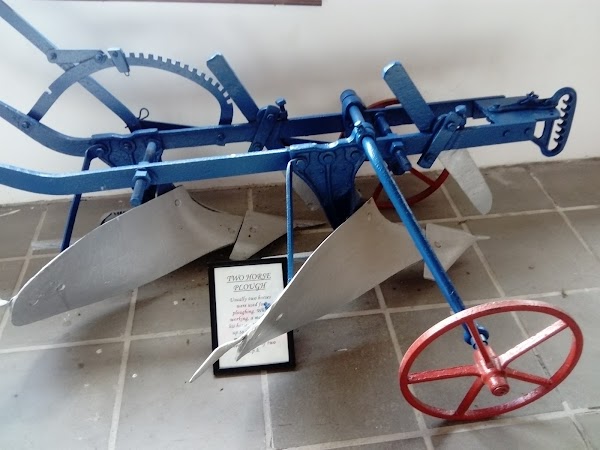 Dartfield Horse MuseumHeritage attraction · 5.4 mi