What is recorded here
Located in the N half of an ecclesiastical enclosure (DG084-001001-), and c. 15m N of a graveyard (DG084-001002-) which is located in the S half of an oval enclosure (DG084-084-001011-).
This holy well is not indicated on the 1836 OS 6-inch map; it is named ‘St Columbkille’s Well’ on the 1907 edition. It consists of a natural spring confined within a shaft lined with roughly coursed stones. A wooden cover closes the top of the well. Two penitential cairns (DG084-001009-; DG084-001010-) flank the well. According to local tradition, water from the well is said to cure toothache, and ailments of farm stock. The traditional devotional ‘pattern’ or ‘turas’ began with the recitation of a set sequence of prayers (three Paters, three Aves, three Glories) at the well, followed by a walking circuit of the graveyard, with the same set of prayers recited at each of the three penitential cairns (DG084-001005-; DG084-001006-; DG084-001007-) within the graveyard. The penitential cairns were circled clockwise, and a small stone was placed on each cairn. Pilgrims then proceeded to the ‘arch’ enclosure (DG84-001012-), where further prayers were recited, and those with ailments climbed through the arch and placed a stone on top of it. The ‘turas’ concluded back at the holy well. (Beglane et al. 2016, 16-18; Appendix 2).
Compiled by: Jane O'Shaughnessy
Date of revised upload: 8 August 2017
St. Columbkilles Well is associated with Saint Columba, a 6th-century Irish monk and missionary linked to the spread of Christianity in Scotland and parts of Ireland. The well may have been used for ritual healing or baptism, reflecting early Christian traditions that often incorporated pre-existing sacred sites.
The monument record does not grant public access. Check the route and ask the landowner before entering private land.
- What survives
- Recorded monument
Places near here
 Disert GraveyardGraveyard · 33 yd
 Dolmen at DisertPublicly named tomb or grave · 52 yd
 Dermot & Grania's BedCave · 1.1 mi
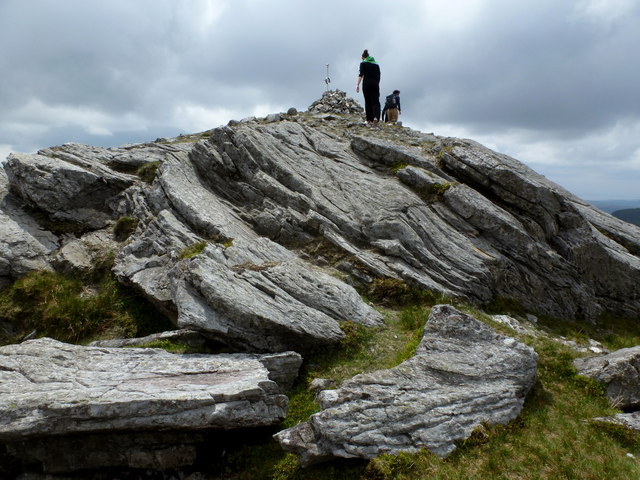 CarnaweenMountain / peak · 1.2 mi
 Cloghmeen HillMountain / peak · 1.5 mi
 Tullytrasna Standing StonePublicly named standing stone · 2.4 mi
 Church of the Holy Redeemerchurch/chapel · 2.8 mi
 Lettermore National Schoolschool · 2.8 mi
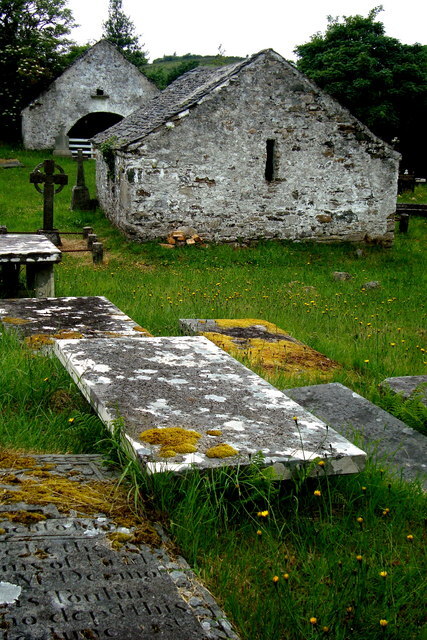 Inishkeel Graveyard near GlentiesGraveyard · 4.8 mi
 St. Connell's Museum and Heritage CentreMuseum · 5.7 mi
 Old CastleCastle, tower house · 5.8 mi
 Ardnamona Nature ReserveNational nature reserve · 5.9 mi