
What is recorded here
Sopwell was founded around 1140 for Benedictine women, survived an armed robbery in 1429 and produced the literary tradition around prioress Juliana Berners. After suppression, Henry VIII's engineer Sir Richard Lee replaced it with a Tudor house whose brick ruins now cover the convent site.
Foundation and growth
Abbot Geoffrey de Gorham founded St Mary's Priory on a hermitage around 1140 as a dependency of St Albans Abbey. Its church, chapter house and dormitory enclosed a cloister, supporting a prioress, as many as nineteen nuns and servants.
People and events
Townsmen drove off William Wawe's robbers when they attacked in 1429. Fifteenth-century prioress Juliana Berners is traditionally linked with the Book of St Albans, an influential early printed work on hunting, hawking and heraldry.
Damage, loss and survival
The priory ended with St Albans Abbey in 1539. Sir Richard Lee demolished much of it, reused the church nave in Lee Hall and then built a larger Sopwell House; later owners stripped materials for Gorhambury and the remaining house decayed. Brick walls from Lee's Tudor and later house stand around the former cloister area, with monastic fabric surviving below or within them. St Albans Museums manages the fragile ruin, which required specialist cleaning after graffiti in 2017.
Why it mattered
Sopwell shows a women's religious community feeding directly into a Tudor elite residence rather than disappearing without trace. Its robbery, literary association and reused church make national religious change visible through named local lives.
Sources for this account
Sources checked 16 August 2026.
From OpenStreetMap (© OpenStreetMap contributors) n1807004505
Places near here
Photo credits
- Gary Fellows, Wikimedia Commons · CC BY-SA 2.0
- Rob Hinkley, Wikimedia Commons · CC BY-SA 2.0
- Bill Boaden, Wikimedia Commons · CC BY-SA 2.0
- Ian Capper, Wikimedia Commons · CC BY-SA 2.0
- Martin Stewart, Wikimedia Commons · CC BY-SA 2.0
- Chris Brown, Wikimedia Commons · CC BY-SA 2.0
- MW Hallett, Wikimedia Commons · CC BY-SA 2.0
- Stephan van Helden, Wikimedia Commons · CC BY-SA 4.0
- Richard Cooke, Wikimedia Commons · CC BY-SA 2.0
 Sopwell Nunnery RuinsListed building · 61 yd
 Cycleway bridgeHeritage place · 256 yd
 Sopwell MillListed building · 414 yd
 Hare and Hounds Public HouseListed building · 469 yd
 Railway Bridge over the Alban WayHeritage place · 483 yd
 St Albans South Signal Box MuseumMuseum · 763 yd
Explorer Tom St Albans South Signal Box has 44 levers, and Tom is convinced one controls the tea trolley. This preserved Midland…
 Old Milepost by the A5183, St Stephen's Hill, St AlbansMonument or public art · 917 yd
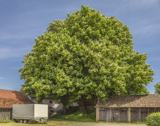 The Verdun TreeHorse-chestnut · 925 yd
 Clarence Park FountainMonument · 1233 yd
 Verulamium Park - St Germain's BlockVisitor information · 1342 yd
 Hatfield Road CemeteryCemetery · 1455 yd
 The HypocaustMuseum · 1736 yd
Explorer Tom The Hypocaust in St Albans is an ancient argument for warm feet, and the Romans made it with brick, hot air and a…
More archaeology and monuments in St Albans · All of St Albans

What do you know about this place?Tap to add a comment or ask a question