What is recorded here
Saint Johnstown is a vanished linear town on the River Foyle that appeared fully formed in 1618, bypassing older centres to claim a voice in parliament. Its narrow streets and Monday market served thirty-seven souls before the earls of Wicklow sold the borough for compensation in 1800. The rapid rise and sudden erasure suggest a place built for show rather than life, leaving behind only a road cut through memory.
Described in the Urban Survey of Donegal as 'This town is situated on the Rver Foyle just a short distance from the border with county Derry. The town was not on any of the original lists for the plantation of Ulster and appears in 1618 as a fully fledged new town at a time when other centres such as Raphoe and Rathmullan were clamouring for incorporation. The town was situated in the old parish of Taughboyne, I.e. Teach Baithen ("the church of Baithen"), named after the abbot who succeeded Colmcille at Iona (Gwynn and Hadcock 1970, 406). Despite attempts to build a new church within the town, Taughboyne, some 3km north of St. Johnstown, was to remain as the parish church of the new settlement.
The land of St Johnstown, then called "Dromtoolan alias Cashelduffe", was granted to Ludovic Hamilton, duke of Lennox, on condition that he should introduce thirteen English or Scottish men, "principally artificers", wihin the space of four years and build houses for them (Ir. Rec. Comm. 1830, 403). The patent, which survives in the Public Record Office of Ireland, further required that the corporation should consist of thirteen members and it set out stipulations for the plan of the town (PROI, R.C. 3/4, ff. 88-93). The purpose of the proposed town is interestingly stated as being as much for the defence of loyal subjects living in the area as for the restraint of rebels. It seems, however, that the incorporation was not proceeded with before the outbreak of rebellion in 1641. The Civil Survey, compiled some years later, describes St Johnstown simply as a little village. The adult population in the census of c. 1659 is given as 19 English and Scots, and 18 Irish making a total of 37, the second smallest borough population (after Killybegs) in Ulster. In 1671, however, the town returned members to parliament and it continued to do so until 1800 when the earls of Wicklow, who had bought the town from the hamiltons, received £15,000 in compensation for the loss of the borough' (Bradley and Dunne 1989, 60-1).
The physical layout of the town is described in the Urban Survey as 'The street plan is linear consisting of one main street running E-W, intersected by a narrower street running N-S, past the unfinished parish church. The manner in which the present Derry road cuts through the town indicates that it is not original. The market place was evidently in the main street which was made broad in order to accommodate it. The original patent stipulates that the market should be held on Mondays' (Bradley & Dunne 1989, 61-2).
The monument record does not grant public access. Check the route and ask the landowner before entering private land.
- What survives
- Recorded monument
Places near here
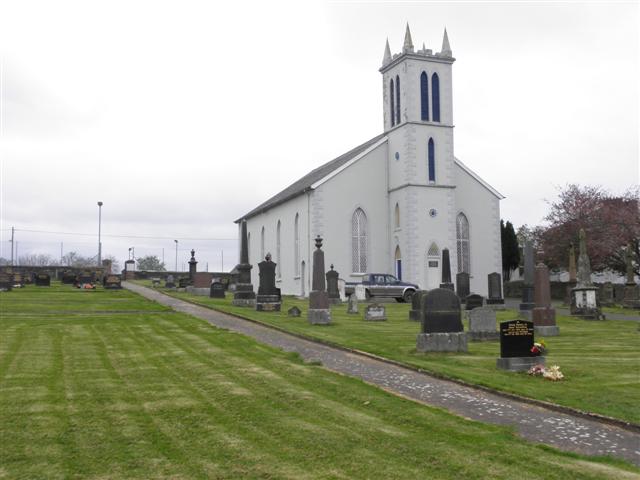 St. Johnstown Presbyterian Churchchurch/chapel · 124 yd
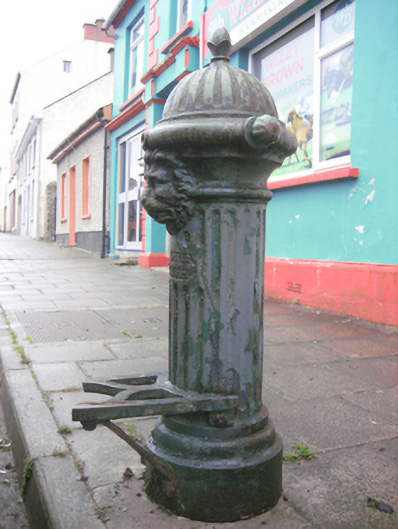 water pumpwater pump · 139 yd
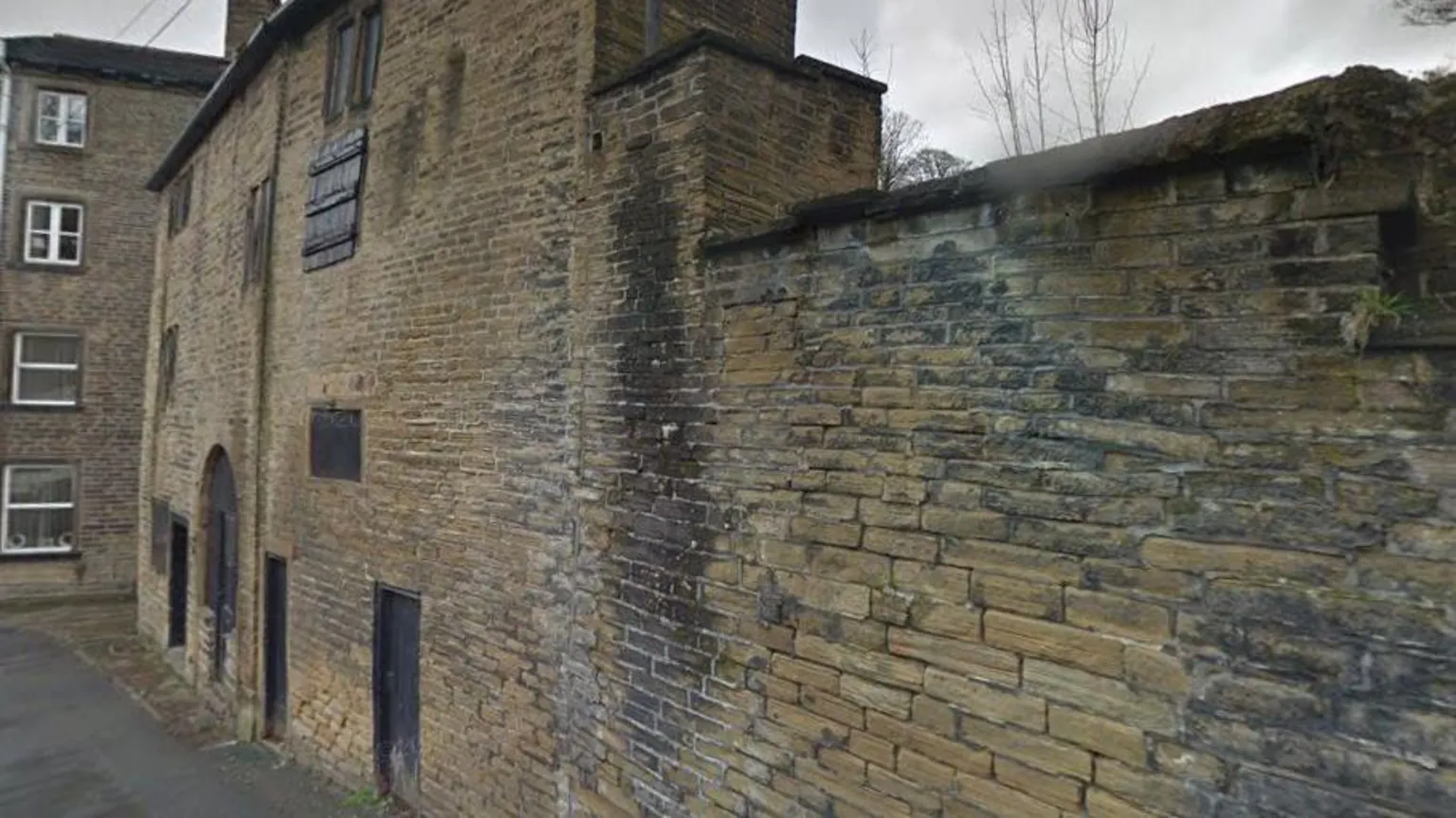 Former Clashygowan EnclosureEnclosure · 858 yd
 Former Saintjohnstown EnclosureEnclosure · 947 yd
 CastleCastle, unclassified · 1.7 mi
 Mongavlin CastleHouse, fortified house · 2.1 mi
 Gortmonly HillMountain / peak · 3.3 mi
 BATTLE SITE: BATTLE OF THE FORDS, Northern crossing, 1689 in Ballydonaghy; Greenlaw; LeckpatrickBATTLE SITE: BATTLE OF THE FORDS, Northern crossing, 1689 · 4.1 mi
 Emmery Celtic CrossWood · 4.6 mi
 Feddyglass WoodWood · 4.7 mi
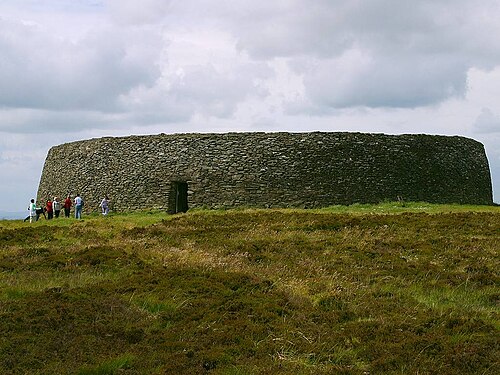 Grianán of AileachFairy fort / stone ringfort · 6.3 mi
 Apprentice Boys of Derry and Siege MuseumMuseum · 6.8 mi