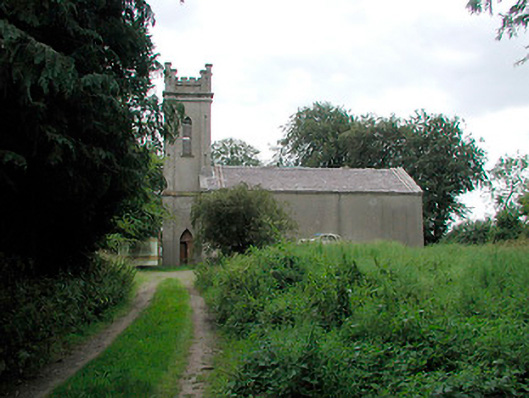
What is recorded here
Detached three-bay Church of Ireland church with attached two-stage tower on square-plan to east with a crenellated parapet and clasping corner buttresses, built c.1790 and remodeled c.1820. Pitched natural slate roof with clay ridge tiles, cast-iron rainwater goods and raised verges with cut stone coping. Roughcast rendered walls over cut stone plinth with cut stone detailing. Pointed-arch window openings to south side of nave with Y-tracery and latticed glass, no openings to north side of nave. Triple-light window with intersecting tracery and latticed glass to chancel gable, pointed-arched windows either side of tower on entrance front (east). Pointed-arched door opening to north side of tower with timber sheeted double-doors. Pointed-arched openings with louvered vents to belfry. Interior has been cleared of fixtures and fittings but curved plaster ceiling and simple painted decoration to the walls remain. Cut stone gate posts with wrought-iron double gates, flanked by curved stone walls with wrought-iron railings to road frontage to north. Church located in round enclosure with graveyard to the south of the village centre and is approached down long tree-lined avenue.
This well-composed, small scale-church is typical of the form advocated by the Board or First Fruits (1711 to 1833). Although now long disused, the church retains most of its original form and massing, together with the remains some important salient features and materials. The cut-stone detailing to the exterior and the tracery to the windows is of artistic merit. An attendant graveyard enhances the setting of the church. The circular enclosure within which the church is set looks suspiciously like a early medieval church site, although the site is not a recorded monument. The fine cut stone gate and wrought-iron railings to the north enhance the streetscape. The church is of particular social importance as a reminder of the once-prosperous Church of Ireland community in the locality and remains an important landmark in the area.
This does not grant access. Most recorded buildings are privately owned; view them only from public ground unless the owner allows entry.
Places near here
 market placemarket place · 211 yd
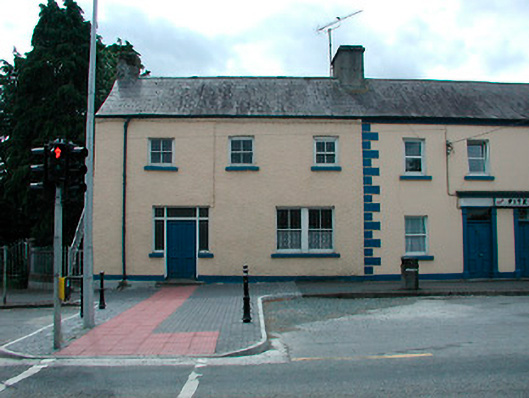 court housecourt house · 228 yd
 OutlinedFairy fort / earthen ringfort · 1042 yd
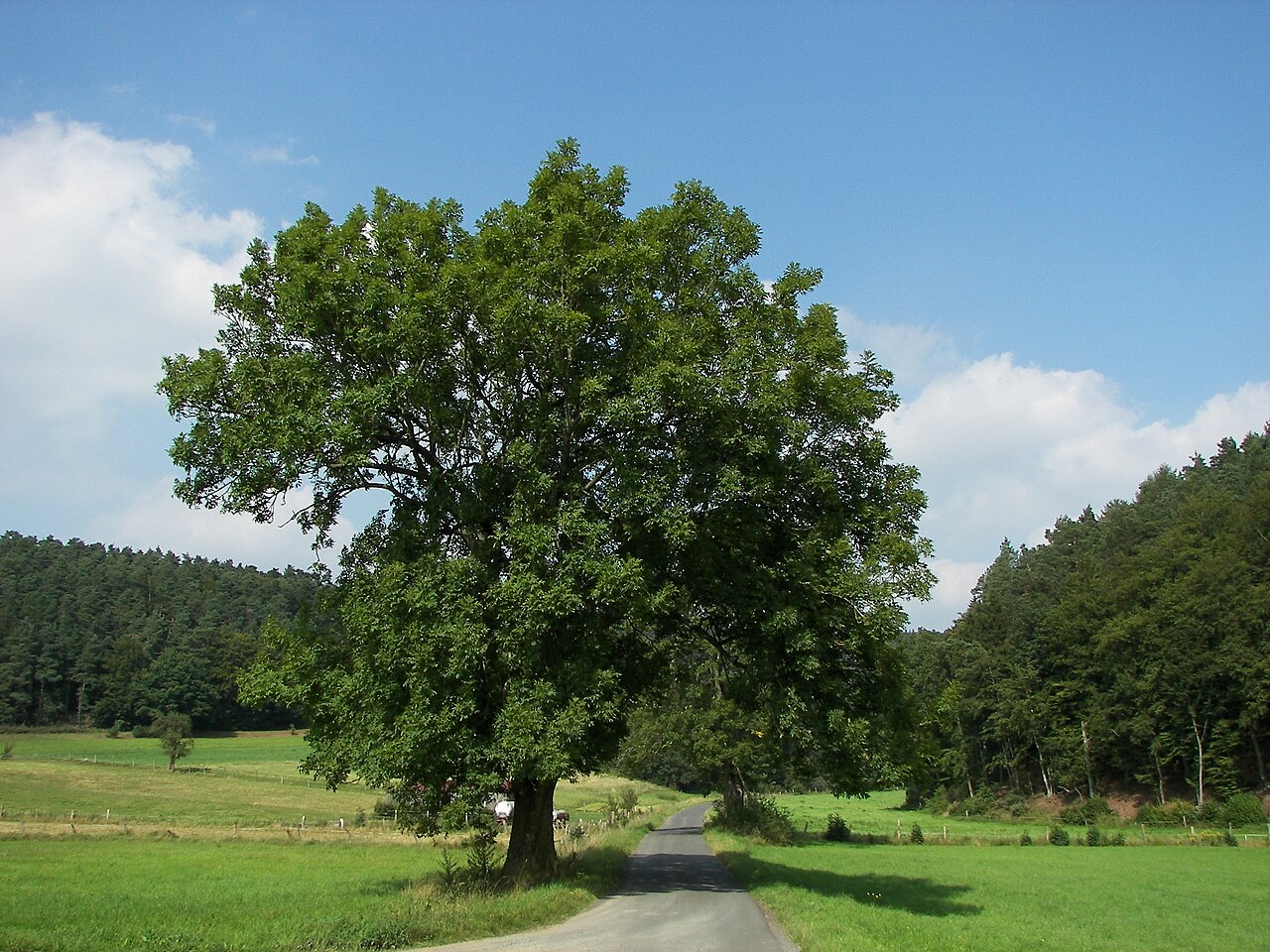 European ashEuropean ash · 1.8 mi
 Enclosure in Shanco (fore By.)Enclosure · 1.8 mi
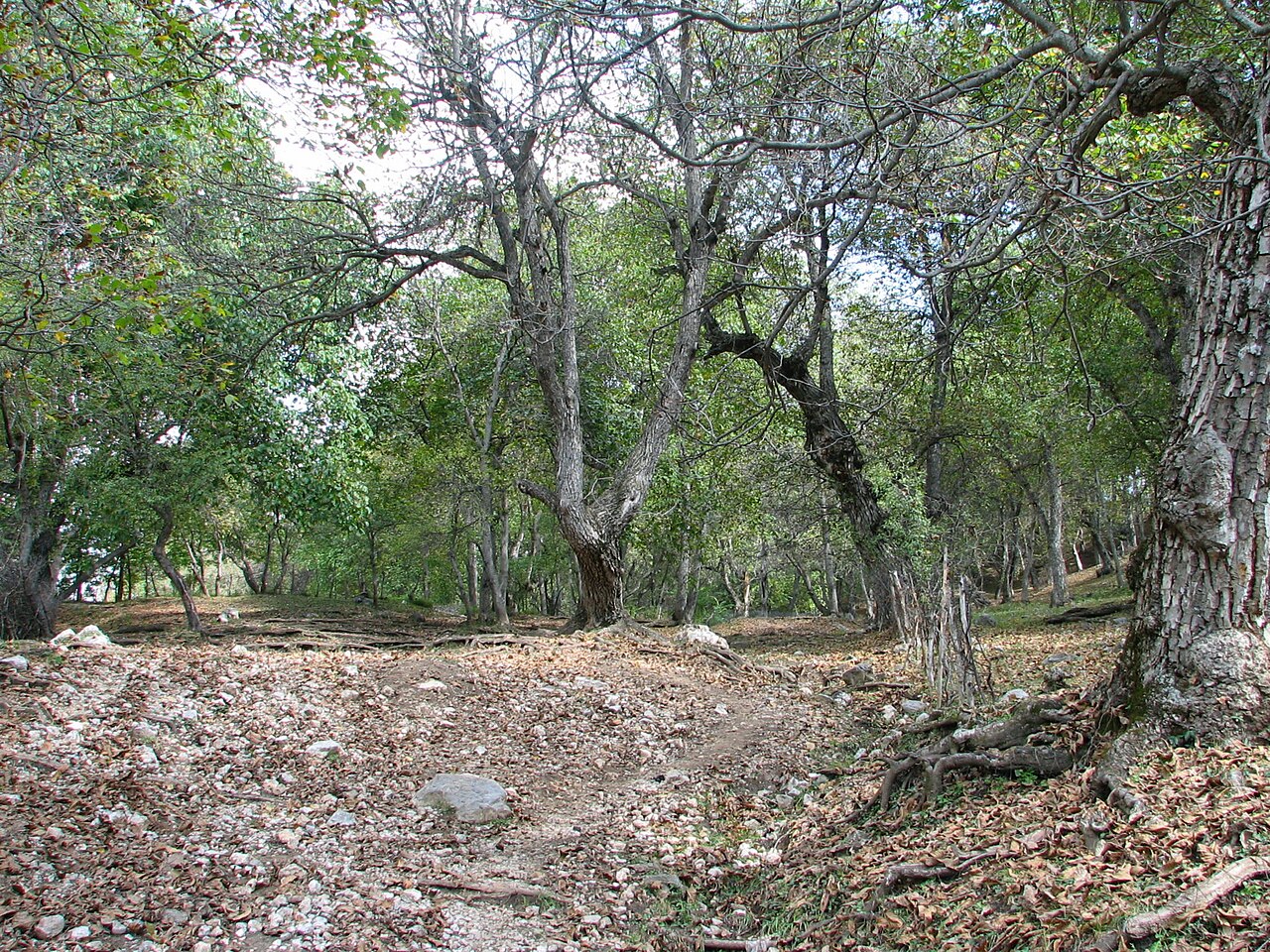 Persian WalnutPersian Walnut · 1.8 mi
 Dervotstown CastleCastle · 1.9 mi
 Round TowerCastle, tower house · 2.1 mi
 Drewstown LittleMountain / peak · 2.3 mi
 CloncatMountain / peak · 3.2 mi
 BoglandMemorial · 3.8 mi
 Causey FarmHeritage attraction · 3.9 mi
Other information
Photo: National Inventory of Architectural Heritage · Website use allowed for educational or private purposes with source credit