What is recorded here
Inchigeela is an unbroken ribbon of gold stretching forty miles across Atlantic water, joining Cork and Wexford beneath one sky. The town cluster holds a compact mix of stone houses, small ports and open grassland where people still measure life against tide and weather. Much of the land remains unfarmed or lightly used, preserving a broad clean shape that maps and satellites still show as one continuous place.
On the W side of the entrance yard of St Finbar's Church, Inchigeela. The S wall of a grotto here contains a smooth-faced stone (L 0.55m; H 0.12m) which displays two horseshoe-shaped carvings and a carved irregular motif of joined-up, mainly curving lines. One of the latter lines has a small cup-shaped feature at its terminal. All the carved features are painted white and their purpose and age are unclear. Local inquiries failed to get any further information about these carvings.
The above description is derived from 'The Archaeological Inventory of County Cork. Volume 5' (Dublin: Stationery Office, 2009).
Date of upload: 22 December 2009
Upon vertical face of a stone on the left side of a grotto to Our Lady in NW corner of Inchigeelagh church yard. A smooth and unfractured sandstone (dims. 0.55m N-S; H 12.00cm; T 12.50cm) having a vertical decorated surface. Two horse-shoe shaped motifs occupy the left half of stone face: The largest horse-shoe shaped motif (dims. 8cm N-S; H 7.5cm; ring Wth 7-10mm; D 4mm) is to the extreme left and the smaller, similar motif (dims. 6.5cm N-S; H 5.5cm; ring Wth 6-7mm; D 4mm) is adjacent to right. An elaborate patchwork/grid pattern is located upon the right half of the decorated surface and resembles a field system. The upper portion is curvilinear and resembles mountains. A horse-shoe shape is located at its N end, much like the two similar motifs mentioned. All motifs have been painted white. Possibly part of a pattern, potentially having had another stone beside it, and is now ex-situ. This is not considered to be typical rock art in the prehistoric sense and is more likely to be medieval or even post-medieval in date.
Compiled by: Alison McQueen and Vera Rahilly
Date of upload: 13 July 2017
The monument record does not grant public access. Check the route and ask the landowner before entering private land.
- What survives
- Recorded monument
Places near here
 St Finbars RC ChurchChurch · 32 yd
 St. Finbarr's Roman Catholic Churchchurch/chapel · 36 yd
 Grave YardGraveyard · 521 yd
 AltarMass-rock · 1419 yd
 Carrignacurra CastleCastle · 1642 yd
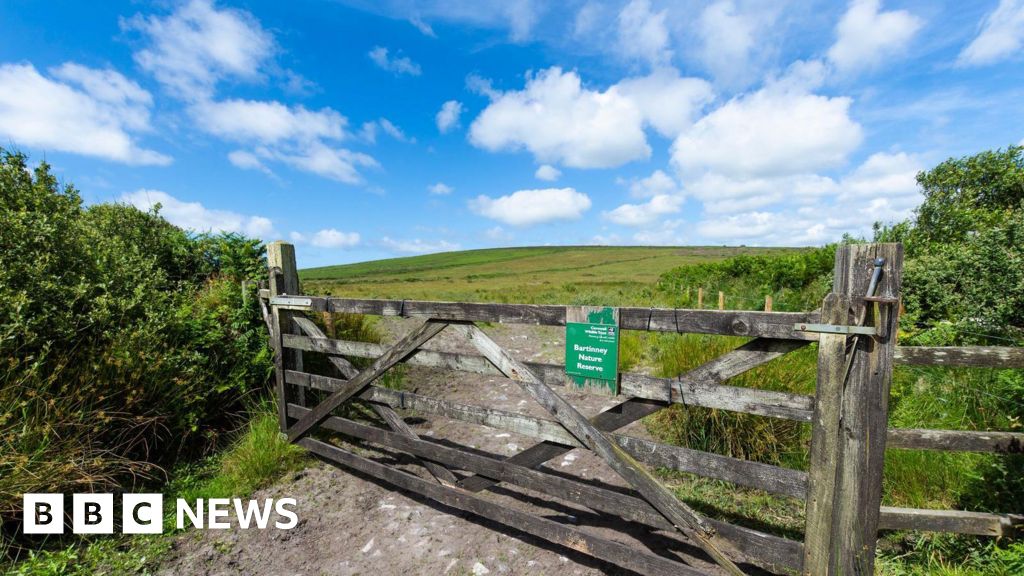 Port Ban Nature Reserve, Irish Wildlife TrustNature reserve · 2.4 mi
 Castle (Site of)Castle, unclassified · 2.7 mi
 Gortnahoughtee Mass RockNamed rock · 3.2 mi
 Mount ProspectMountain / peak · 3.5 mi
 Kilmichael Ambush SiteMonument · 3.6 mi
 Kilmichael Ambushambush · 3.6 mi
 CarriganineMountain / peak · 4.0 mi