What is recorded here
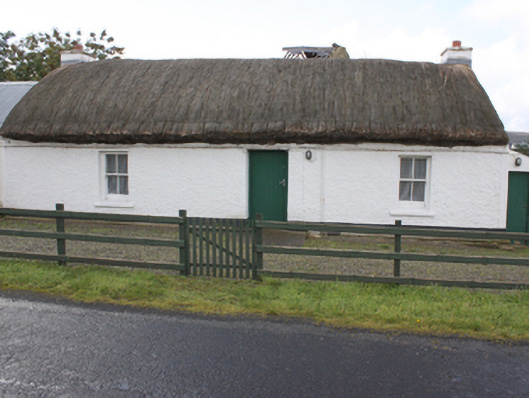
Semi-detached three-bay single-storey vernacular house, built c. 1800, having lean-to single-bay single-storey shed attached to the north and single-bay single-storey outbuilding attached to the south gable end. Pitched/domed thatched roof having ropes and wire mesh over secured on wrought-iron bars below eaves level, and with rendered chimneystacks to gable ends; metal pegs for securing ropes at eaves level to the rear elevation, and to the gable ends. Roughcast rendered walls over smooth rendered plinth course to front elevation, with whitewashed rubble stone walls to gable ends, rear elevation and attached outbuildings to either gable end. Square-headed window openings with painted stone sills, and with two-over-two pane horned timber sliding sash windows. Central square-headed door opening having replacement battened timber door. Set back from road within own grounds with garden to front (east) having picket fence to front boundary. Ruinous single-storey thatched vernacular house (see 40805027) immediately to south of site. Ruinous two\three-storey former corn mill building to rear of property having remains of pitched natural slate roof, rubble stone walls, and square-headed openings, some with brick lintels. Located to the north-east of Carndonagh, adjacent to the east bank of the Glennagannon River.
This charming and well-maintained thatched vernacular house retains its early form and character, and is an appealing feature in the rural landscape to the north-east of Carndonagh. Its architectural integrity and visual expression is enhanced by the retention of the majority of its salient fabric, including timber sliding sash windows. Modest in scale, it exhibits the simple and functional form of vernacular building in Ireland. Of particular interest in the survival of the thatch roof, which is now sadly becoming increasingly rare in Donegal. The rounded roof is a typical feature of thatched houses located close to the sea in exposed areas in the north-west of Ireland, while the wrought-iron bar and the metal pegs to the eaves were used to tie ropes (and sometimes nets) over the roof to secure it against the prevailing winds, as is the case here at Tullanree. The attached rubble stone outbuildings to either gable end are a feature of many vernacular dwellings in the area., while the largely blank rear elevation is a typical feature of many small-scale vernacular dwellings in rural Ireland. The form of this building and location of the chimneystacks suggests that it is of the ‘direct entry’ type that is characteristic of the vernacular tradition in north-west Ireland. The survival of the ruinous two or three-storey former corn mill building to the west adds substantially to the context and setting, and is an interest addition to the built heritage and social history of the local area in its own rights. This mill probably originally dates to the late-eighteenth or early-nineteenth century, a boom period for the Irish corn milling industry. The settlement is described as Mill Town, suggesting a connection with this derelict nineteenth century corn mill to the rear. It forms a pair of buildings along with the sadly ruinous thatched vernacular house (see 40805027) adjacent to the south. This house represents a fine surviving example of a once ubiquitous building type in the rural Irish countryside, and is one of the better and more attractive surviving examples of its type in County Donegal.
This does not grant access. Most recorded buildings are privately owned; view them only from public ground unless the owner allows entry.
Places near here
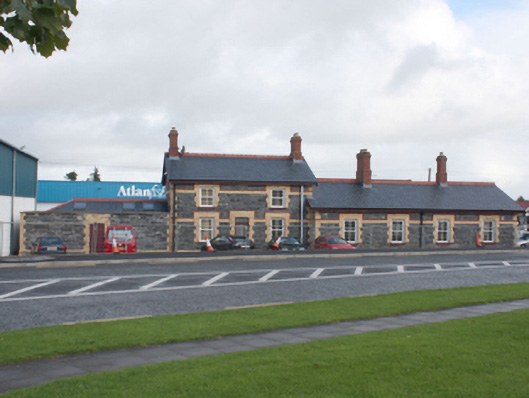 railway stationrailway station · 894 yd
 Carndonagh Courthousecourt house · 928 yd
 Tullanree Western Stone RingfortFairy fort / stone ringfort · 1389 yd
 Former Site of Carndonagh South Pillar StoneStone sculpture · 1726 yd
 Carndonagh Early Church GraveyardGraveyard · 1.0 mi
 CuldaffOfficial bathing water · 4.8 mi
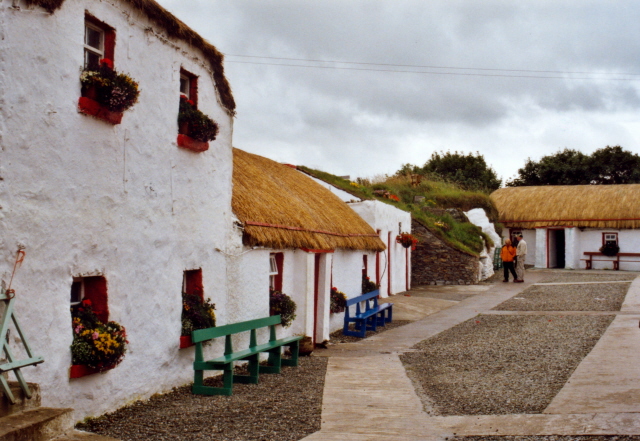 Dough Famine VillageHeritage attraction · 4.9 mi
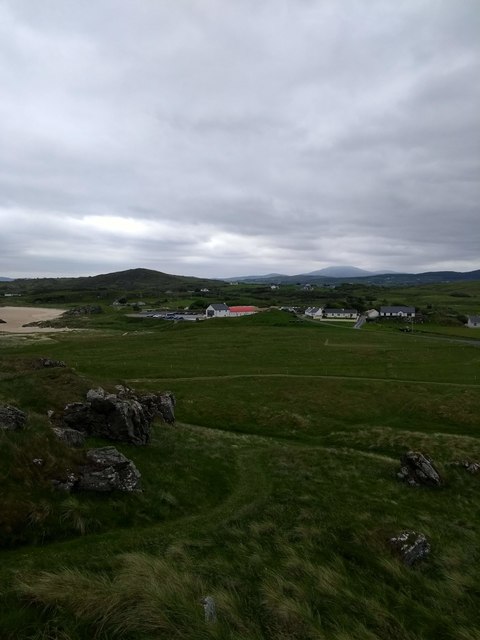 Doagh Famine VillageMuseum · 4.9 mi
 CastleCastle, unclassified · 4.9 mi
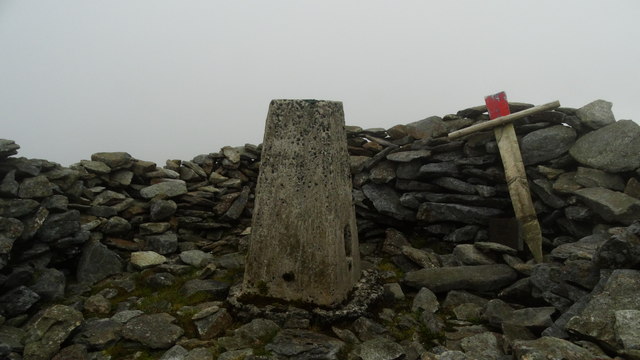 Wee Slieve SnaghtMountain / peak · 5.0 mi
 Lag GraveyardGraveyard · 5.3 mi
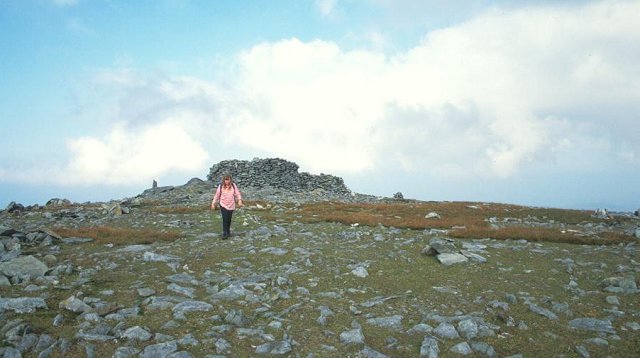 Slieve SnaghtMountain / peak · 5.3 mi
Other information
Photo: National Inventory of Architectural Heritage · Website use allowed for educational or private purposes with source credit