What is recorded here
A stone (dims. H 1.42m x T 0.5m x T 0.07m) decorated with megalithic art, used as a hearth stone in a house at Craud, may have come from a passage-tomb whose original location is unknown. Craud is a village farmstead in Dowth townland, and the stone is in the National Museum of Ireland (O'Kelly 1967, 45-6; NMI Reg. No. 1964:69). Decorated stone described by O'Kelly as follows; 'The main device on the decorated face consists of a panel of chevrons, four rows deep, occupying the lower third of the slab. They are very sharp and clear, so much so that one is inclined to suspect their authenticity. Close examination, however, shows that they were achieved partly by pecking and partly by incision, a mixture of techniques that is similar to that found on orthostat no. 18 (counting from the entrance inward) on the right-hand side of the passage of the Newgrange tomb. In the centre of the face of the stone is a small, roughly circular area of fine random pecking while near the top edge (as it is now set up) is a small sharply incised device consisting of a straight line crossed by others at varying angles. Whether or not this is an authentic feature it is difficult to say. A variant form of this device occurs on the upper surface of roof-slab no. 3 on the passage of the Newgrange tomb. There, however, it is executed in a pecked technique and to a larger size'.
See attached photograph taken from O'Kelly 1967, Pl. 3
The above description is derived from the published 'Archaeological Inventory of County Meath' (Dublin: Stationery Office, 1987). In certain instances the entries have been revised and updated in the light of recent research.
Revised by: Caimin O'Brien
Date of revised upload: 29 August 2022
Passage tomb art, dating to the Neolithic period (c. 3200–2500 BCE), associated with early megalithic monument traditions in Ireland. The stone's decoration reflects the symbolic and artistic practices of Neolithic communities, though its original tomb context remains unidentified.
The monument record does not grant public access. Check the route and ask the landowner before entering private land.
- What survives
- Recorded monument
Places near here
 Dowth CastleCastle, tower house · 251 yd
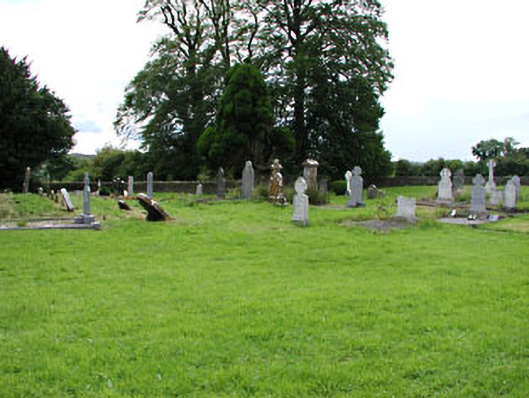 Netterville Manorgraveyard/cemetery · 252 yd
 Church (in Ruins)Church · 258 yd
 DowthNeolithic passage tomb · 304 yd
 St. Bernards WellHoly well · 308 yd
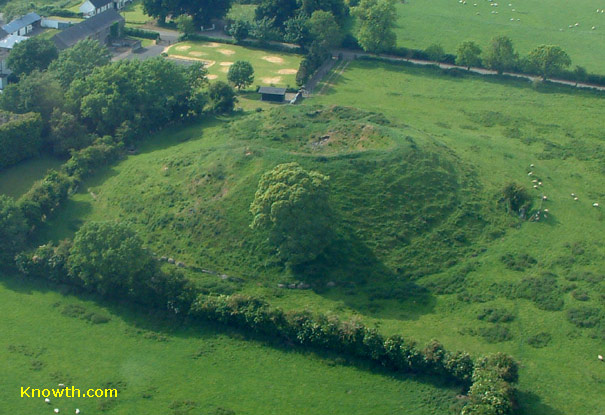 Concentric enclosure in DowthConcentric enclosure · 964 yd
 Brú na Bóinne Visitor Centre AccessHeritage attraction · 1346 yd
 Brú na Bóinne Visitors CentreVisitor information · 1445 yd
 Glenmore ForestWood · 1662 yd
 Proudfootstown CastleCastle, unclassified · 1682 yd
 European YewEuropean Yew · 1.5 mi
 Battle of the BoyneMajor battlefield · 1.6 mi