What is recorded here
A small circular pit cut into boulder clay near Parksgrove, filled with iron slag and charcoal, likely served as a furnace bowl for local ironwork. Beside it stretched a wide orange sand and clay spread scattered with nail fragments, suggesting repeated heating and shaping rather than a single event. The pit and spread were later cut by a linear gully containing burnt mound material, hinting that people moved or buried heat-related debris across the floodplain. Modern intrusions such as a padlock and porcelain now mix with the ancient slag, blurring when the site stopped being a workshop and became ordinary ground.
Within the western flood-plain of the River Nore. A burnt mound (KK009-095----) and a metalworking site were revealed during archaeological monitoring of a Bord Gáis Éireann gas pipeline development and excavated in 1999 (Stevens 2000, 150-51; Licence no. 99E0597). The burnt mound, 8m to the N, may or may not be related to the ironworking site.
The metalworking site centred on a small, circular pit (diam. 1.2m; D 0.3m), cutting natural boulder clay subsoil and possibly used as a furnace bowl for ironworking. It was filled with a stony clay containing iron slag and charcoal. Associated with but post-dating this was a large, thin, circular spread (dims. 15m N-S; at least 9m E-W; D 0.18m) of hard, mixed, orange, coarse sand and clay, with some fire-cracked limestone, also containing a number of iron nail fragments.
A large linear gully (Wth 1.6m; D 0.45m), orientated NE-SW (continuing to the W) cut the ironworking pit and spread, and turned E, terminating with a V-shaped profile and rounded terminus. The ditch contained a clay fill and burnt mound material which was sealed by a sub-circular spread of burnt mound material (dims. 10m N-S; 8m+ E-W; D 0.3m) also extending under the W baulk. The spread was heavily truncated by later ploughing and may have been deliberately pushed into the ditch.
A number of fragments of iron objects, slag and charcoal suggest this was an ironworking site. However, stray finds, including a fragment of clay pipe, modern porcelain and a modern padlock, suggest substantial modern intrusion. (Stevens 2000, 150-51)
Compiled by: Jean Farrelly
Date of upload: 31 July 2018
The monument record does not grant public access. Check the route and ask the landowner before entering private land.
- What survives
- Recorded monument
Places near here
 Concentric enclosure in ParksgroveConcentric enclosure · 803 yd
 Holy well in BallyconraHoly well · 964 yd
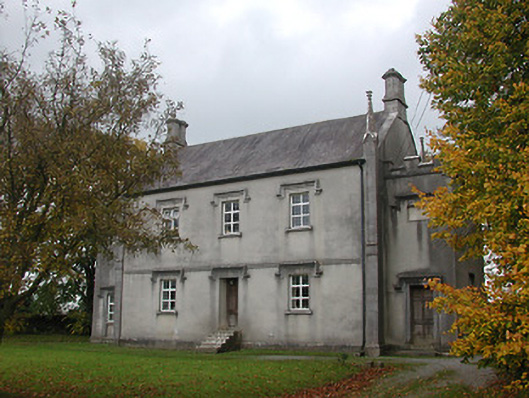 Ballyragget National Schoolschool · 1004 yd
 Wall monument in BallyconraWall monument · 1018 yd
 Ballyragget Cas.Castle, tower house · 1558 yd
 Moat Castle (site of)Archaeological place · 1.5 mi
 Donaghmore WellSpring · 1.7 mi
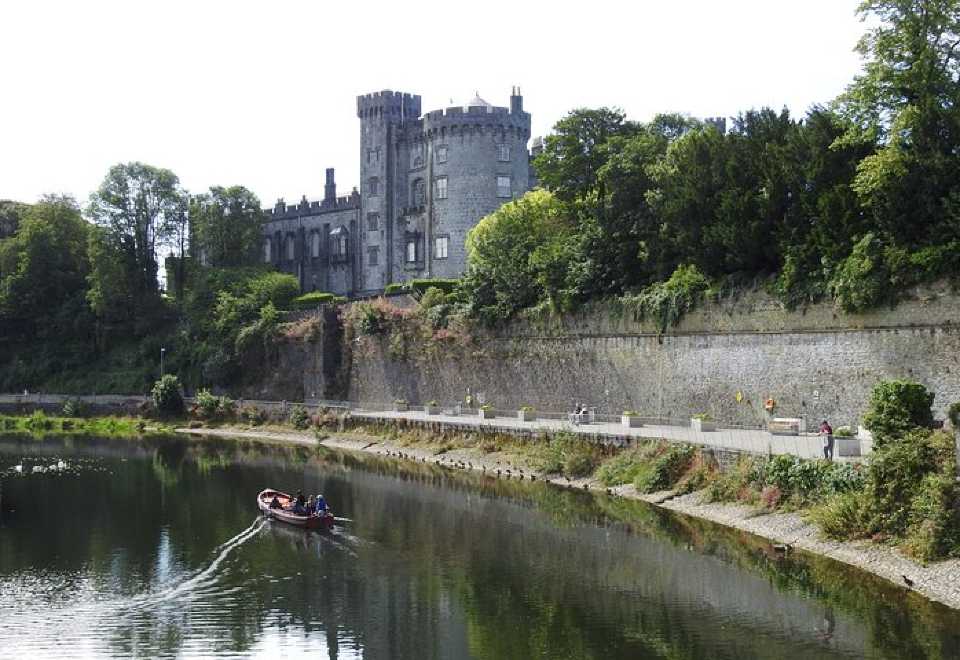 Anker's IslandIsland · 2.0 mi
 Graveyard in SraleaghGraveyard · 2.1 mi
 Emma Jane Browne-ClaytonMemorial · 4.0 mi
 Red horse-chestnutRed horse-chestnut · 4.0 mi
 Freshford LoopWalking route · 4.5 mi