What is recorded here
Situated on a gentle S-facing slope in the vicinity of the great passage tomb of Dowth (ME020-017----) and the medieval parish church (ME020-019----). Lewis (1837, vol. 1, 496) describes a cromlech ‘consisting of four large upright stones, and several others lying near’. Sir William Wilde (1849, 210-11) mentions a giant’s tomb in the vicinity of the great tomb and Dowth castle (ME020-018----) in addition to the Cloghalea stones (ME020-009----) with which it might be confused. O’Kelly (1978, 59-60) observed a number of large stones against the E boundary of this field, and there is a quarry at one point which might be the site of this structure and account for the removal of the tomb.
The above description is derived from the published 'Archaeological Inventory of County Meath' (Dublin: Stationery Office, 1987). In certain instances the entries have been revised and updated in the light of recent research.
Compiled by: Michael Moore
Date of revision: 10 September 2018
Neolithic passage tomb, dating to approximately 3200–2500 BCE. It is part of the Brú na Bóinne complex, a UNESCO World Heritage Site, and is significant for its association with early megalithic funerary and ceremonial traditions in Ireland.
The monument record does not grant public access. Check the route and ask the landowner before entering private land.
- What survives
- Recorded monument
Places near here
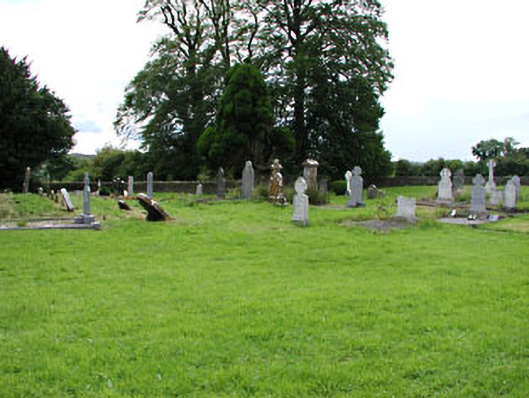 Netterville Manorgraveyard/cemetery · 157 yd
 Church (in Ruins)Church · 167 yd
 Dowth CastleCastle, tower house · 184 yd
 DowthNeolithic passage tomb · 189 yd
 St. Bernards WellHoly well · 196 yd
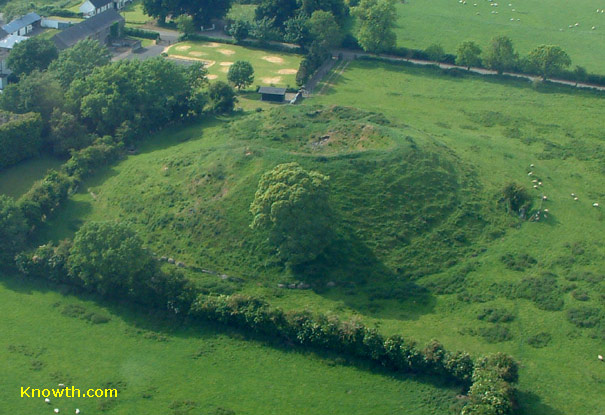 Concentric enclosure in DowthConcentric enclosure · 915 yd
 Brú na Bóinne Visitor Centre AccessHeritage attraction · 1233 yd
 Brú na Bóinne Visitors CentreVisitor information · 1330 yd
 Glenmore ForestWood · 1648 yd
 Proudfootstown CastleCastle, unclassified · 1.0 mi
 European YewEuropean Yew · 1.6 mi
 Battle of the BoyneMajor battlefield · 1.7 mi