What is recorded here
Clear water, hot stones, and waiting: that is all a fulacht fia needs to give life back to tired flesh. You can still see the buried heat in the drain wall, a dark ribbon of charcoal and cracked sandstone beneath the grass. The date from that charcoal points to the later Bronze Age, when people lived close enough to the land to read its moods and answer them without fear.
Situated in enclosed land on the flat bottom of a drained peat basin at southern foot of Knocknaveen (known locally as ‘Glan Hill’). This fulacht fia is exposed in both faces of a field drain, 20m to SSW of another fulacht fia (MA085-016004-) and close to the south-western end of the peat basin. It is overlooked by higher, drier ground, immediately to S and SW, which forms the southern limits of the basin. Another fulacht fia (MA085-016002-) is also exposed in the northern side of the same drain 19.5m to WSW.
A portion of this fulacht fia was archaeologically excavated (92E163) in September–October 1992 (King 2007, 239-248). Prior to excavation, a narrow band of charcoal and heat-shattered stones was visible in both section faces of the E−W drainage trench, c. 0.2m below the ground surface. There was no above ground trace of a mound. The excavation revealing a mound (c. 3.5m E-W; c. 6.7m N-S) of burnt sandstone fragments and a heavy concentration of charcoal (King, 2007, 244-248). It may originally have been oval or horseshoe-shaped in plan, but was disturbed by later agricultural activity and the drainage ditch. The trough was not located during excavation, or by a resistivity survey undertaken in the unexcavated areas, and it may have been destroyed by the drainage ditch. A sandstone hammer stone was recovered.
A charcoal sample produced a radiocarbon date of 2957 +/-33 BP(UB 6827) suggesting usage in the later Bronze Age in the period 1293-1053 BC (Ibid. 246).
The above description is derived from: New Survey of Clare Island. Volume 5: Archaeology. Edited by Paul Gosling, Conleth Manning and John Waddell. (Royal Irish Academy, Dublin. 2007). In certain instances the entries have been revised and updated.
Date of upload: 29 November 2018
The monument record does not grant public access. Check the route and ask the landowner before entering private land.
- What survives
- Recorded monument
Places near here
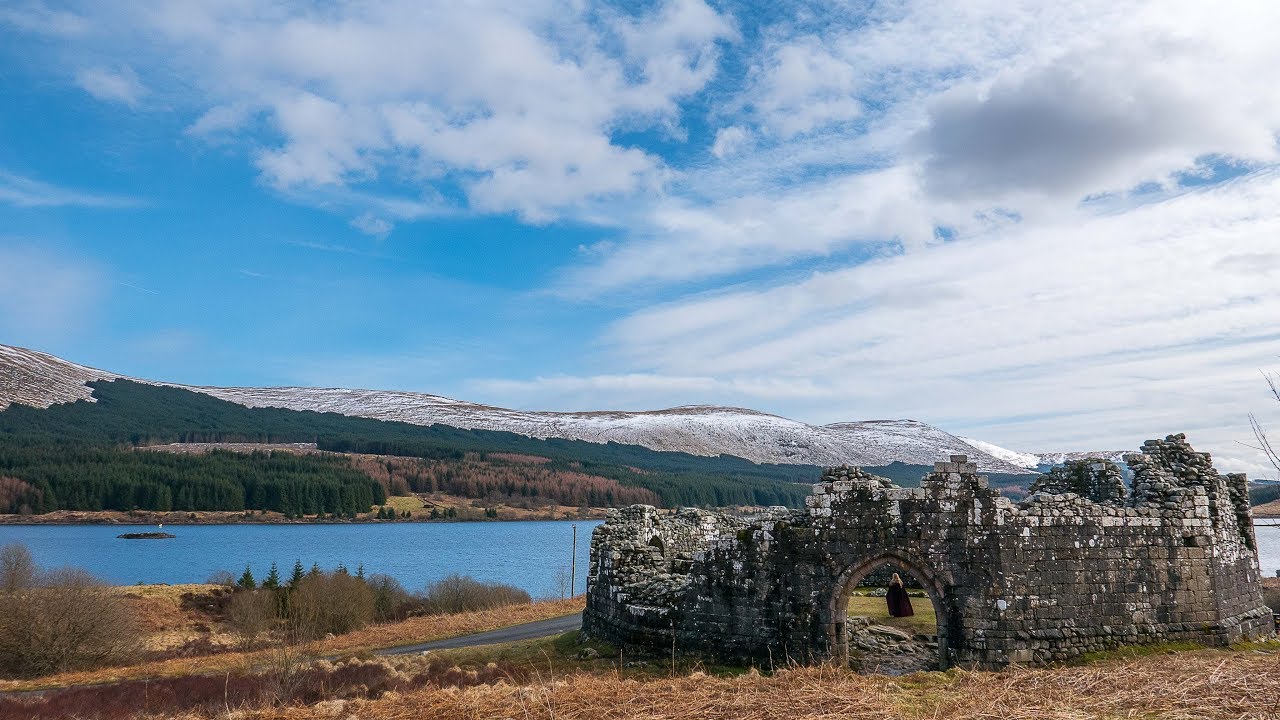 Doon CloakPromontory fort, coastal · 906 yd
 Megalithic tombArchaeological place · 1311 yd
 AbbeyReligious house, Cistercian monks · 1332 yd
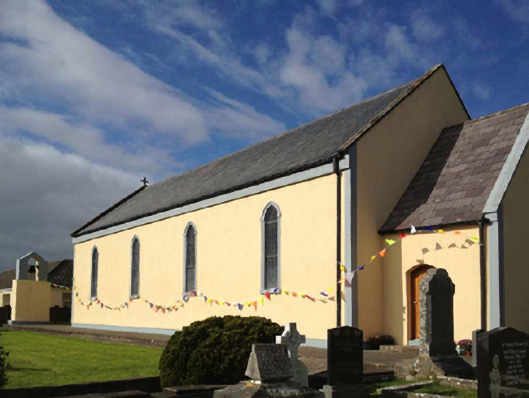 Catholic Church of the Sacred Heartchurch/chapel · 1361 yd
 Granuaile's CastleCastle · 1509 yd
 Clare IslandIsland · 1.4 mi
 ScalpatruceMountain / peak · 1.5 mi
 KnockmoreMountain / peak · 2.2 mi
 Turloughbeg StrandBeach / strand · 3.8 mi
 Carrownisky BeachBeach / strand · 4.4 mi
 Acaill BheagIsland · 4.8 mi
 Kildavnet CastleCastle, tower house · 6.0 mi