What is recorded here
Fairy fort in Ballycatten is a circular earthen ringfort about sixty metres across, climbing the southeast end of a narrow Cork ridge with three banks, fosses and a causewayed entrance guarded by gates. Séan P. Ó Ríordáin and P.J. Hartnett excavated it in 1941-2, finding twelve hearths, underground passages, crucible fragments, whetstones, a kiln, iron slag and bronze and iron objects. The black deposit in the southwest quadrant marks the earliest important habitation area, dating to a period just before and after 600 AD, while an axe-head from the 11th to 16th century lay almost on floor level in passage C.
In pasture, atop SE end of narrow ridge, with commanding views. Circular area (diam. c. 60m) enclosed by three banks with intervening fosses and external fosse; counterscarp bank SE->N. Rough grazing in interior, bank partially gorse covered. Excavated in 1941-2 by Séan P. Ó Ríordáin and P.J. Hartnett (1943, 1-43). Excavation produced evidence for palisade of wooden posts inside and approx. concentric with inner bank. Causewayed entrance to SE, 'protected by a series of gates', with end of palisade giving further protection to entrance. SW quadrant 'fully investigated' and 'excavated area was extended near the centre to complete the investigation of Man-made underground passage A' (CO124-034002-). Evidence for habitation found in centre and along N part of SW quadrant, in form of post holes; in all 12 hearths excavated; no well defined house plan discovered. Excavator concluded that 'the black deposit' in SW quadrant represented 'the earliest and most important habitation area' from evidence produced by finds, dating to 'a period just before and after 600 AD'. Evidence of 'technical pursuits' were found in form of 'crucible fragments, numerous whetstones and a kiln'; iron slag shows iron smelting was carried out. Other finds include 12 bronze objects, 23 iron objects, two glass beads, other glass fragments and amber bead. Excavator felt that occupation in centre belonged to a 'later phase',t o which he would ascribe two other Man-made underground passages, B and C (CO124-034003-; CO124-034004-), excavated in interior. Most important of medieval and later finds was 'the axe-head' dated 'from the 11th to the 16th century', found 'almost on floor level in Man-made underground passage C'. (CO124-034004-).
The above description is derived from the published 'Archaeological Inventory of County Cork. Volume 2: East and South Cork' (Dublin: Stationery Office, 1994). In certain instances the entries have been revised and updated in the light of recent research.
Date of upload/revision: 14 January 2009
A fairy fort in Ballycatten is an early-medieval ringfort, likely dating to between the 5th and 10th centuries, characterized by three concentric banks with intervening ditches and a counterscarp bank. Local tradition associates such sites with the fairy folk, and they were often avoided due to beliefs in their supernatural inhabitants.
The monument record does not grant public access. Check the route and ask the landowner before entering private land.
- What survives
- Recorded monument
Places near here
 Ballycatten FortArchaeological place · 10 yd
 ToberreendoneyHoly well · 250 yd
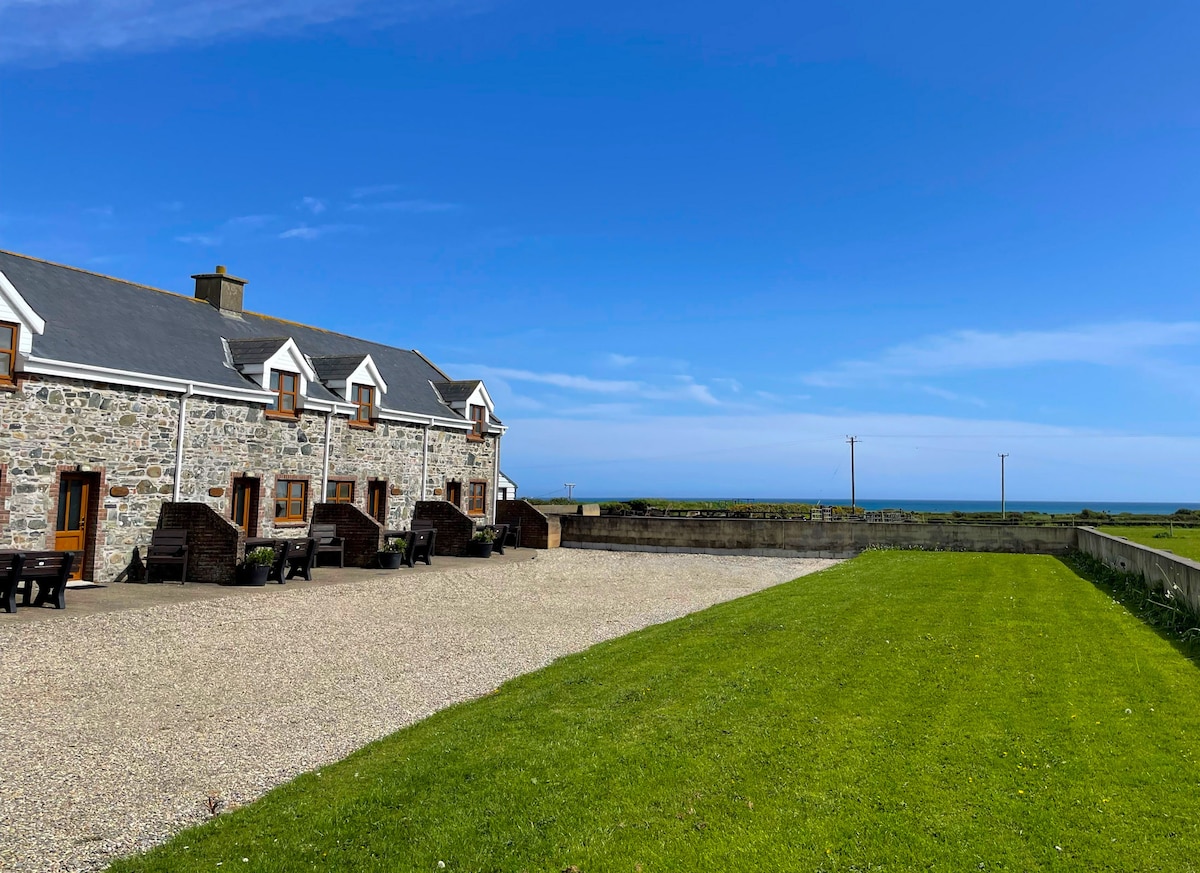 Kilmore WoodWood · 556 yd
 Church (in Ruins)Church · 752 yd
 Church of Ireland Templetrinechurch/chapel · 756 yd
 Garrettstown ForestWood · 972 yd
 The Moving StatueHeritage attraction · 1618 yd
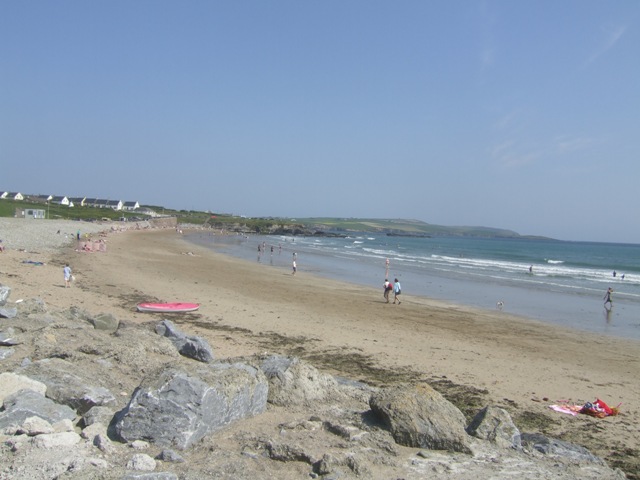 Garretstown StrandBeach / strand · 1.8 mi
 Hackstown Raised Beach GeologyNamed rock · 1.9 mi
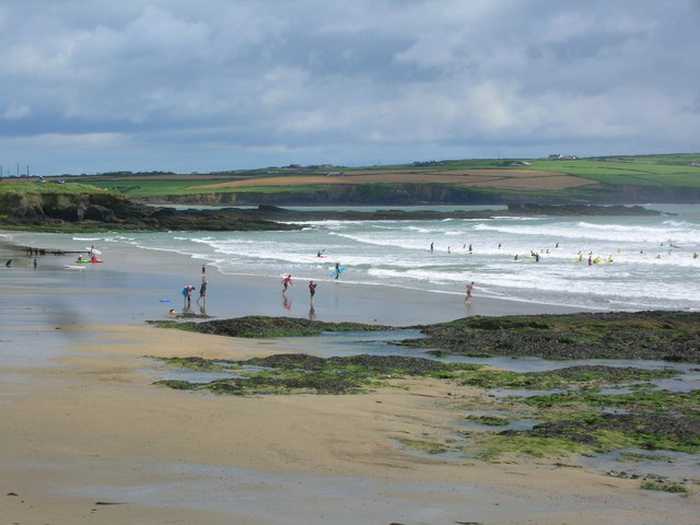 Garrylucas, White StrandBeach / strand · 2.4 mi
 Howe's StrandBeach / strand · 2.4 mi
 Castle (in Ruins)Castle, tower house · 2.8 mi