What is recorded here
Excavation in County Kerry, Ireland revealed a shallow rectangular pit filled with charcoal, lime and oxidised sand, evidence that people burned oak and perhaps worked heat long before the industrial estate covered the slope. The absence of coins, pottery or bones denies the pit an exact date but the layering preserves a moment when fire transformed ordinary soil into memory. Modern concrete now stands above that forgotten warmth, forcing us to imagine the hands, purpose and disappearance of the people who made it.
On a SW-facing slope, within an industrial estate. Archaeological monitoring of foundation trenches during the construction of a building revealed 'a linear burnt feature' which was subsequently excavated (McCarthy and Quinn 2002, 146-7). Excavation revealed a subrectangular feature (2.63m x 1.64m; D 1m) containing four separate fills. The primary fill (D 0.04-0.25m) of silty sand with flecks of charcoal was sealed with a deep layer (D 0.49m) of compacted white, silty sand containing small amounts of lime and charcoal. Above this was a thin lens (0.04-0.06m) of charcoal within a loose, silty sand matrix. The uppermost layer (D 0.14m) consisted of a stony sediment with several large fragments of charcoal. The base and sides of the feature were orange to yellow in colour, owing to a high level of oxidation. No datable material finds were recovered during the excavation. The excavators concluded that the contents of the layers suggests activity associated with burning: the charcoal indicates that wood was used as fuel while the lime in the second layer may indicate industrial activity (ibid. 147). Two charred wood samples from the excavation were found to contain oak (Quercus spp.) (McKeown 2000). (Quinn 2000)
Compiled by: Elizabeth Byrne, Ursula Egan and Sheila Ronan, Archaeological Survey Unit, University College, Cork.
Date of upload: 31 January 2011
The monument record does not grant public access. Check the route and ask the landowner before entering private land.
- What survives
- Recorded monument
Places near here
 Enclosure in ParkEnclosure · 404 yd
 Mass RockNamed rock · 671 yd
 Lissivigeen Stone CircleHeritage attraction · 932 yd
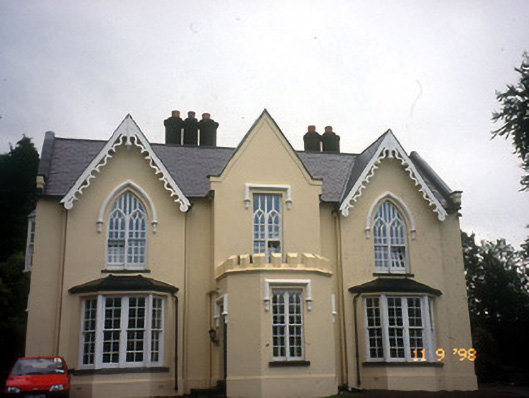 Woodfordhouse · 1030 yd
 IndicatedFairy fort / earthen ringfort · 1161 yd
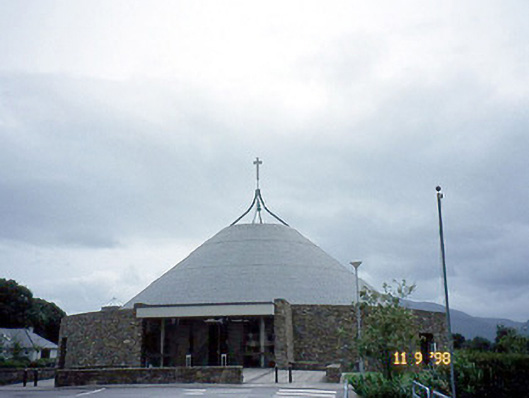 Catholic Church of the Resurrectionchurch/chapel · 1281 yd
 Flesk CastleCastle · 1569 yd
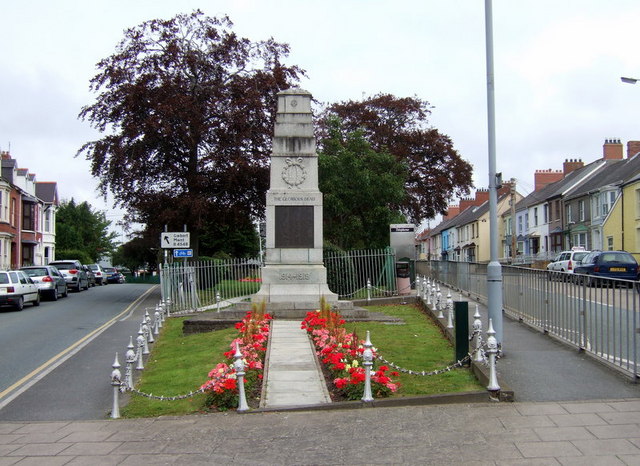 Killarney First World War MemorialMemorial · 1.5 mi
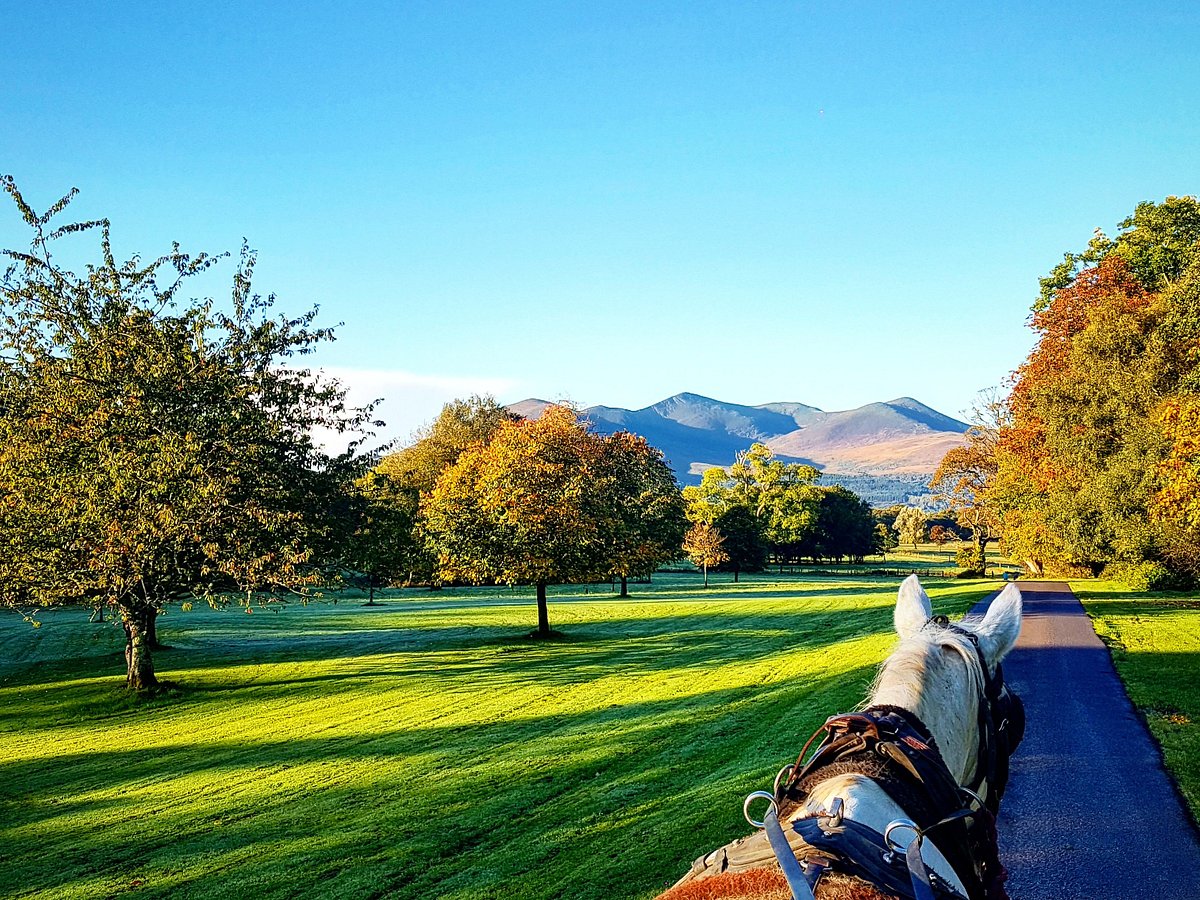 Jaunting ToursHeritage attraction · 1.6 mi
 Kerry 2nd Brigade of the Irish Republican ArmyMemorial · 1.6 mi
 Sheheree Bog Nature ReserveNature reserve · 1.7 mi
 GinkgoGinkgo · 1.7 mi