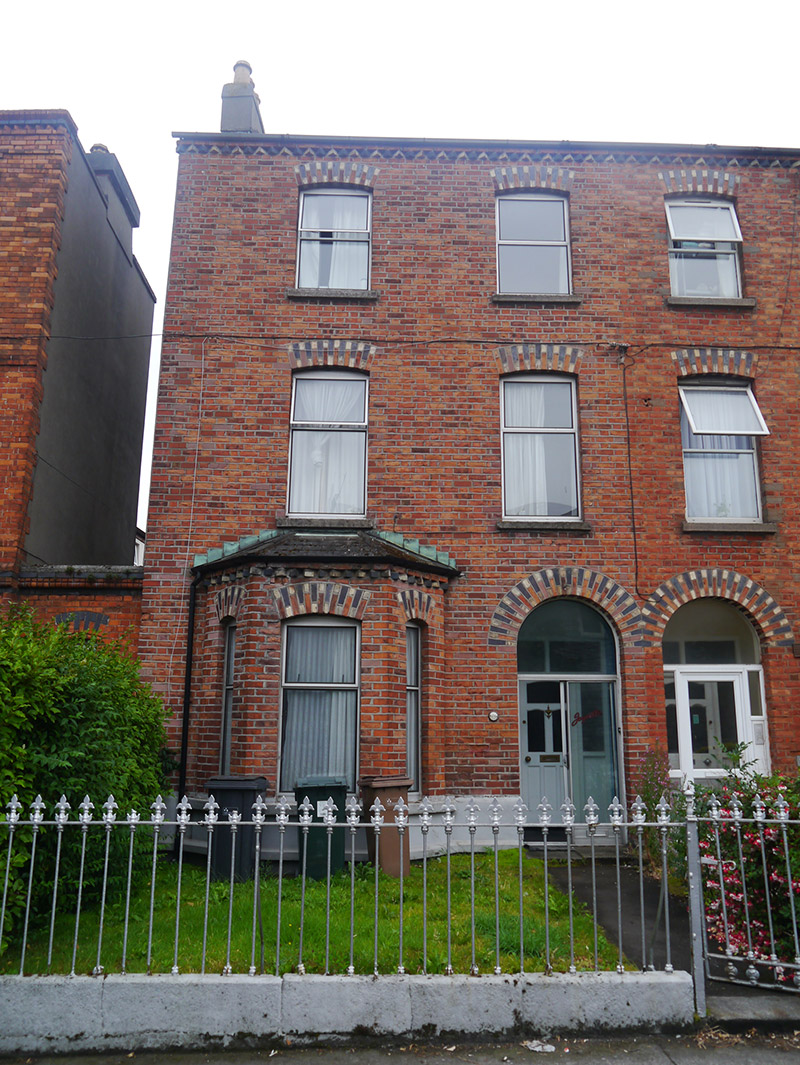
What is recorded here
End-of-terrace two-bay three-storey former house, built c. 1895 as one of terrace of four, having canted-bay to ground floor of front (north) elevation, and single-storey return to rear elevation with enclosed yard. Now in use as apartments. M-profile pitched slate roof with angled ridge tiles, replacement uPVC gutter supported on cogged yellow and black brick eaves course, and red brick chimneystack with yellow clay pots to east gable. Red brick walling, laid in Flemish bond, over granite plinth course, with painted smooth render to sill level. Camber-arch window openings with polychrome (red, black and yellow) brick voussoirs, generally replacement stone sills, granite sill to canted-bay, and replacement uPVC frames. Entrance recessed within round-headed integral porch with plain reveals, polychrome brick voussoirs; porch opening now glazed with aluminium sliding door; square-headed six-panel timber entrance door (top three panels glazed) with sidelights and two-light transom, approached by nosed granite step with cast-iron boot-scrape. Set back behind garden bounded to front by cast-iron railings with decorative finials on cut granite plinth to front.
This well-built house is part of a terrace of four late nineteenth-century houses on the south side of St. Alphonsus Road Lower. Taller than other terraces on the road, the group is a dominant feature of the streetscape. Its attractive frontage is ornamented with lively yellow and black voussoirs and high-quality gauged brick detailing, such as the cogged eaves course. St. Alphonsus Road was laid out in the late nineteenth century as part of the suburban expansion of the Drumcondra area. The road developed from the east, eventually connecting to Iona Road which was set out in the early twentieth century. It is highly representative of the type of housing that characterizes the area, driven by speculative builders who often constructed small groups of terrace houses, resulting in subtle variety of proportions, materials and detailing.
This does not grant access. Most recorded buildings are privately owned; view them only from public ground unless the owner allows entry.
Places near here
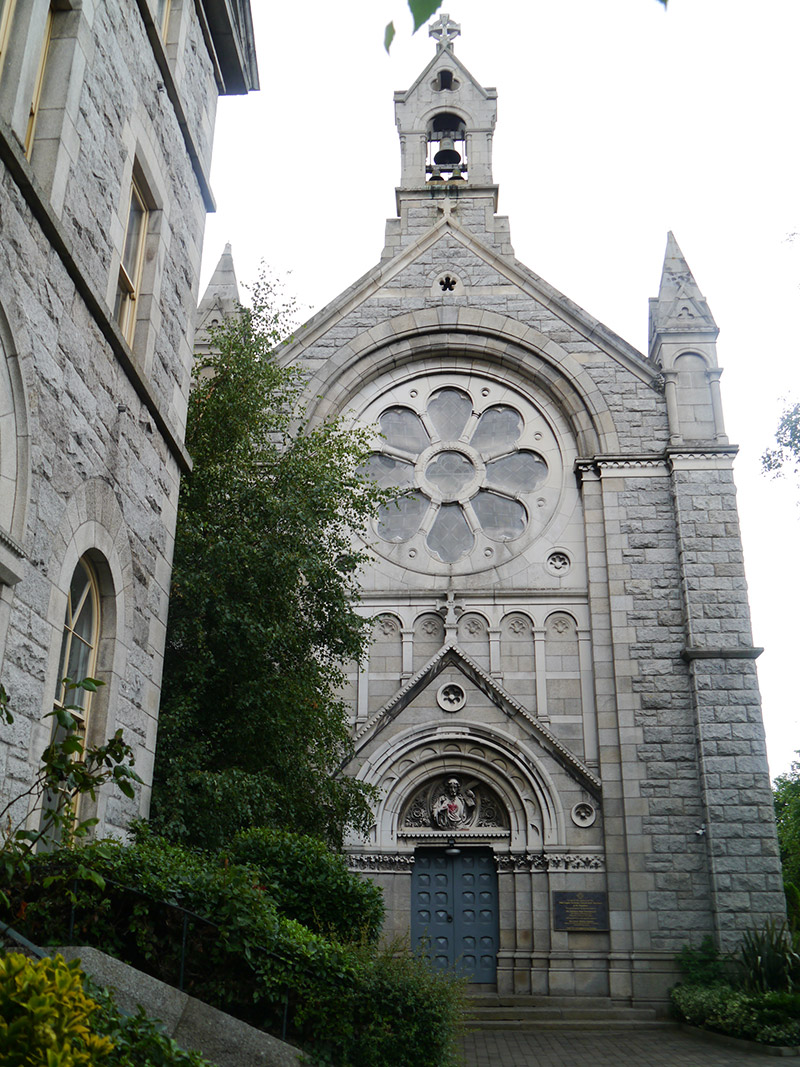 SS Maximus and Domadios Coptic Orthodox Churchchurch/chapel · 70 yd
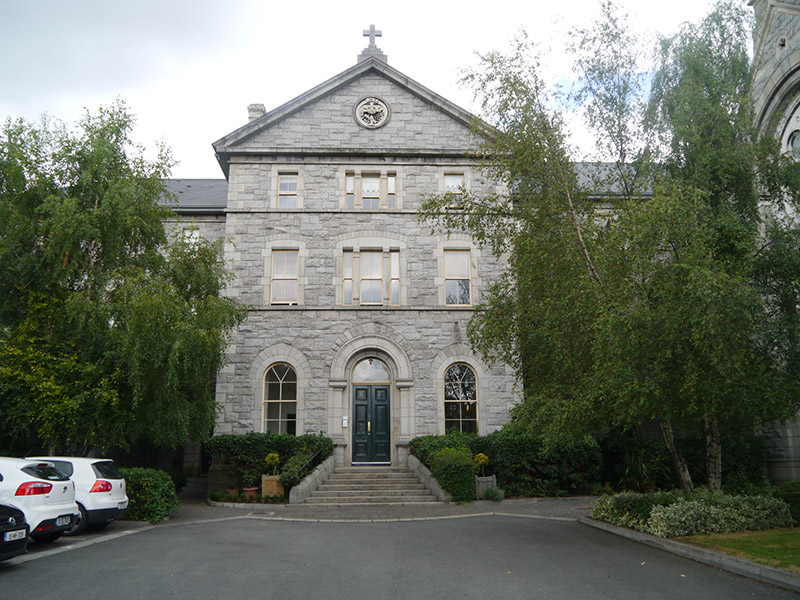 Chapelgatemonastery · 92 yd
 Percy Edwin LudgateMemorial · 254 yd
 Memorial to Peadar Kearney 1883-1942Memorial · 485 yd
 Leabharlann LibraryVisitor information · 651 yd
 Former swimming areaViewpoint · 686 yd
 St. Catherines WellHoly well · 691 yd
 Grave yd.Graveyard · 1010 yd
 St Josephs Asylum for the BlindCastle, unclassified · 1048 yd
 Chinese ToonChinese Toon · 1073 yd
 Caucasian zelkovaCaucasian zelkova · 1263 yd
 Glasnevin CemeteryHistoric cemetery · 1673 yd
Other information
Photo: National Inventory of Architectural Heritage · Website use allowed for educational or private purposes with source credit