What is recorded here
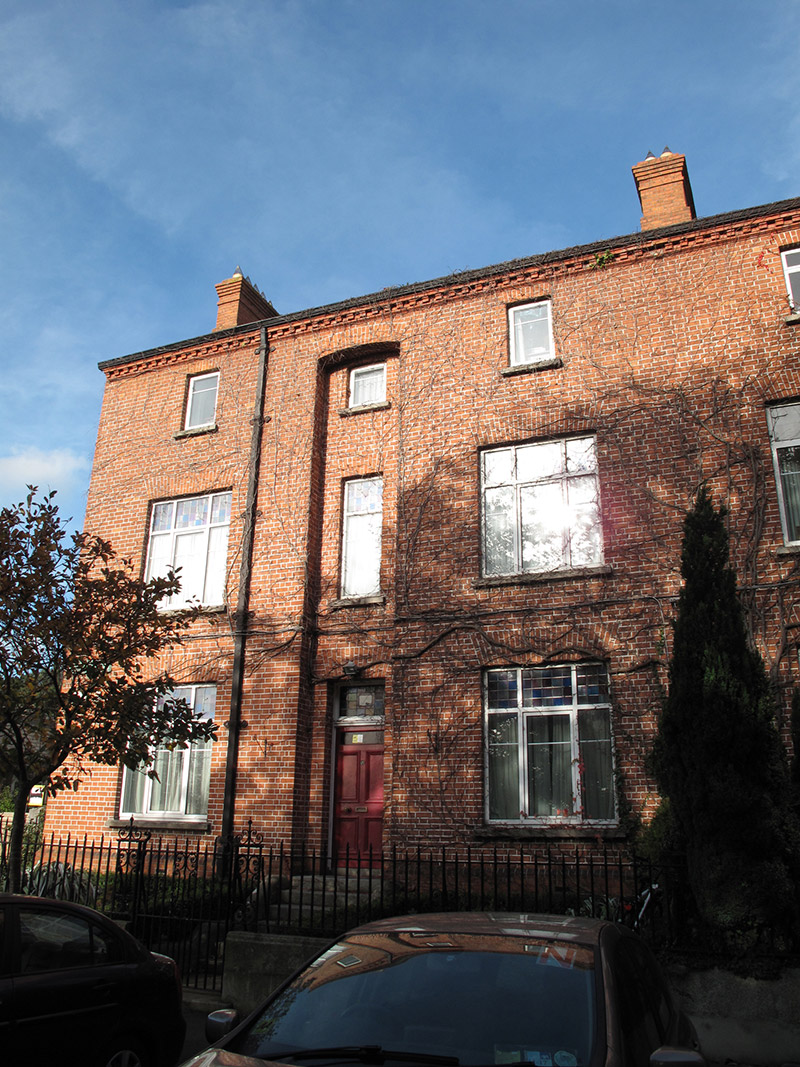
End-of-terrace three-bay three-storey house, built c. 1900 as one of thirteen, having two recent returns to rear (north) elevation and recessed entrance bay to front topped with camber arch. Pitched slate roof, hipped to return, with terracotta ridge tiles, stepped red brick chimneystacks, terracotta eaves course with moulded corbels and stringcourse, and cast-iron box-profile rainwater goods. Red brick walling, laid in Flemish bond, to front and west elevations, with brick plinth course having chamfered brick capping; English garden wall bond to rear. Square-headed window openings with granite sills and replacement uPVC windows, and having recent one-over-one pane timber sliding sash windows to rear. Timber-framed box-bay oriel window to first floor to side with timber panelled apron. Square-headed principal doorway has timber panelled door with glazed panel and coloured glass overlight, approached by six granite steps flanked by walls with moulded render copings. Boundary has wrought-iron pedestrian gate and cut granite step to front, flanked by decorative panels, with matching railings set on carved granite plinth wall on rendered base, enclosing yard to front and side of house.
This well-composed house shares the parapet height and fenestration arrangement of the adjoining buildings, creating a strong sense of unity. Its three-bay form and oriel window set it apart from the remainder of the terrace, imbuing this corner-sited building with an increased sense of grandeur. The symmetry of the façade is enhanced by the narrow central recess, in which the entrance is set. Decorative moulded terracotta and brick is used to good effect to subtly enliven the façade, and embody the decorative tradition of the Arts and Crafts movement. The decorative railings, cast at the foundry of Hill & Smith, attest to the high quality of ironwork employed at the start of the twentieth century. Their complete retention contributes to the intact early suburban residential character of the terrace, an enclave that retains its original character, with well-preserved houses creating a strong sense of rhythm and order.
This does not grant access. Most recorded buildings are privately owned; view them only from public ground unless the owner allows entry.
Places near here
 St Josephs Asylum for the BlindCastle, unclassified · 162 yd
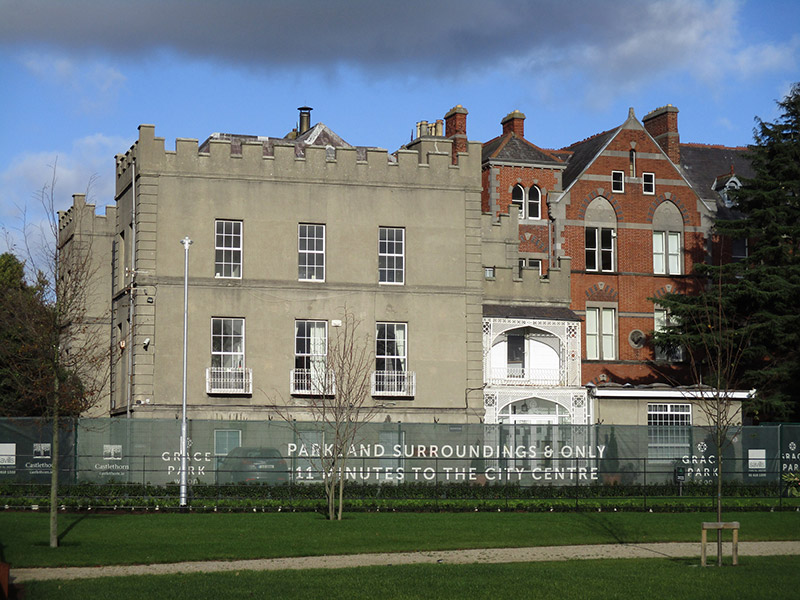 St. Joseph's School for Children with Visual Impcastle/fortified house · 178 yd
 post boxpost box · 241 yd
 Grave yd.Graveyard · 297 yd
 Saint John's WellSpring · 355 yd
 DCUVisitor information · 443 yd
 Leabharlann LibraryVisitor information · 741 yd
 Percy Edwin LudgateMemorial · 849 yd
 St. Catherines WellHoly well · 854 yd
 Killing of David Byrnemurder · 1081 yd
 Seán Russell Memorial StatueMemorial · 1214 yd
 Tree of HeavenTree of Heaven · 1637 yd
Other information
Photo: National Inventory of Architectural Heritage · Website use allowed for educational or private purposes with source credit