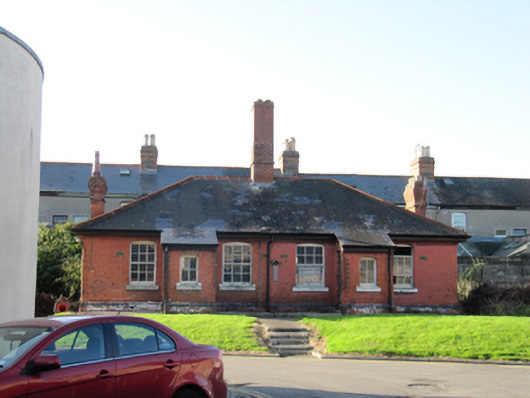
What is recorded here
Semi-detached pair of three-bay single-storey houses, built c.1890, each having porch with catslide roof to front (north-east) elevation. Hipped slate roof with terracotta ridge tiles, red brick chimneystacks and clay chimney pots. Cast-iron rainwater goods and timber barge boards to porches. Red brick laid in Common bond to walls, having black brick plinth course. Bull-nosed corners to porches to front. Segmental-headed window openings to front, having masonry sills and six-over-six pane timber sash windows. Timber framed windows to front of porches. Square-headed window openings to south-east and north-west elevations, having render lintels, masonry sills and timber framed windows. Square-headed door openings to interior (south-east and north-west) elevations of porches, having bull-nosed brick jambs, timber battened doors, and granite steps. Shared render platform to front, with granite coping and cast-iron bootscrapes.
Portobello Barracks was constructed at the beginning of the nineteenth century as a cavalry barracks. It was taken over by Irish troops in 1922, and became the Headquarters of the National Army, under the leadership of Michael Collins. It was renamed Cathal Brugha Barracks in 1952, after the Chief of Staff of the Irish Republican Army during the War of Independence, and Ceann Comhairle of the first Dáil in 1919. The modest form and design of this pair contrasts with the long ranges which dominate the complex. The regular fenestration arrangement and hipped roof create a pleasing sense of symmetry, and much of the original fabric is retained which adds to the historic character of the building.
This does not grant access. Most recorded buildings are privately owned; view them only from public ground unless the owner allows entry.
Places near here
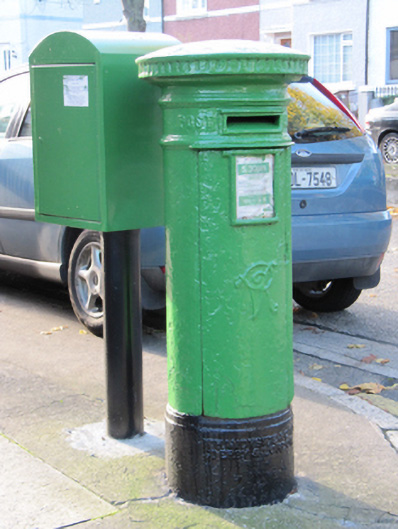 post boxpost box · 137 yd
 Robert EmmetMemorial · 235 yd
 Robert Emmet Bridgebridge · 311 yd
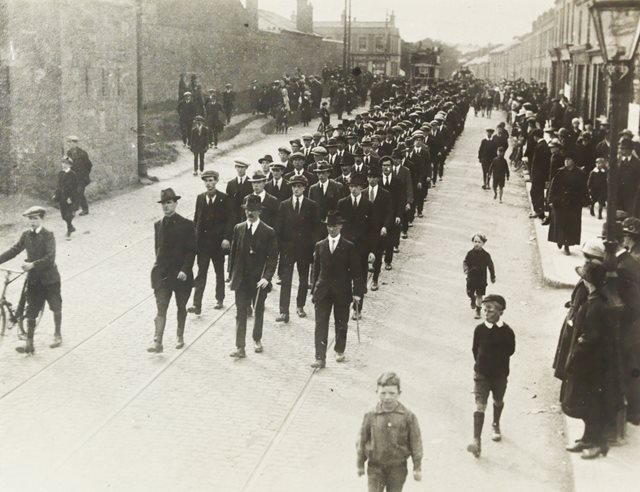 Fourth Battalion Dublin BrigadeMemorial · 377 yd
 Irish Jewish MuseumMuseum · 500 yd
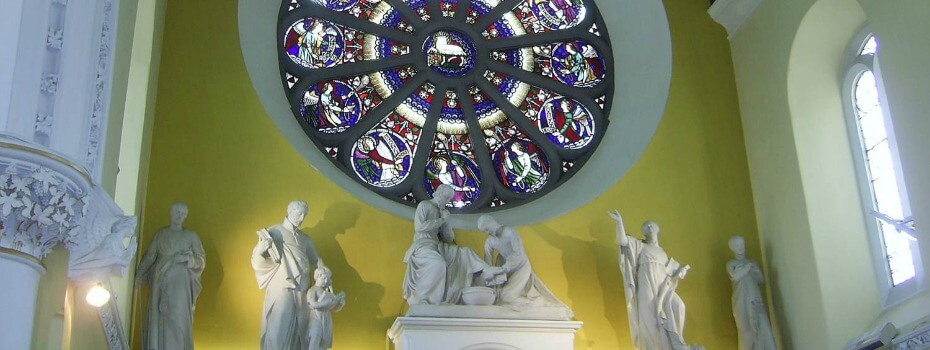 Mary Aikenhead Heritage CentreMuseum · 535 yd
 Site of Donore Castle indicatedCastle, unclassified · 882 yd
 David Luke 1993Monument · 1192 yd
 Battle of RathminesMajor battlefield · 1305 yd
 Liberty BellMonument · 1540 yd
 Rathgar CastleCastle, unclassified · 1.1 mi
 European PearEuropean Pear · 1.2 mi
Other information
Photo: National Inventory of Architectural Heritage · Website use allowed for educational or private purposes with source credit