What is recorded here
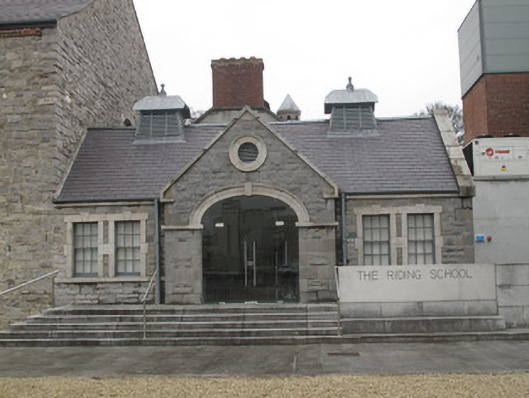
Attached five-bay single-storey former cookhouse, built c.1885, having central gable-fronted porch to front (south) elevation and gabled return to rear (north) elevation. Now in use as museum building. Pitched slate roofs with timber ventilation shaft roof lanterns having aluminium roofing and ball finials, limestone coping, cast-iron rainwater goods, granite eaves course. Red brick chimneystacks to rear return. Snecked rock-faced rusticated calp limestone walls, cut limestone block-and-start quoins. Oculi to apices of gable to front and east elevation with carved granite surrounds and timber louvered vents. Square-headed window openings, paired to front, having cut granite surrounds, continuous sill course. and six-over-six pane timber sash windows. Elliptical-headed door opening to front, carved granite architrave surround and string course to breakfront at impost level. Recent glazed doors opening onto concrete paved platform and nosed granite steps. Square-headed door opening to east elevation, granite surround, timber louvered vent over.
In 1885, the riding school attached to this building was adapted for use as a mess hall, and this modestly sized structure was built to function as a cook house. It forms a component part of a related group of structures, originally designed for military use, and is indicative of the ongoing development of the barracks. Cut granite is used to good effect to enliven the calp limestone walls of this building, a sense of symmetry created by the regular fenestration arrangement and central gabled bay to front. The louvered vents to the front, east elevations and roof point to its original use as a cook house. Composed of predominantly large, imposing buildings and prominently sited on a height overlooking the river, the Royal Barracks complex makes an enduring impression on the cityscape and has played a considerable role in the political development of Dublin and, indeed, the country as a whole.
This does not grant access. Most recorded buildings are privately owned; view them only from public ground unless the owner allows entry.
Places near here
 Rutland Fountain National Museum of Ireland Collins Barracksfountain · 25 yd
 CastleCastle, unclassified · 37 yd
 National Museum of Ireland, Collins BarracksMuseum · 56 yd
 Royal BarracksBarracks · 69 yd
 National Museum of Ireland (Decorative Arts & History)Museum · 71 yd
 Military Heritage of Ireland Trustsexton's house · 100 yd
 Croppies Acre MemorialMemorial · 189 yd
 Burial ground in Unknown TownlandBurial ground · 207 yd
 1916 Easter RisingMemorial · 242 yd
 European PearEuropean Pear · 654 yd
 Silver mapleSilver maple · 1054 yd
 Gairdín Foirmiúil Ospidéal Ríoga Chill MhaighneannVisitor information · 1178 yd
Other information
Photo: National Inventory of Architectural Heritage · Website use allowed for educational or private purposes with source credit