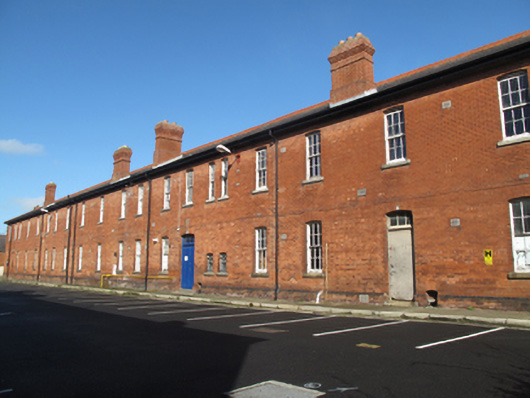
What is recorded here
Detached twenty-one bay two-storey barracks, built c.1890, having full-height returns with hipped roofs to rear (east) elevation. Hipped slate roof having terracotta ridge cresting and finials, red brick chimneystacks, moulded brick eaves course, and cast-iron rainwater goods. Red brick laid in stretcher bond to walls, having cast-iron vent covers and red brick plinth course. Segmental-headed window openings with painted masonry sills and six-over-six pane timber sash windows. Some paired window openings with two-over-two pane timber sash windows to ground floor, having cast-iron bars. Segmental-headed door openings with bull-nosed piers, double-leaf timber battened doors and overlights, approached by granite steps. Segmental-headed niches, some retaining cast-iron bootscrapes.
Portobello Barracks was constructed at the beginning of the nineteenth century as a cavalry barracks. It was taken over by Irish troops in 1922, and became the Headquarters of the National Army, under the leadership of Michael Collins. In 1952 it was renamed after Cathal Brugha, Chief of Staff of the Irish Republican Army during the War of Independence, and Minister for Defence in the first Dáil. This substantial range is representative of the later phase of construction at the complex, with its form, materials and detailing characteristic of military architecture at the time. Several similar buildings are to be found within the barracks, forming a notable group, and indicating the continuous expansion of the barracks in the Victorian era.
This does not grant access. Most recorded buildings are privately owned; view them only from public ground unless the owner allows entry.
Places near here
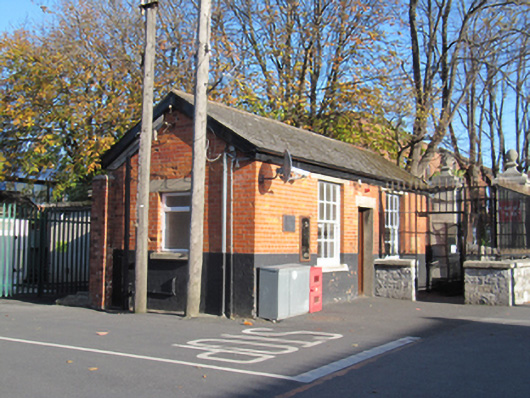 Cathal Brugha Barracksguard house · 42 yd
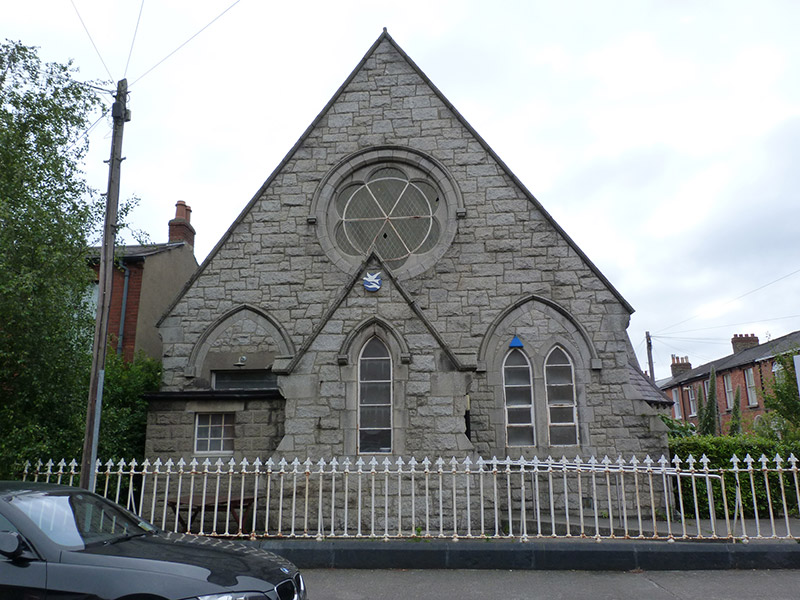 church/chapel, schoolchurch/chapel, school · 389 yd
 Irish Jewish MuseumMuseum · 426 yd
 The MART GalleryHeritage attraction · 435 yd
 Robert EmmetMemorial · 564 yd
 James Joyce Dublin TourismMemorial · 703 yd
 David Luke 1993Monument · 899 yd
 Battle of RathminesMajor battlefield · 954 yd
 Site of Donore Castle indicatedCastle, unclassified · 1177 yd
 Liberty BellMonument · 1554 yd
 Rathgar CastleCastle, unclassified · 1.1 mi
 Bigleaf MapleBigleaf Maple · 1.3 mi
Other information
Photo: National Inventory of Architectural Heritage · Website use allowed for educational or private purposes with source credit