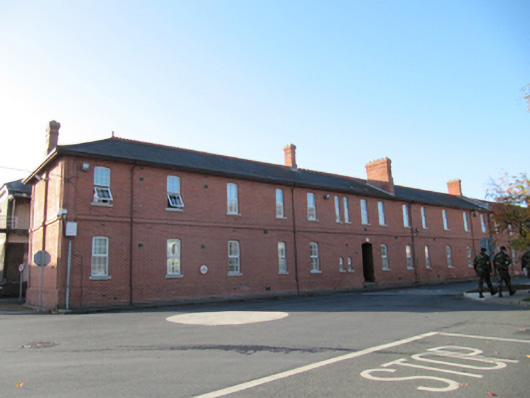
What is recorded here
Pair of multiple-bay two-storey barracks facing north, with thirteen-bay two-storey barracks facing east to west, built c.1890. Full-height returns to rear (south) elevation of eastern range. Hipped slate roofs with terracotta ridge cresting and finials, red brick chimneystacks, timber eaves courses and cast-iron rainwater goods. Hipped slate roofs to returns. Red brick laid in stretcher bond to walls having moulded brick string course, pilasters to corners, and plinth course with cast-iron vents. Projecting chimneybreasts to centre of side elevations (east and west to north-facing ranges, north and south to east-facing range). Segmental-headed window openings having granite sills and replacement uPVC windows. Segmental-headed door openings to recessed porches to front (north and east) elevations, having granite steps, bull-nosed jambs and timber battened doors. Segmental-headed door openings to rear elevations, with timber panelled doors. Recent steel staircases to rear.
Portobello Barracks was constructed at the beginning of the nineteenth century as a cavalry barracks. It was taken over by Irish troops in 1922, and became the Headquarters of the National Army, under the leadership of Michael Collins. In 1952 it was renamed after Cathal Brugha, Chief of Staff of the Irish Republican Army during the War of Independence, and Minister for Defence in the first Dáil. These ranges date from the latter decades of the nineteenth century, and were built to replace earlier buildings. Their construction may coincide with changes in requirements following the departure of the cavalry for McKee Barracks in 1888. Their formal, functional plan is complemented by a regularity of design and proportion seen in the even fenestration arrangement and pleasing uniformity. The use of red brick places these in a late nineteenth-century context, and contrasts with the calp and render finishes of earlier buildings.
This does not grant access. Most recorded buildings are privately owned; view them only from public ground unless the owner allows entry.
Places near here
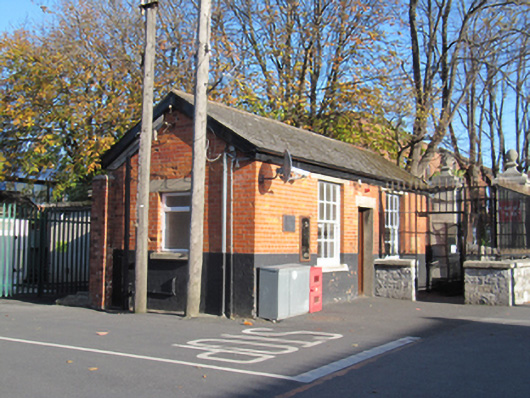 Cathal Brugha Barracksguard house · 183 yd
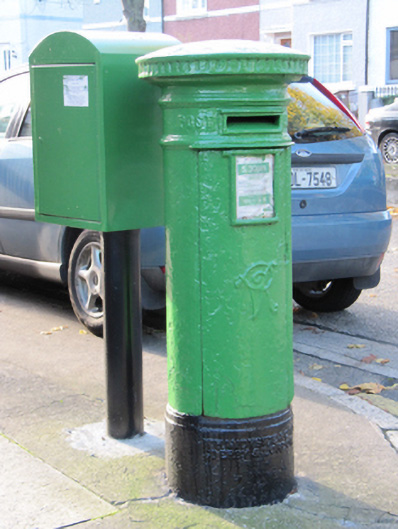 post boxpost box · 341 yd
 Robert EmmetMemorial · 447 yd
 Irish Jewish MuseumMuseum · 500 yd
 The MART GalleryHeritage attraction · 509 yd
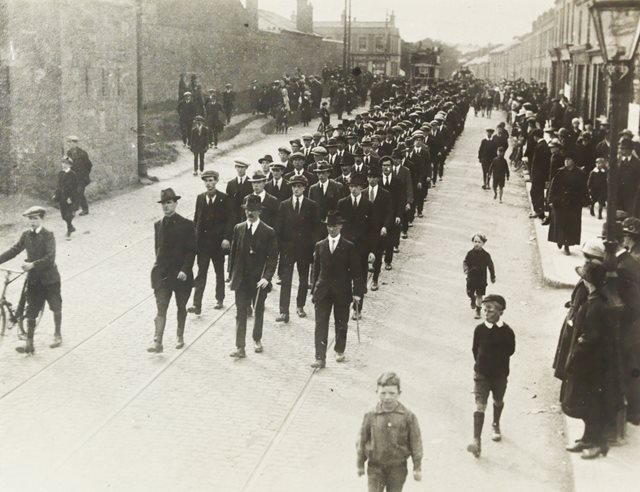 Fourth Battalion Dublin BrigadeMemorial · 543 yd
 David Luke 1993Monument · 979 yd
 Site of Donore Castle indicatedCastle, unclassified · 1089 yd
 Battle of RathminesMajor battlefield · 1093 yd
 Liberty BellMonument · 1615 yd
 Rathgar CastleCastle, unclassified · 1.0 mi
 European PearEuropean Pear · 1.3 mi
Other information
Photo: National Inventory of Architectural Heritage · Website use allowed for educational or private purposes with source credit