What is recorded here
Kill of the Grange holds a granite bullaun stone with two shallow basin hollows, one still visible and one buried, beside an old graveyard and holy well. People may have knelt there, poured water, or marked the stone for prayer, while the worn DOM letters hinted at a divine name. The place still feels like a threshold where human devotion pressed into rock and the rock kept the shape.
Situated on a low rise, in a green area, NE of Kill Abbey road. Immediately SW of the graveyard (DU023-015002-) at Kill of the Grange is a granite bullaun stone. It has a circular shaped hollow (diam. 0.4m x D 0.28m) with a second hollow now covered in soil and no longer visible.
Bullaun Stone described in 1896 as follows; 'Just within the gate of the Espinasse lawn is a granite mass, 9 feet [2.7m] in length by 6 [1.8m] in breadth, rising slightly above the ground. This may be either a huge boulder, or portion of the “living rock.” Upon its somewhat sloping surface have been artificially sunk two basin-like hollows of a class usually styled, by Irish - speaking people, Bullán, i.e., in English, Little Pools. The bulláns at the Kill are slightly unequal in size, one measuring 14 [0.35m], the other 18 [0.45m], inches in diameter; they are 14 inches [0.35m] in depth, and in section present the figure of an acutely-pointed inverted cone. Close beneath the smaller and lower example is an inscription, now much worn by elemental action, consisting of three letters. These characters, DOM, are, as will be acknowledged by experts in such matters, perhaps as old as any lapidary inscription of Christian times found in Ireland. They doubtless stand for Domini, Domino, or, possibly, for the words Deo Optimo Maximo' (Wakeman 1896, 407-8).
The site is located within a complex which includes a pre-Norman church with a late medieval chancel (DU023-015001-), a graveyard (DU023-015002-), a holy well (DU023-015003-), two graveslabs (DU023-015005-, DU023-015006-), a stone font (DU023-015009-), the base of a stone cross (DU023-015008-), and two crosses (DU023-015004) from the former laneway into the graveyard which are now in the care of the OPW in Trim, county Meath.
See attached photograph of bullaun stone at Kill of the Grange showing the two hollows taken by Paddy Healy, © South Dublin Libraries, Local Studies Collection, https://hdl.handle.net/10599/1967
Wakeman, W.F. 1896 Proceedings - Descriptive Sketch of Places Visited. Journal of the Royal Society of Antiquaries of Ireland 26, 403-18.
Compiled by: Geraldine Stout and Padraig Clancy
Revised by: Caimin O'Brien
Date of revised upload: 12 January 2023
Likely dating to the early Christian period, bullaun stones were often used for ritual purposes, such as the preparation of holy water or as pilgrimage sites. They are associated with local saints and folklore, sometimes linked to healing traditions.
The monument record does not grant public access. Check the route and ask the landowner before entering private land.
- What survives
- Recorded monument
Places near here
 Holy well in Kill OF THE GrangeHoly well · 33 yd
 Grange ChurchChurch · 38 yd
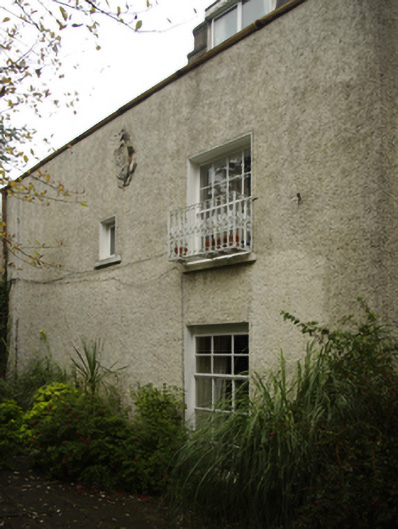 Kill Abbeyhouse · 64 yd
 1916 MonumentMonument · 326 yd
 Brian NolanHeritage attraction · 470 yd
 Ernest WaltonHeritage attraction · 492 yd
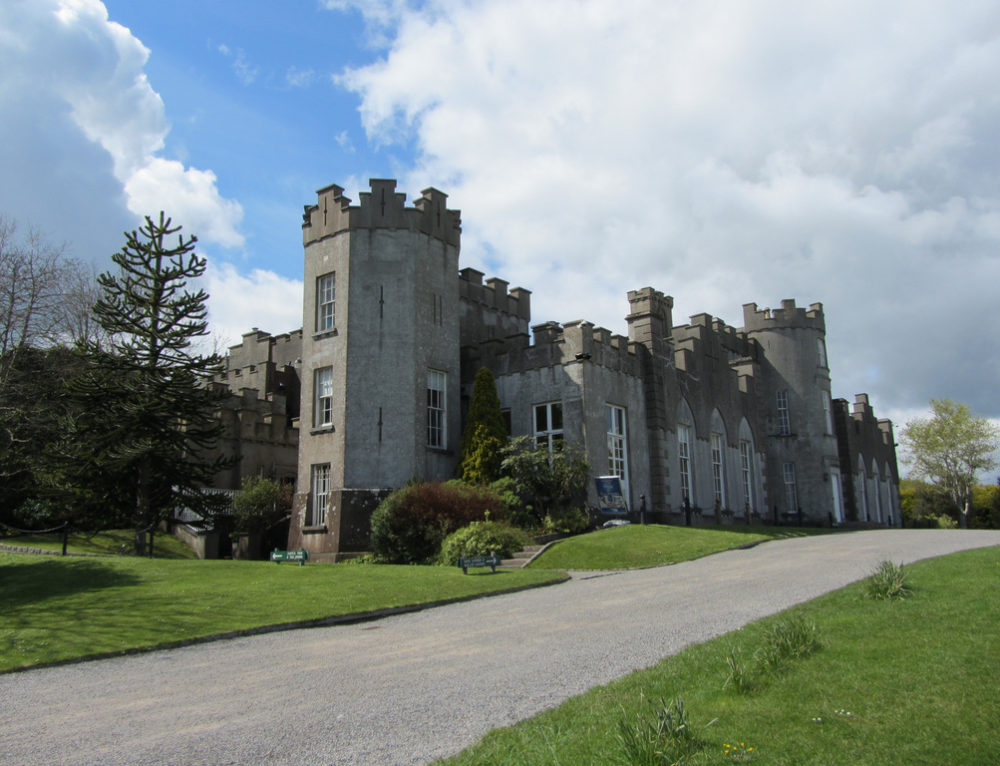 CastleCastle, unclassified · 836 yd
 Nature TrailVisitor information · 1128 yd
 Castle (in ruins)Castle, tower house · 1212 yd
 Graveyard in Monkstown HousefarmGraveyard · 1313 yd
 SeapointBeach / strand · 1.1 mi
 Welcome to FoxrockVisitor information · 1.3 mi