
What is recorded here
Kill of the Grange is a hollowed green chamber where water once breathed through stone. The chamber is empty now, but it is not dead. It is waiting for the living to remember the shape of what it held.
Situated on a low rise, in a green area, NE of Kill Abbey road. A holy well formerly lay a short distance from the church (DU023-015001-) and graveyard (DU023-015002-). Annotated 'Well' on the OSi 25-inch map. Described in 1896 as a, 'remarkable fount, which may be found at a short distance from the church, just a little within the gate entrance to a lawn appertaining to the “Abbey" (a picturesque and venerable residence of the Espinasse family dating from the sixteenth century), was, within my own memory, styled by some ancient people of the neighbourhood the “British Well.” How it acquired this singular title must, I fear, remain a subject for conjecture. Some forty years ago I was informed on the spot that a parcel of land in the immediate neighbourhood was called by the old people “Mimoge," or "Moymoge," i.e. the Plain of Mogue. St. Mogue , Mædhog, Mæog , or Aedan was one of the most famous of Erin's early saints. This 'British Well' now dry, is approached from the sward by several descending steps formed of blocks of stone. It is encompassed by a strongly constructed building, oval, or rudely circular in plan, and was probably originally covered by a roofing of flags, or boarding, of which no trace remains' (Wakeman 1896, 406-7). This was filled in the mid 1980's leaving no visible surface trace (Healy 1975, 1-19).
The site is located within a complex which includes a pre-Norman church with a late medieval chancel (DU023-015001-), a graveyard (DU023-015002-), a bullaun stone (DU023-015007-), two graveslabs (DU023-015005-, DU023-015006-), a stone font (DU023-015009-), the base of a stone cross (DU023-015008-), and two crosses (DU023-015004) from the former laneway into the graveyard which are now in the care of the OPW in Trim, county Meath.
Wakeman, W.F. 1896 Proceedings - Descriptive Sketch of Places Visited. Journal of the Royal Society of Antiquaries of Ireland 26, 403-18.
Compiled by: Geraldine Stout and Padraig Clancy
Revised by: Caimin O'Brien
Date of revised upload: 11 January 2023
Linked to Saint Killian (or Cillian), an early Irish saint associated with monastic foundations and healing wells; the well was traditionally visited for cures related to skin ailments and general well-being. Local folklore suggests that the water was most potent when taken on Saint Killian’s feast day, though the exact date is not consistently recorded.
The monument record does not grant public access. Check the route and ask the landowner before entering private land.
- What survives
- Recorded monument
Places near here
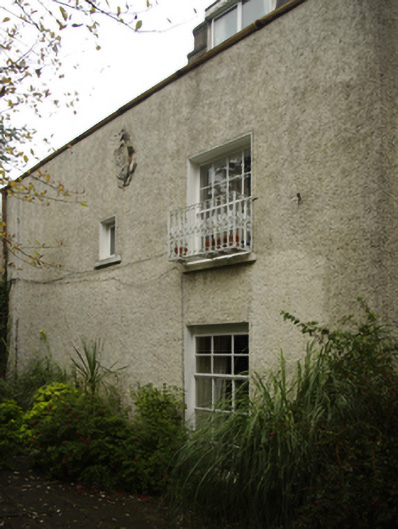 Kill Abbeyhouse · 46 yd
 Grange ChurchChurch · 50 yd
 1916 MonumentMonument · 320 yd
 Ernest WaltonHeritage attraction · 474 yd
 Brian NolanHeritage attraction · 477 yd
 IADT SignMonument · 563 yd
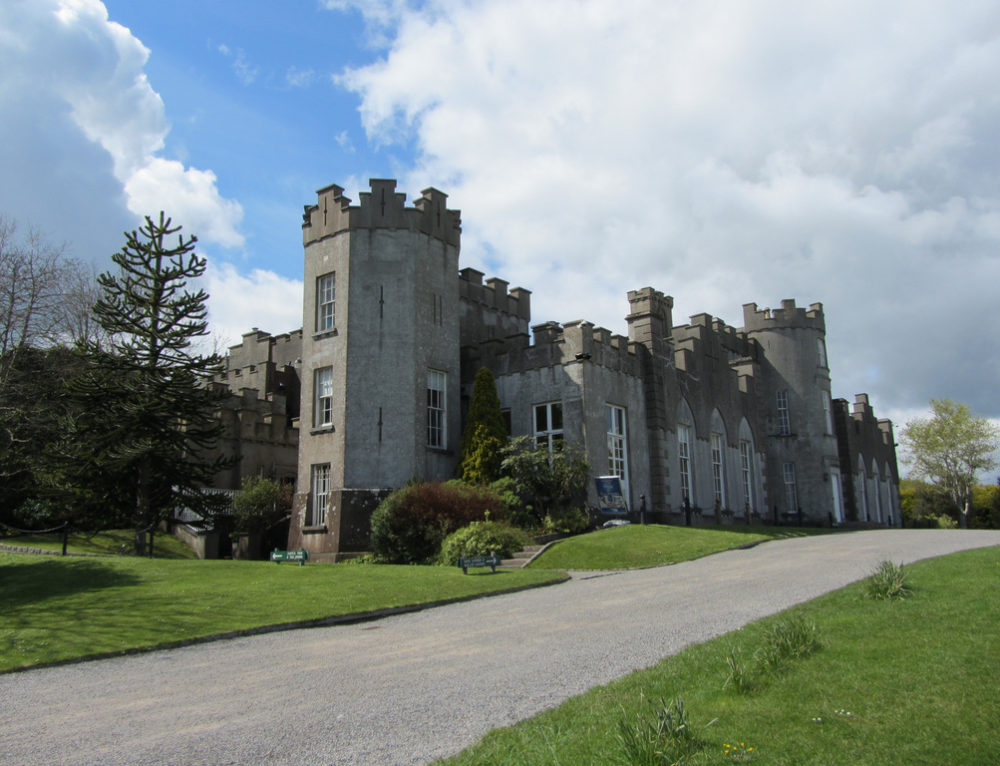 CastleCastle, unclassified · 851 yd
 Nature TrailVisitor information · 1130 yd
 Castle (in ruins)Castle, tower house · 1189 yd
 Graveyard in Monkstown HousefarmGraveyard · 1288 yd
 SeapointBeach / strand · 1.1 mi
 Welcome to FoxrockVisitor information · 1.3 mi
Other information
Photo: Credit not shown in the picture search · Rights wording not checked; contact us if this picture should be removed