What is recorded here
One huge stone leans across two smaller blocks on a ridge above the river plains, mocking death with its crude, unfinished shape. It may be an ancient tomb or a Georgian folly built for pleasure, but that uncertainty gives the place its edge. The De Courcy family owned the land when writers first noticed the stones, and a tree still grows at its north foot like a witness refusing to leave.
On the crest of a N-S ridge, with land sloping gently away to the E and W down to the river plains, in tillage. There are very good views in all directions. Formerly in the demesne of Borrismore House, it is described by Carrigan (1905, vol. 2, 366) as, 'a cromlech in Mr. De Courcy's land in Borrismore'. A large roofstone-like stone (L 2.9m; Wth 2.2m; T 1.1m thick, partly rests on two inclined blocks. The E stone (dims. 2.2m x 1m; T 1m) leans to the S. The W stone (L 1.4m; T 0.6m) leans to the W. If erect it would be 1.7m high. A tree grows at the N foot of the monument. Two smaller slabs lie beside it and field clearance has been dumped in this area. The precise nature of this monument is uncertain. While the whole does not appear to be natural, the stones are very rough and uneven. This may have been a folly erected as part of the landscaping of the former demense and cannot be classified conclusively as a portal tomb. (Tighe 1802, 625; Lewis 1837, vol. 2, 671; Borlase 1897, vol. 2, 410-11).
Compiled by: Jean Farrelly and Paul Walsh
Date of revised upload: 12 May 2021
Portal tomb; Neolithic period. Its location on a prominent ridge suggests it was a significant ceremonial or funerary site with wide visibility, typical of Neolithic ritual landscapes in Ireland.
The monument record does not grant public access. Check the route and ask the landowner before entering private land.
- What survives
- Recorded monument
Places near here
 Enclosure in Donaghmore LowerEnclosure · 354 yd
 Borrismore Ringfort (Rath)Archaeological place · 705 yd
 Ardaneena Church (in ruins)Church · 897 yd
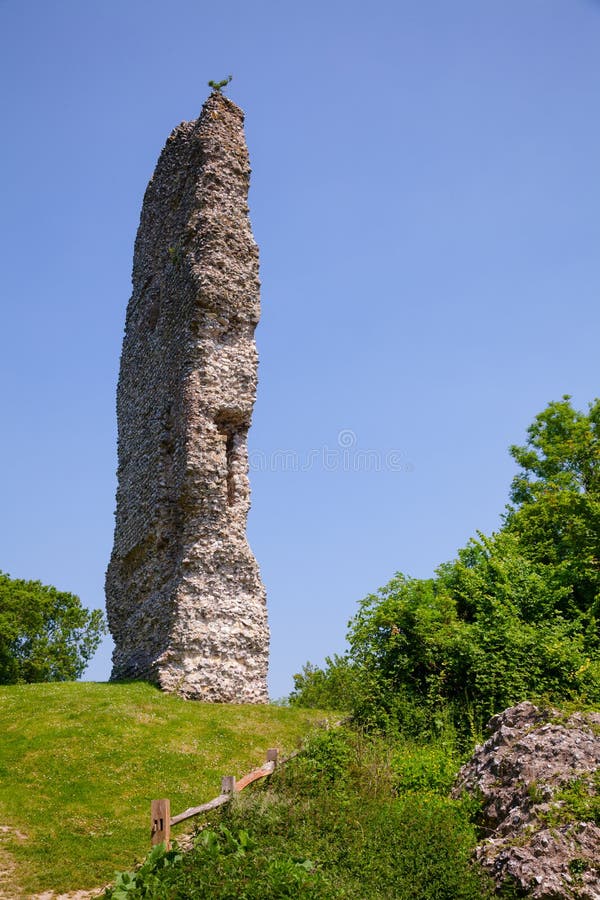 CastleCastle, ringwork and bailey · 1255 yd
 The Old Rectoryrectory/glebe/vicarage/curate's house · 1572 yd
 John HelyMemorial · 1.2 mi
 DelaneyMemorial · 1.3 mi
 TurretBawn · 1.5 mi
 Clomantagh HillMountain / peak · 1.9 mi
 Kildrinagh WoodForest · 3.6 mi
 Street fieldArchaeological place · 4.1 mi
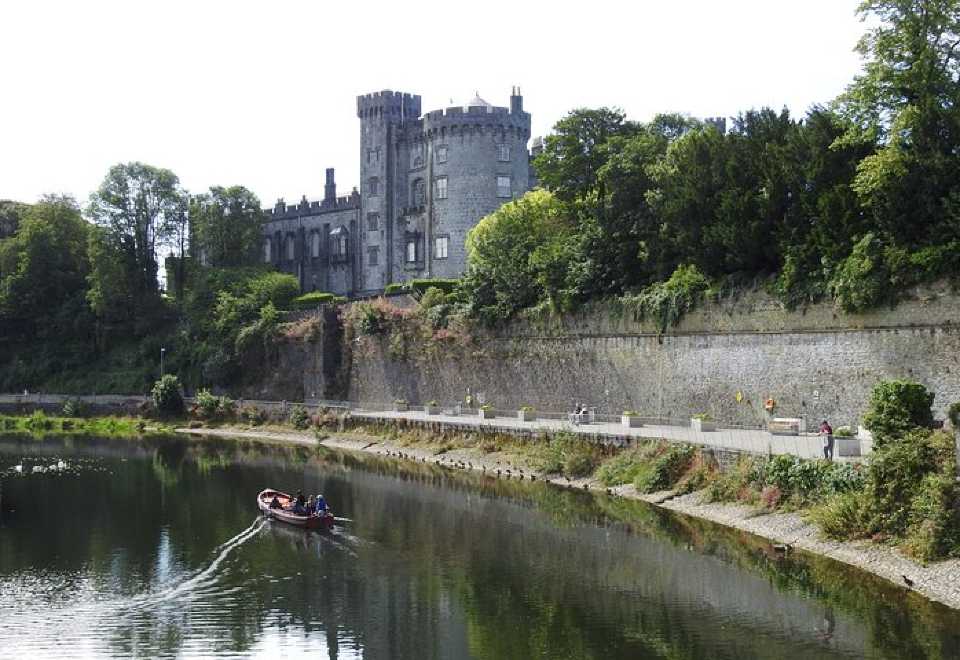 Anker's IslandIsland · 9.9 mi