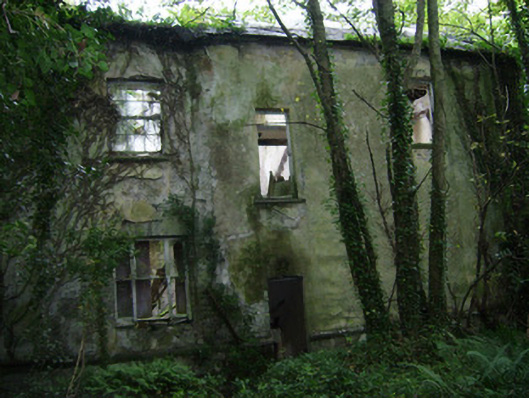
What is recorded here
Detached three-bay two-storey house over basement, built 1814, with four-bay side elevations and having porch to front. Now in ruins. Remains of hipped slate roof. Rendered walls and quoins. Square-headed window openings with dressed limestone quoins under render, with variety of limestone sills, moulded, curved and rectangular. Remains of tripartite timber sliding sash windows with shutters and having render surrounds and pediments to ground floor. Remains of six-over-six timber pane sliding sash windows to first floor. Round-headed stairway window opening to rear. Central round-headed door opening with gabled porch to front. Farmyard to west consisting of single- and two-storey buildings set around four sides of a rectangular yard, and having two-storey early eighteenth-century house to south later converted to outbuildings. Pitched slate and corrugated iron roofs, and rubble limestone walls. East range comprising single-storey block with pair of segmental-arch vehicular entrances to north end, having cut-stone voussoirs, one entrance leading toward house of 1814 to east. Remains of timber horse boxes in partially collapsed north range. Gable-fronted bay in west range with loading door to first floor. Gateway leading to field at south end. South range comprising remains of earlier house with arch inserted to north elevation. Early eighteenth-century house to south-west of house and south of farmyard. Set in mature parkland landscape, approached by tree-lined avenue which led to eighteenth-century house. Entrance gates and lodge to south.
Old Court, built by Jonas Stawell, is a excellent example of an early nineteenth-century gentleman’s residence. The building retains its historic form and although the house is derelict it retains much historic fabric such as the tripartite windows, stone sills, and render details. This house, along with the earlier house to the site, demonstrates continuity of occupation and changing architectural styles from the eighteenth to nineteenth centuries. The group of farm buildings is noteworthy for the use of traditional skills and materials and adds significantly to the context of the two houses.
This does not grant access. Most recorded buildings are privately owned; view them only from public ground unless the owner allows entry.
Places near here
 IndicatedCountry house · 51 yd
 Old Courtdemesne walls/gates/railings · 207 yd
 Enclosure in Oldcourt (fermoy By.)Enclosure · 542 yd
 Smith's WellSpring · 568 yd
 Old town of Doneraile (Site of)Promontory fort, inland · 793 yd
 Doneraile Castle (Site of)Castle, unclassified · 1408 yd
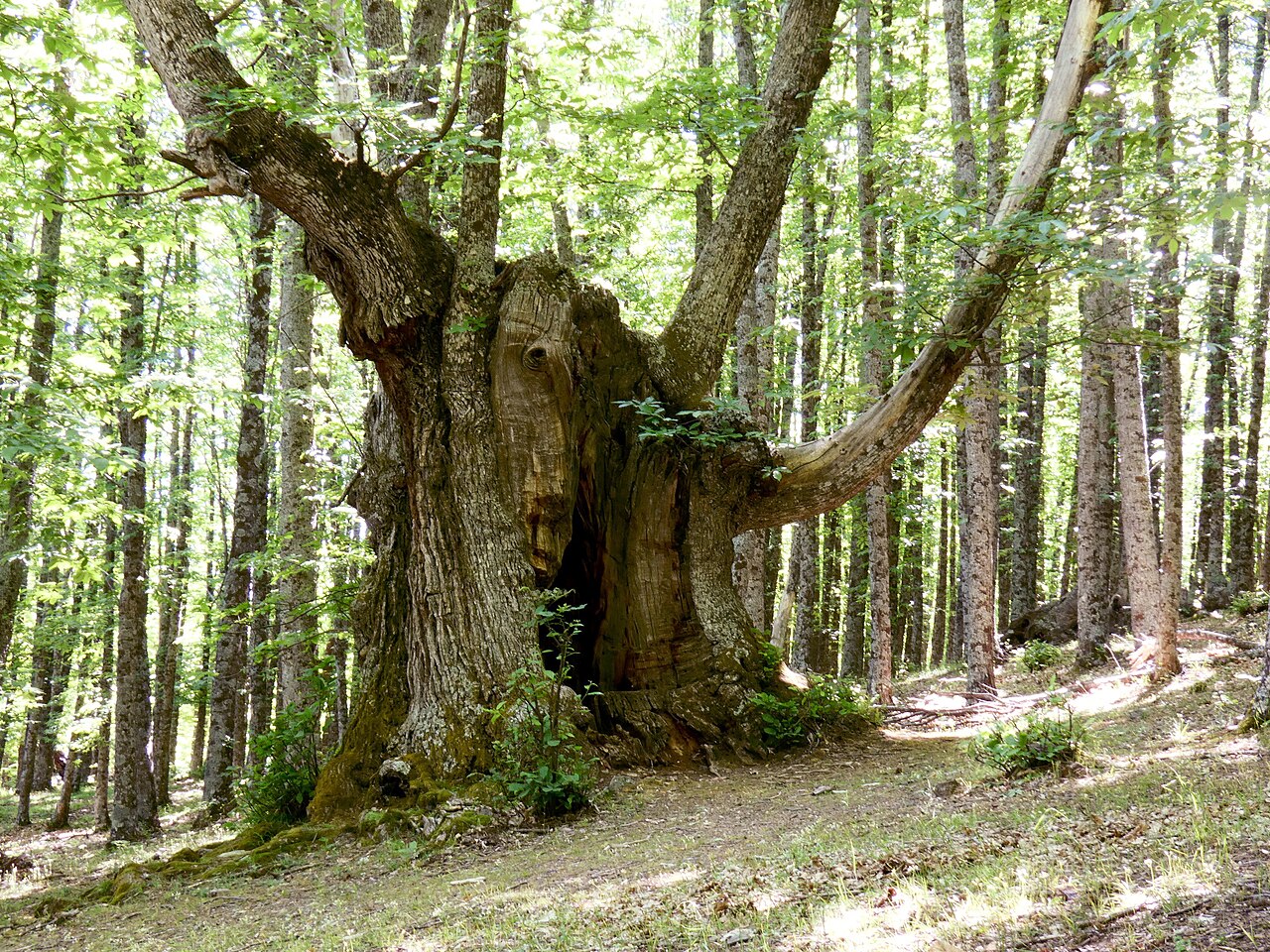 Sweet ChestnutSweet Chestnut · 1647 yd
 Doneraile HouseHeritage attraction · 1.0 mi
 Brough WoodWood · 1.0 mi
 CastleCastle, unclassified · 1.4 mi
 David HurleyMemorial · 3.2 mi
 Charles BunworthMemorial · 3.3 mi
Other information
Photo: National Inventory of Architectural Heritage · Website use allowed for educational or private purposes with source credit