What is recorded here
Triple-arch bridge carrying road over the Ballintra River, built c. 1790, having V-profile cutwaters to central piers. Service pipe attached to the south elevation. Central segmental-headed arch having cement render over dressed stone voussoirs; cement rendered finish to arch barrels. Segmental-headed/pointed segmental-headed arches to the either end (east) and west) having cement rendered finish over. Rubble stone construction to spandrels, abutments and to parapets; now generally with cement rendered finish over. Roughly dressed stone coping over parapets. Tarmacadam deck with vegetation to verges. Located to the north-west of Ballintra and the south of Donegal Town, a short distance to the south of where the Ballintra River discharges into Donegal Bay. Entrance to Murvagh House (see 40909921) adjacent to the east end of bridge.
This triple-arched road bridge retains its early character and form, despite some modern alterations, and is an appealing feature in the rural landscape to the north-west of Ballintra. It is one of a number of good quality bridges spanning the Ballintra River in this part of Donegal. It is robustly-constructed in rubble stone masonry, and its continued survival and use stands as testament to the quality of its original construction, and of the skill of the masons involved. The V-profile cutwaters and the tooled stone voussoirs to the arches are noteworthy features. However, the modern cement rendered finish to the elevations of this bridge detracts somewhat from its visual appeal. This bridge probably originally dates to the late-eighteenth century, a period that saw a great deal of road and bridge-building in Ireland, particularly by the Grand Juries (the forerunners of the County Councils). It may have been built around the same time as Murvagh House (see 40909921), which was built in 1792 as a Church of Ireland rectory – the main entrance to same is located adjacent to the east end of the bridge. This fine bridge is an integral element of the extensive transport heritage of south County Donegal, and is an integral element of the built heritage of the local area.
From the Buildings of Ireland (National Inventory of Architectural Heritage) record 40909923
This does not grant access. Most recorded buildings are privately owned; view them only from public ground unless the owner allows entry.

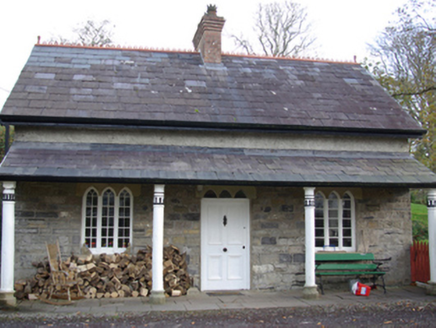 Murvagh HouseSchool · 36 yd
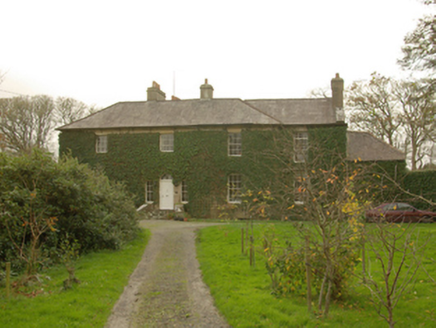 Murvagh HouseHouse · 347 yd
 MurvaghOfficial bathing water · 1750 yd
 Rooney's IslandIslet · 1.8 mi
 Ballyboyle IslandIslet · 2.7 mi
 Wych Elm3.3 mi
 Killymard Old Church GraveyardGraveyard · 3.5 mi
 Siege of DonegalSiege · 3.7 mi
 Donegal Friary GraveyardGraveyard · 3.7 mi
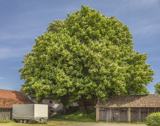 Horse-chestnut3.9 mi
 DonegalHistoric town · 4.0 mi
 Donegal CastleVisitor information · 4.1 mi
What do you know about this place?